


Best pumps for exclusive pumping: UK guide 2026


What are the best pumps for exclusive pumping in the UK?
The Spectra S1 Plus is the strongest all-round choice for exclusive pumping in the UK, combining hospital-grade suction, a closed system, and a rechargeable battery. For mothers who need flexibility alongside power, pairing it with a wearable such as the Momcozy V1 or Elvie Pump covers both thorough home sessions and hands-free pumping on the move.
Exclusive pumping places far greater demands on a pump than occasional expressing does. You are asking the machine to replace the breast stimulation a baby would provide 8–12 times a day, so suction strength, hygiene design, and durability matter more than they would for a mother who pumps once or twice. The pumps below are chosen specifically for that workload.
| Pump | Best for | Pump type | Price (approx.) | Key features | Battery | UK availability |
|---|---|---|---|---|---|---|
| Spectra S1 Plus | Best overall output | Hospital-grade double electric | — | Closed system, 270 mmHg, night light | Rechargeable | Widely available |
| Spectra S2 Plus | Budget hospital-grade at home | Hospital-grade double electric | — | Closed system, same suction as S1 | Mains only | Widely available |
| Spectra SG Portable | Hospital-grade power on the move | Portable double electric | — | Closed system, compact body | Rechargeable | Widely available |
| Medela Symphony | Long-term supply building | Hospital-grade double electric | Rental | Clinically proven, strong drainage | Mains | Available via rental |
| Baby Buddha 2.0 | Portable output | Portable double electric | — | Closed system, fast emptying | Rechargeable | Available online |
| Pumpables Genie Advanced | Comfort-focused pumping | Compact double electric | — | Adjustable suction, quiet motor | Rechargeable | Available online |
| Momcozy V1 | Best value wearable | Wearable double electric | — | 292 mmHg suction, hands-free | Rechargeable | Widely available |
| Momcozy Air 1 | Slim wearable for active use | Wearable double electric | — | Ultra-slim, high suction | Rechargeable | Widely available |
| Elvie Pump | Quiet, discreet smart pumping | Wearable single/double electric | — | Tube-free, app tracking | Rechargeable | Widely available |
| Willow Go | Wearable with spill-proof design | Wearable double electric | — | Spill-proof bag, app-connected | Rechargeable | Available online |
| Eufy S1 Pro | Flexible wearable power | Wearable double electric | — | Strong battery, adjustable suction | Rechargeable | Available online |
| Medela Motion InBra | Discreet mobile sessions | Wearable double electric | — | Cord-free, Medela bottle compatible | Rechargeable | Available online |
| Lansinoh Wearable Electric | Budget wearable option | Wearable double electric | — | Lightweight, multi-speed | Rechargeable | Widely available |
| Lansinoh Rechargeable Double Electric | Rechargeable double at mid-price | Double electric | — | Multiple suction levels | Rechargeable | Widely available |
| Lansinoh 2-in-1 Double Electric | Single and double flexibility | Double electric | — | Convertible, rechargeable | Rechargeable | Widely available |
| Lola & Lykke Smart Electric | Tech-savvy pumpers | Double electric | — | App connectivity, data tracking | Rechargeable | Available online |
| Pippeta LED Wearable | Visual session feedback | Wearable double electric | — | LED indicators, hands-free | Rechargeable | Available online |
| MAM Move Wearable | Budget wearable mobility | Wearable double electric | — | Simple controls, portable | Rechargeable | Available online |
| Fraupow Wearable | Slim wearable with strong suction | Wearable double electric | — | Slim profile, adjustable suction | Rechargeable | Available online |
| Medela Harmony (Harmony Flex) | Manual backup and travel | Manual single | — | Ergonomic, no power needed | None | Widely available |
| Haakaa Silicone Breast Pump | Supplemental milk collection | Manual silicone | £10–£20 | Passive suction, silent | None | Widely available |
Top strengths and trade-offs at a glance:
- Spectra S1 Plus: Thorough drainage, closed system, and rechargeable battery make it the go-to for full-time exclusive pumpers. Bulkier than wearables and requires a bag for travel.
- Spectra S2 Plus: Identical suction to the S1 at a lower price, but mains-only power limits portability.
- Medela Symphony: The clinical benchmark for supply building, particularly in the early weeks. Available on rental rather than outright purchase, which suits short-term intensive use.
- Baby Buddha 2.0: Compact and fast-draining with a closed system. A strong portable option, though the small motor can be louder than some competitors.
- Momcozy V1: The most popular budget wearable in the UK for good reason. Suction is genuinely competitive, though drainage may be less thorough than a tabletop pump.
- Elvie Pump: Exceptionally quiet and discreet, with app-based session tracking. The price is high and suction is moderate, so it works best as a secondary pump rather than a sole device.
- Willow Go: Spill-proof design and app connectivity suit mothers who pump while moving around. Output can vary by user.
- Medela Harmony: A reliable manual backup. Not suited to replacing electric sessions but useful for travel or power cuts.
- Haakaa Silicone Breast Pump: Passive suction only. Excellent for catching letdown on the opposite side during a nursing or pumping session, not for replacing electric pumping.
What types of breast pump work best for exclusive pumping?
Choosing the right pump category is the first decision, and it has a bigger impact on long-term supply than any individual feature. Each type suits a different part of an exclusive pumping routine.
Hospital-grade double electric pumps
Hospital-grade pumps such as the Spectra S1 Plus, Spectra S2 Plus, and Medela Symphony generate the strongest, most consistent suction available for personal use. Their motors cycle faster and more powerfully than standard consumer pumps, which matters when you are pumping eight or more times a day. The Medela Symphony is the pump most commonly used in neonatal units and is available on rental from pharmacies and lactation consultants across the UK.
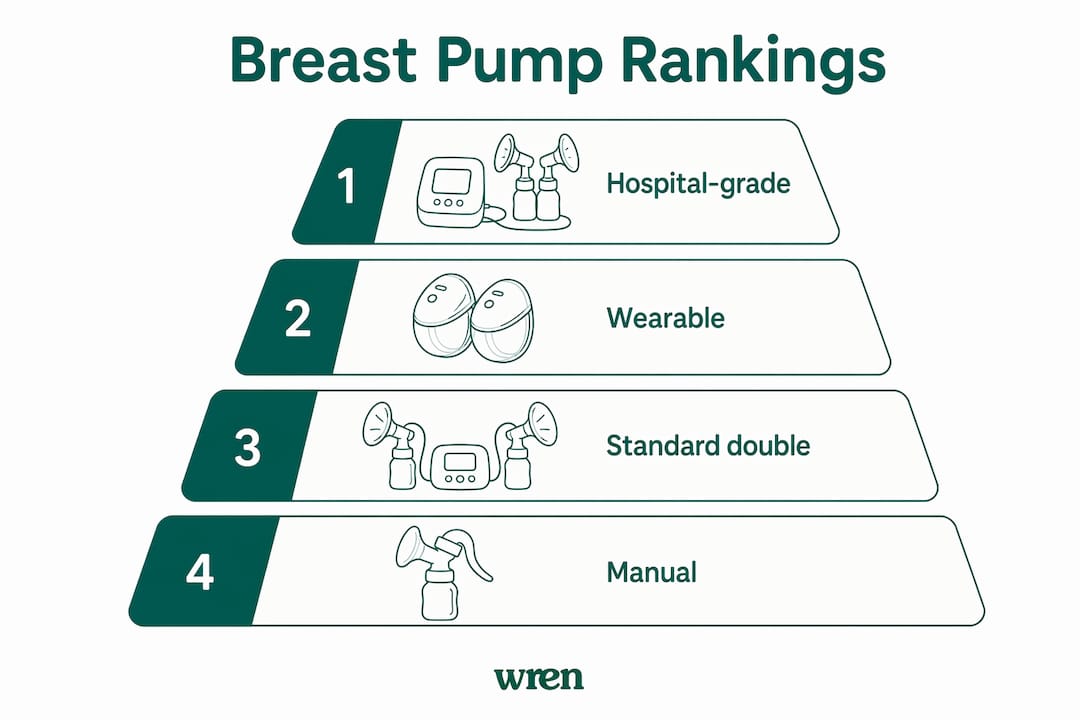
A critical feature in this category is the closed system, which places a barrier between the milk collection kit and the motor. Closed-system pumps prevent milk from entering the motor, protecting both hygiene and the pump’s lifespan. The Spectra range and Baby Buddha 2.0 all use closed systems. Open-system pumps, by contrast, can harbour mould in the tubing over time, which becomes a real concern when you are cleaning parts multiple times a day.
Pros for exclusive pumping: strongest suction, best drainage, closed-system hygiene, durable motors built for frequent use. Cons: bulkier, less portable, mains-dependent (unless rechargeable like the S1 Plus or SG Portable).
Wearable double electric pumps
Wearable pumps sit inside a nursing bra and collect milk into built-in cups, leaving both hands free. The Momcozy V1, Elvie Pump, Eufy S1 Pro, Willow Go, and Medela Motion InBra all fall into this category. They are not designed to replace a hospital-grade pump for every session but are genuinely useful for work sessions, commuting, or any time you cannot sit at a desk for twenty minutes.
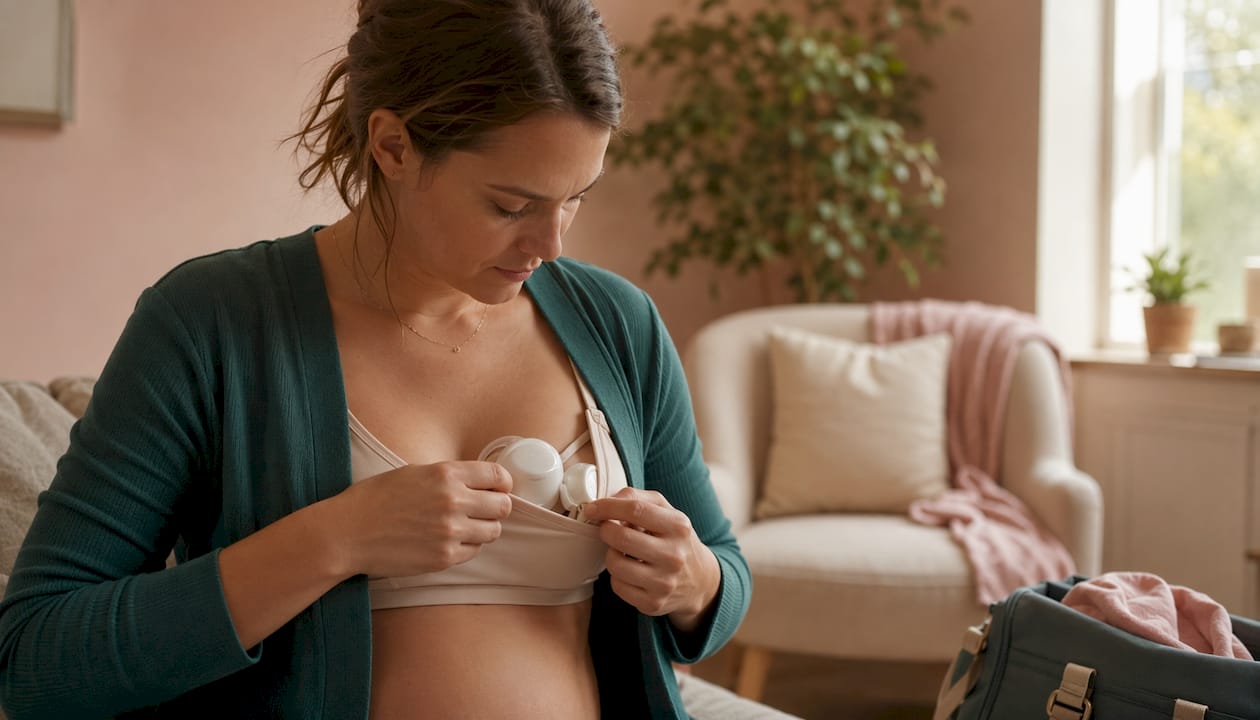
Suction levels in wearables have improved considerably. The Momcozy V1 claims approximately 292 mmHg, which is competitive with many tabletop pumps. That said, wearable pumps tend to produce less complete drainage than a strong corded pump, particularly in the early weeks when establishing supply. Most experienced exclusive pumpers use a wearable as a secondary pump rather than their only device.
Pros for exclusive pumping: hands-free, discreet, portable, rechargeable. Cons: generally less thorough drainage than hospital-grade options, smaller milk capacity per session, more parts to clean.
Standard double electric pumps
Pumps like the Lansinoh Rechargeable Double Electric, Lansinoh 2-in-1 Double Electric, and Pumpables Genie Advanced sit between hospital-grade and wearable in terms of power and price. They are a practical choice for mothers who need reliable double pumping at home without the cost of a Spectra or Medela. The Pumpables Genie Advanced is particularly well-regarded for its quiet motor and adjustable suction, making long sessions more comfortable.
Pros: affordable, rechargeable, good suction for the price. Cons: not as powerful as hospital-grade, less portable than wearables.
Manual pumps
The Medela Harmony (Harmony Flex) and Haakaa Silicone Breast Pump serve very different purposes. The Harmony is a single manual pump with an ergonomic handle, useful as a backup when travelling or during a power cut. The Haakaa uses passive suction to catch letdown on the opposite breast during a session. Neither is suitable as a primary pump for exclusive pumping, but both earn a place in a well-equipped pumping kit.
Pros: no power needed, silent, lightweight, inexpensive. Cons: not viable as a sole pump for exclusive pumping; output is limited.
Pro Tip: Experts recommend prioritising a closed-system pump with adjustable suction cycles over simply looking for the label “hospital grade.” The closed system protects hygiene across hundreds of cleaning cycles, and adjustable cycles let you fine-tune stimulation and expression phases to match your body’s response.
How do you choose the best pump for exclusive pumping?
The right pump depends on your daily routine, not just the spec sheet. A mother who works from home full-time has different needs from one who commutes or returns to an office. Work through these questions before buying.
Questions to ask before you purchase
- How many times a day will you pump, and for how long?
- Will you pump primarily at home, at work, or both?
- Do you need to pump discreetly in shared spaces?
- What is your budget, and are you open to renting a hospital-grade pump?
- How much time can you spend cleaning parts between sessions?
- Do you need compatibility with a specific bottle brand?
- How important is noise level in your environment?
- Do you want app connectivity or session tracking?
Matching pump type to your lifestyle
If you pump exclusively at home and prioritise output above all else, the Spectra S1 Plus or Spectra S2 Plus is the clearest choice. The S1 adds a rechargeable battery for occasional portability; the S2 saves money if you never need to move the pump. For mothers building supply in the early weeks, a short-term rental of the Medela Symphony gives access to the most clinically proven motor without a large upfront cost.
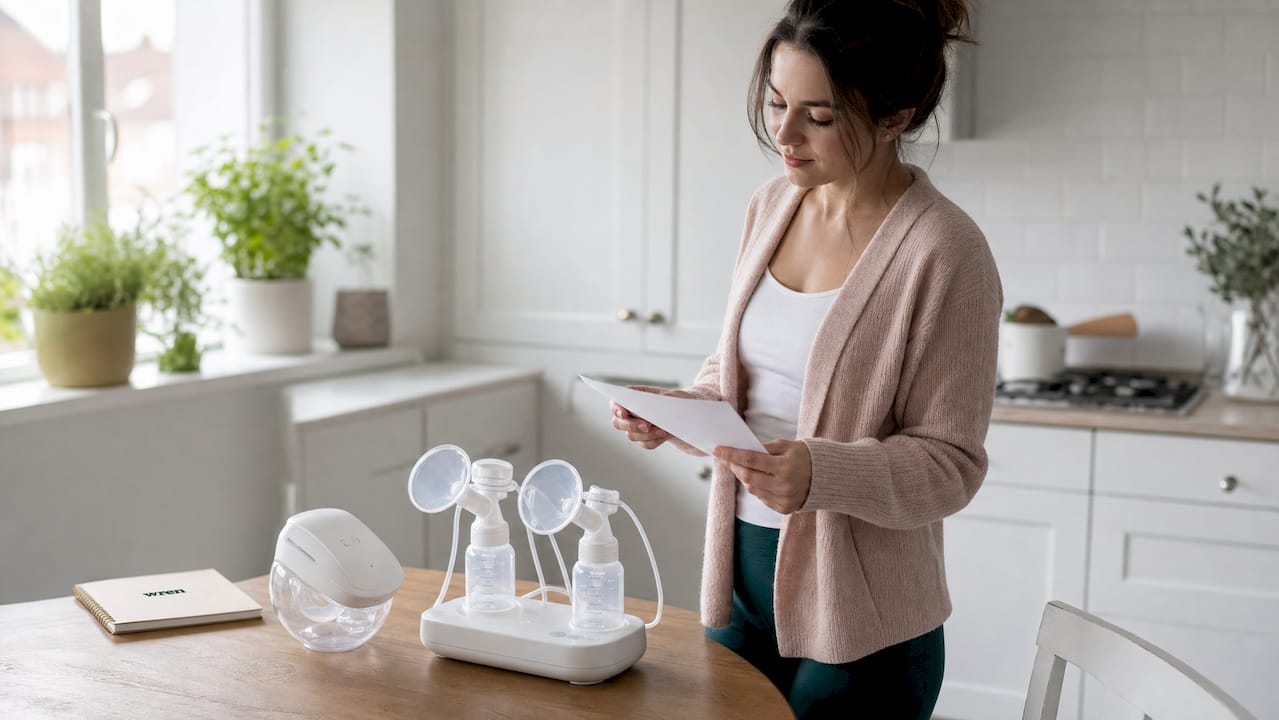
For mothers who split time between home and work, the dual-pump approach works well in practice. A corded or rechargeable hospital-grade pump handles morning and evening sessions at home, while a wearable covers sessions at the office or during the commute. The Momcozy V1 is the most cost-effective wearable for this role; the Elvie Pump or Eufy S1 Pro suit mothers who need near-silence in shared offices.
Budget matters, but so does the cost of replacing a cheap pump that fails under daily use. A pump used eight times a day will cover thousands of sessions over several months. Spending more on a durable, closed-system device often works out cheaper than replacing a budget pump mid-supply-building.
Flange sizing
Correct flange sizing is one of the most overlooked factors in pumping output. A flange that is too large or too small causes nipple pain and reduces milk extraction. Most pumps ship with one or two standard sizes, but flanges are available separately in a wide range of diameters. Many lactation consultants offer flange-sizing appointments, and several brands now include sizing rulers in their packaging.
Cleaning and maintenance considerations
Exclusive pumping generates a large volume of washing. Prioritise pumps with dishwasher-safe parts, and plan to own at least two full sets of collection kits so you can rotate while one set dries. The Spectra range, Medela, and Lansinoh all have widely available spare parts in the UK. For wearable pumps, check that replacement valves and membranes are stocked by UK retailers before buying, as these wear out quickly under heavy use.
Key checklist for exclusive pumpers:
- Closed-system design confirmed
- Suction strength adjustable across stimulation and expression phases
- Rechargeable battery or mains power suits your routine
- Spare parts available in the UK
- Flange sizes available beyond the standard kit
- Noise level acceptable for your pumping environment
- Compatible with bottles you already use or plan to use
Effective exclusive pumping techniques and maintenance tips
Getting the pump right is only part of the picture. How you use it determines whether your supply stays consistent across months of exclusive pumping.
Pumping frequency and session length
Aim for 8–12 pumping sessions every 24 hours, with each session lasting 15–20 minutes or until milk flow slows to a trickle. Babies aged 1–6 months typically consume 750–800 mL of milk daily, so that is the volume target to work towards. Skipping sessions, particularly overnight, is the most common reason supply drops in the first few months.
Frequency matters more than duration when it comes to signalling milk production. Adding a shorter extra session is more effective than extending an existing one. This is the principle behind power pumping, where you pump for 20 minutes, rest for 10, pump for 10, rest for 10, and pump for 10 again within a single hour. Done once a day for several days, power pumping mimics cluster feeding and can lift a flagging supply.
Hands-on pumping
Hands-on pumping combines massage, breast compressions, and manual expression with electric pumping to improve drainage and signal production. The technique involves massaging the breast before attaching the pump, applying gentle compressions during the session when flow slows, and finishing with a short period of hand expression. La Leche League UK describes this multi-step approach as one of the most effective tools for maintaining supply during exclusive pumping.
Breast compressions are particularly useful in the later part of a session when the pump’s suction alone may not fully drain the breast. Squeeze gently from the chest wall towards the nipple while the pump is running. This mimics the jaw compressions a baby makes during active feeding and can noticeably increase the volume collected.
Power pumping schedule
- Pump for 20 minutes
- Rest for 10 minutes
- Pump for 10 minutes
- Rest for 10 minutes
- Pump for 10 minutes
- Repeat once daily for 3–5 consecutive days when supply needs a boost
Rotating pump parts and cleaning
Owning two or three full sets of flanges, valves, and membranes makes the cleaning routine manageable. Wash parts in hot soapy water immediately after each session, or use a dedicated steam steriliser. The CDC recommends sanitising pump parts at least once a day for babies under two months, those born prematurely, or those with a weakened immune system. For older, healthy babies, thorough washing after each session is sufficient.
Valves and membranes are the parts that wear out fastest. A membrane that has lost its elasticity reduces suction noticeably, so check them weekly and replace them at the first sign of cracking or deformation. Most UK retailers stock Spectra, Medela, and Lansinoh replacement parts; for less common brands, order spares before you need them.
Pro Tip: Correct flange sizing is often the single most effective upgrade for output and comfort. If you are experiencing nipple pain, reduced output, or white marks on the nipple after pumping, sizing is the first thing to check, before adjusting suction settings or changing pump brands.
Maintenance checklist:
- Wash all milk-contact parts after every session
- Sanitise at least once daily for newborns and premature babies
- Inspect valves and membranes weekly; replace when worn
- Store clean parts in a covered container between sessions
- Keep tubing dry; replace if condensation appears inside
- Run the pump without parts attached for a minute after cleaning to dry the motor area
Detailed comparison of recommended breast pump models
For exclusive pumping in the UK, the choice ultimately comes down to how you split your sessions across home and work, and how much you are willing to spend upfront versus over time.
The Spectra S1 Plus remains the most recommended primary pump in UK exclusive pumping communities. Its 270 mmHg suction, closed system, and rechargeable battery cover the full range of home and occasional travel sessions. The S2 Plus offers identical performance for less money if mains power is always available. Both use the same collection kit, so parts are interchangeable and widely stocked.
The Medela Symphony sits above both in clinical terms. It is the pump most frequently cited in lactation research and the one most neonatal units use to help mothers establish supply for premature babies. Renting rather than buying makes it accessible without the high purchase price, and most UK pharmacy chains and lactation consultants offer rental schemes.
Baby Buddha 2.0 punches above its size. The motor is compact enough to fit in a jacket pocket, the system is closed, and it empties quickly. Mothers who travel frequently or work in environments where a full-size pump is impractical often find it the best portable option with genuinely good output.
Wearable pumps: which ones hold up for exclusive pumping?
The Momcozy range deserves particular attention because it covers several price points. The V1 is the entry-level wearable with competitive suction; the V2 Pro and M5 add more suction settings and quieter motors; the Air 1 Ultra-Slim is the slimmest option in the range and suits mothers who need maximum discretion under work clothing. None of the Momcozy wearables fully replaces a hospital-grade pump for drainage, but they are the most cost-effective way to add hands-free sessions to a routine built around a corded primary pump.
The Elvie Pump is the quietest wearable available in the UK. Its tube-free design and app-based tracking appeal to mothers who want data on session volume and duration. The suction is moderate compared to the Momcozy V1, which is why most lactation consultants position it as a complement to a stronger pump rather than a standalone device. The Willow Go adds a spill-proof bag design, which matters for mothers who pump while standing or moving between rooms.
Eufy S1 Pro offers a strong battery and adjustable suction in a compact form. The Medela Motion InBra integrates with Medela’s bottle ecosystem, which is useful if you already use Medela bottles and want to avoid adapters. Pippeta LED Wearable adds LED indicators that show session progress without needing to check a phone, a small but genuinely useful feature during night sessions.
For mothers on a tighter budget, the Lansinoh Wearable Electric and MAM Move Wearable both deliver basic hands-free pumping at accessible prices. The Fraupow Wearable sits slightly higher in the range with a slimmer profile and stronger suction than the entry-level options.
Standard double electric pumps
The Pumpables Genie Advanced is the quietest pump in this category, which matters for office use or pumping while a baby sleeps nearby. The Lansinoh 2-in-1 Double Electric is the most flexible, converting between double and single pumping without buying a separate device. The Lola & Lykke Smart Electric Breast Pump adds app connectivity for mothers who want to log sessions and track output over time, similar to the Elvie but in a tabletop rather than wearable format.
Manual options
The Medela Harmony (Harmony Flex) is the most ergonomically designed manual pump available in the UK, with a two-phase lever that reduces hand fatigue during longer sessions. The Haakaa Silicone Breast Pump is not a pumping device in the traditional sense. It attaches to the opposite breast during a session and collects milk that would otherwise be lost to letdown, building a freezer stash with no extra effort.
Key differentiators by use case:
- Best for supply building in the early weeks: Medela Symphony (rental) or Spectra S1 Plus
- Best for full-time home pumping on a budget: Spectra S2 Plus
- Best portable with hospital-grade output: Spectra SG Portable or Baby Buddha 2.0
- Best wearable for value: Momcozy V1
- Best wearable for silence: Elvie Pump
- Best wearable for slim fit: Momcozy Air 1 Ultra-Slim or Fraupow Wearable
- Best for tech tracking: Lola & Lykke Smart Electric or Elvie Pump
- Best manual backup: Medela Harmony (Harmony Flex)
- Best for passive milk collection: Haakaa Silicone Breast Pump
Warranty and returns vary by retailer in the UK. Spectra pumps typically carry a two-year manufacturer warranty when purchased from an authorised UK retailer. Medela offers a two-year warranty on personal-use pumps. Elvie provides a one-year warranty. For wearable pumps from brands like Momcozy, Eufy, and Fraupow, check the retailer’s returns policy carefully, as warranty terms can differ between Amazon listings and direct brand purchases. Buying direct from the brand’s UK site or a specialist retailer such as Boots or John Lewis generally gives stronger consumer protection under UK law.
My-wren’s wearable breast pump for exclusive pumping
My-wren offers a double hands-free wearable electric breast pump designed for mothers who need to pump frequently without being tethered to a desk. Where many wearables compromise on comfort to achieve a slim profile, My-wren’s pump is built with skin-safe materials and an ergonomic cup shape that sits securely in a standard nursing bra. It is rechargeable, quiet, and available directly in the UK with no lengthy wait times.
For exclusive pumpers who already use a hospital-grade pump at home and need a reliable wearable for work or travel sessions, My-wren’s pump fits that secondary role well. The breastfeeding accessories range includes replacement flanges, milk storage bags, and nipple care products that complement a full exclusive pumping kit. My-wren also publishes practical guidance through its blog, covering topics from pumping schedules to cleaning and sterilisation, which is useful when you are managing a demanding daily pumping routine.
Key takeaways
The most effective approach to exclusive pumping combines a closed-system double electric pump for primary sessions with a wearable for flexibility, supported by correct flange sizing and consistent session frequency.
| Point | Details |
|---|---|
| Primary pump choice | A closed-system hospital-grade or double electric pump delivers the most thorough drainage for home sessions. |
| Pumping frequency | Aim for 8–12 sessions every 24 hours, each lasting 15–20 minutes or until milk flow slows, to maintain supply. |
| Wearable as secondary pump | Wearables like the Momcozy V1 or Elvie Pump add hands-free flexibility but work best alongside a stronger primary pump. |
| Flange sizing and parts rotation | Correct flange sizing improves output and comfort; owning two to three sets of parts simplifies the cleaning routine. |
| My-wren | My-wren’s double wearable electric pump suits exclusive pumpers needing a discreet, rechargeable option for work and travel sessions. |


