


Best breast milk storage bags in the UK (2026 guide)


Which breast milk storage bags are worth buying in the UK?
The best breast milk storage bags combine a secure double-zip seal, food-grade BPA-free material, and a flat-freeze design that stacks neatly in any freezer. UK packs typically retail within a moderate price range, with most standard options suitable for a typical parental need of packs containing multiple bags. The table below covers the top categories available to UK parents right now.
| Category | Best for | Leak-proof design | Capacity | Ease of use | Price range | UK availability |
|---|---|---|---|---|---|---|
| Double-zip pre-sterilised bags | Everyday expressing | Dual zip + reinforced seams | 150–180ml | Wide opening, pour spout | £5–£8 / 36 pack | Widely available |
| Gusseted stand-up bags | Fridge and freezer | Gusseted base + zip seal | 150–250ml | Self-standing, easy fill | — | Major retailers |
| Temperature-sensing bags | On-the-go pumpers | Zip seal | 150–180ml | Colour-change indicator | — | Online specialists |
| Reinforced PET/LDPE bags | Heavy freezer users | Thick outer layer + zip | 180–250ml | Tear spout, label panel | — | Online and pharmacy |
| Recyclable/reusable bags | Eco-conscious parents | Clip or zip seal | 150–180ml | Varies by brand | — | Specialist retailers |
Pre-sterilised bags with reinforced seams are the most practical choice for most pumping parents. Brands such as Lansinoh, Medela, Philips Avent, and Tommee Tippee lead the UK market on availability and safety credentials.
Table of Contents
- A closer look at the best bags for freezing breast milk
- How to choose the right breast milk storage bags for your needs
- Materials, safety standards, and storage best practices
- My-wren supports your full pumping and storage routine
- Key takeaways
A closer look at the best bags for freezing breast milk
1. Pre-sterilised double-zip bags
The most widely used category in the UK. These bags arrive ready to use, with no washing required before first fill. Dual-zip seals and gusseted bases allow the bag to stand upright during filling and lie flat once sealed, forming the compact “milk brick” shape that stacks efficiently in a freezer drawer.
Key features:
- Food-grade, BPA-free polyethylene construction
- Pre-sterilised for immediate use
- Measurement markers and a labelling panel for date, time, and volume
- Wide-mouth opening for direct pump attachment on some models
Pros: Hygienic, widely available, affordable at around £5.99 for a 36-pack. Cons: Single-use only, which adds to household waste over time.
2. Gusseted stand-up bags
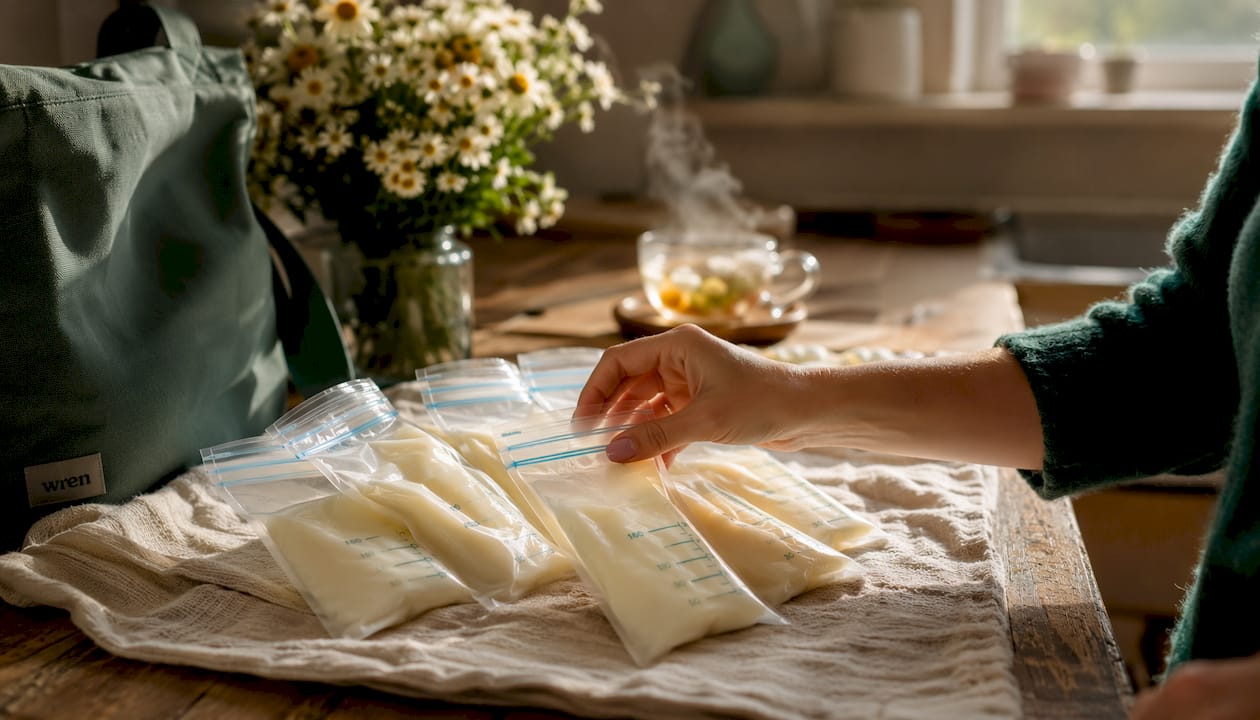
Gusseted bases give these bags a distinct advantage during filling: they sit upright on a worktop without tipping. Once sealed and frozen, they flatten into the same brick shape as standard bags. Capacity tends to run slightly higher, often up to 250ml, which suits parents building a larger freezer stash.
Key features:
- Self-standing base for hands-free filling
- Secure zip or slider seal
- Larger labelling area than flat bags
Pros: Easier to fill solo, good for higher-volume sessions. Cons: Slightly bulkier before freezing, which can make fridge storage less tidy.
3. Temperature-sensing bags
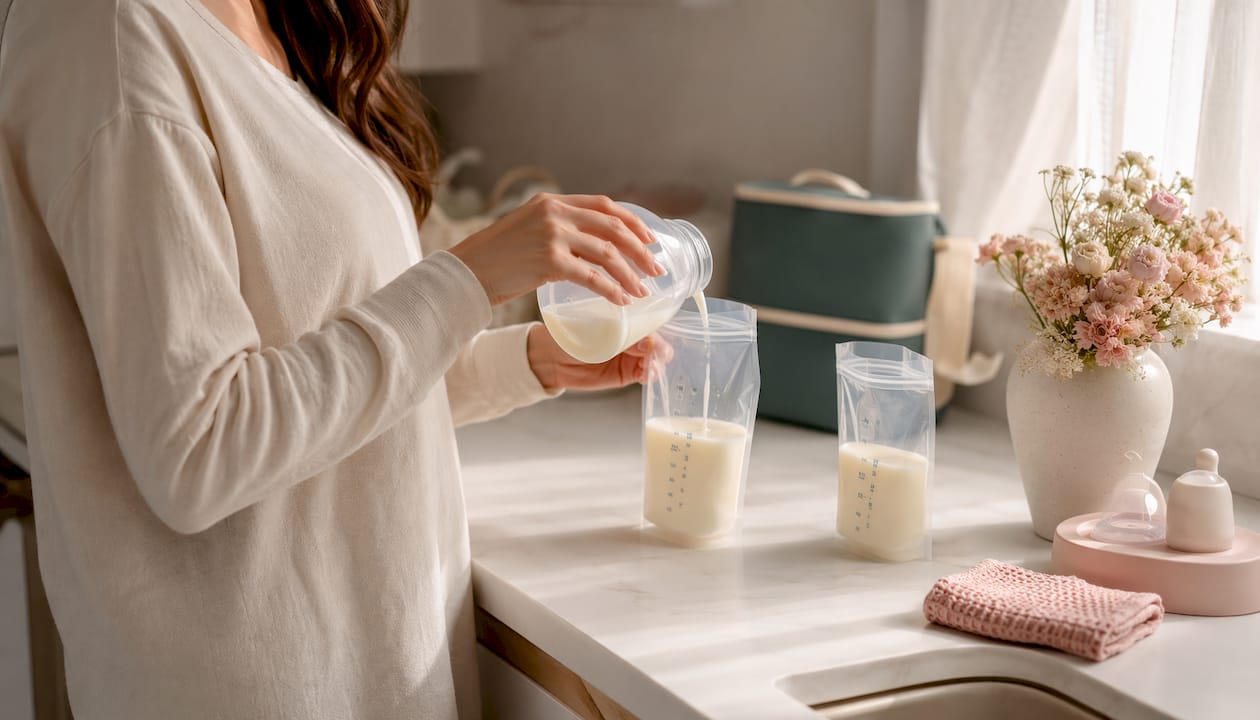
A newer category, these bags include a colour-change strip that indicates whether the milk is at a safe temperature. Useful for parents who transport expressed milk and want a quick visual check without a thermometer.
Key features:
- Colour-change temperature indicator
- Standard zip seal
- Compact design for travel
Pros: Added safety reassurance on the go. Cons: Higher price per bag, and the indicator does not replace proper storage thermometers for home freezer use.
4. Reinforced PET/LDPE bags
Bags with a reinforced outer PET layer over an LDPE inner offer noticeably better tear resistance than thinner single-layer options. This matters most for parents who freeze large quantities and handle bags repeatedly during stash rotation. The trade-off is a marginally higher price per unit.
Key features:
- Dual-layer construction for durability
- Easy-tear pour spout for mess-free defrosting
- Generous labelling panel
Pros: Reduced risk of puncture or split during freezer handling. Cons: Not always available in supermarkets; usually ordered online or from a pharmacy.
Pro Tip: When building a freezer stash, lay filled bags flat on a baking tray to freeze solid before stacking. This keeps the bricks uniform and prevents bags from fusing together.
5. Recyclable and reusable options
Most UK storage bags are designed for single use, but a small number of brands offer bags made from recyclable materials or purpose-built reusable pouches with clip seals. These reduce plastic waste over time, though they require thorough sterilisation between uses and carry a higher upfront cost.
Key features:
- Clip or reinforced zip seal
- Dishwasher-safe or steriliser-compatible (check manufacturer guidance)
- Often sold in smaller sets
Pros: Lower long-term environmental footprint. Cons: Sterilisation adds time; not all are compatible with standard bottle sterilisers.
| Feature | Single-use bags | Reusable bags |
|---|---|---|
| Upfront cost | Low | Higher |
| Per-use cost | Ongoing | Decreases over time |
| Hygiene | Pre-sterilised | Requires sterilisation |
| Freezer performance | Flat-freeze ready | Varies by design |
| Environmental impact | Higher waste | Lower waste |
How to choose the right breast milk storage bags for your needs
Not every bag suits every routine. These are the factors that actually make a difference when selecting from the options available in the UK.
Material safety. Look for bags labelled BPA-free and phthalate-free. UK health guidelines for infant feeding products require food-grade plastics, so reputable brands will state this clearly on the packaging. If the label does not confirm it, move on.
Capacity. Most standard bags hold 150–180ml, which covers a typical single pumping session. If you regularly express more than 180ml at a time, look for bags rated to 250ml. Overfilling a bag past its stated capacity is one of the most common causes of seal failure.
Sealing reliability. Double-zip seals outperform single-zip designs for freezer use. Run a finger along the seal after closing to confirm it is fully engaged before laying the bag flat. Some bags also include a colour-change seal indicator.
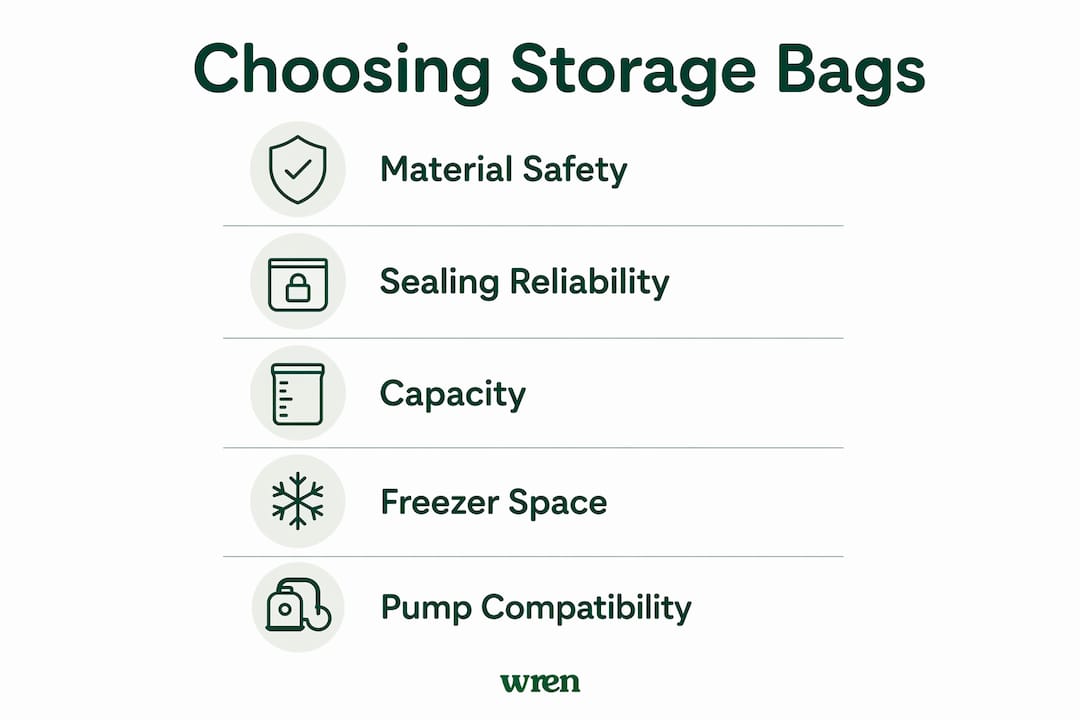
Freezer shape and space. Flat-freeze bags are far more space-efficient than rigid containers. Bags that form a uniform brick shape stack in a drawer or door shelf without wasted gaps. Check whether the bag has a gusseted base, which helps it stand during filling but still flattens once frozen.
Labelling space. Most bags include measurement markers and a labelling area for date, time, and volume. The size of that space varies considerably. If you use a fine-tip marker and write small, most bags work fine. If you prefer a standard biro, check that the panel is large enough before committing to a bulk pack.
Pump compatibility. Some bags attach directly to breast pump flanges, removing the need to transfer milk from a collection bottle. This reduces spillage risk and saves time. Check your pump brand’s compatibility list before buying bags marketed for direct attachment.
Pack size and cost. Packs of 25–50 bags cover most parents for two to four weeks of regular expressing. Buying in bulk reduces the per-bag cost, but only if you are confident in the brand. Start with a smaller pack to test fit, seal quality, and labelling before ordering in quantity.
Pro Tip: Keep a small stock of two different bag brands. If one batch has a seal issue, you have a backup without interrupting your storage routine.
For more detail on safe storage practices, including fridge and freezer duration guidelines, the My-wren blog covers the full picture.
Materials, safety standards, and storage best practices
What UK bags are made from
Breast milk storage bags in the UK are typically made from food-grade, BPA-free polyethylene, usually low-density polyethylene (LDPE) for the inner layer. Higher-specification bags add a polyethylene terephthalate (PET) outer layer for additional strength. Both materials are approved for food contact and do not leach harmful chemicals into milk under normal storage conditions.
Glass is an alternative for fridge storage and is genuinely inert, but it carries real risk in freezer conditions. Plastic bags are preferred for freezer use because they flex rather than crack as milk expands during freezing, and they allow milk to be frozen flat, which saves space and speeds up thawing.
Safety certifications to look for
- BPA-free and phthalate-free: stated on packaging; mandatory for reputable UK brands
- Food-grade material: confirmed by CE marking or equivalent food-contact certification
- Pre-sterilised: bags sealed in sterile packaging, ready to use without washing
Storage duration guidelines
The NHS advises that expressed breast milk can be stored:
- At room temperature (up to 25°C): up to 4 hours
- In the fridge (at 4°C or below): up to 8 days, though NHS guidance recommends using it within 3–5 days for best quality
- In a freezer (at -18°C or below): up to 6 months
Key safety and usage tips:
- Always wash hands before handling bags or expressed milk
- Label every bag with the date and volume before sealing
- Leave a small gap at the top of the bag before sealing to allow for expansion during freezing
- Thaw frozen milk in the fridge overnight or under cool running water; never microwave
- Do not refreeze thawed breast milk
- Discard any milk left in the bag after a feed
Higher prices in breast milk storage bags often reflect reinforced materials and additional features such as pour spouts or temperature-sensing strips, rather than simply better safety. A mid-range bag with a solid double-zip seal and BPA-free construction meets all practical requirements for the majority of parents.
If you are returning to work and managing a pumping schedule alongside a full day, the breastfeeding tips for returning to work guide covers how to integrate storage into a realistic daily routine.
My-wren supports your full pumping and storage routine
Choosing the right storage bags is one part of a pumping setup that works. My-wren’s Hands-Free Double Electric Breast Pump and Hands-Free Electric Breast Pump are designed to collect milk efficiently and transfer it directly into storage bags with minimal fuss, whether you are at home or at work. The range also includes a Lactation Massager to support milk flow before and during a session, Bamboo Reusable Breast Pads for everyday comfort, and a Nipple Bubble with storage case and bag for nipple care between feeds. Every product is built to fit a real pumping routine, not an idealised one. Browse the full breastfeeding accessories range to find what fits your setup, or explore breastfeeding kits and bundles if you are building a complete kit from scratch.
Key takeaways
The most reliable breast milk storage bags in the UK combine BPA-free food-grade material, a double-zip seal, and a flat-freeze design that keeps freezer space organised.
| Point | Details |
|---|---|
| Material safety is non-negotiable | Choose bags confirmed as BPA-free and phthalate-free; reputable UK brands state this on the packaging. |
| Double-zip seals reduce leakage risk | Dual-zip closures outperform single-zip designs, particularly for freezer storage and repeated handling. |
| UK packs cost £5.99 | Standard packs of 36 bags are available at this price; higher prices usually reflect reinforced materials or added features. |
| Flat-freeze design saves space | Bags that form uniform bricks stack efficiently and thaw faster than rigid containers. |
| My-wren pumps pair with storage bags | My-wren’s hands-free electric breast pumps are designed to transfer milk directly into storage bags with minimal spillage. |


