


5 Step Routine to Improve Milk Letdown in Minutes With Pump Tips


The fastest way to trigger let-down is to combine slow breathing with warmth and gentle stimulation. Take five slow nasal breaths, apply a warm compress to the breast for a minute, then start light massage while looking at a photo of your baby or breathing in something that smells of them. Do this before every session and your body starts to recognise the pattern. The rest comes down to timing, technique and knowing what “working” actually looks like.
TL;DR:
- Using consistent sensory cues like a photo, scent, or song can train your body to trigger let-down more reliably over time.
- Relaxation techniques such as slow breathing and warm compresses can significantly improve oxytocin release by reducing stress and tension.
- Staying on the breast or pump for several minutes after flow slows boosts the chances of multiple let-downs and increased milk output.
- Proper flange fit and pump part maintenance are crucial, as discomfort and pain can inhibit milk ejection by raising cortisol levels.
- A forceful milk flow may require different strategies like laid-back positioning or paced feeding, and persistent issues should be discussed with a lactation professional.
Table of Contents
- What is the let-down reflex and why does it matter?
- How do you know let-down is actually happening?
- Practical techniques to trigger let-down before and during feeding
- What should you change when you’re pumping without baby?
- Coping with a forceful or overactive let-down
- When should you seek professional help?
- Every let-down is different, and that’s the point
- Where Wren’s products fit into your routine
- Sources
- FAQ
What is the let-down reflex and why does it matter?
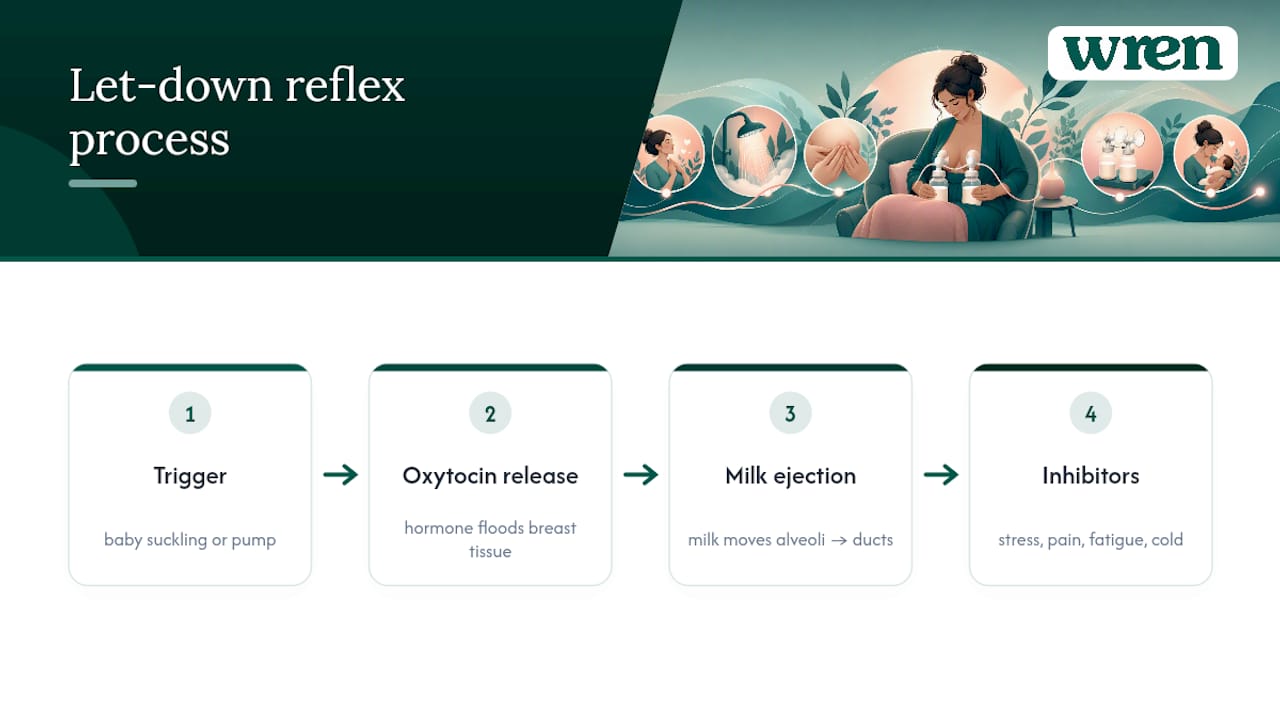
The let-down reflex, or milk ejection reflex, is the release of milk from the alveoli into the ducts, triggered by oxytocin flooding the breast tissue. Your baby’s suckling, or the suction of a pump, signals your brain to release the hormone. Stress hormones work against it: cortisol and adrenaline can blunt oxytocin’s effect, which is why a tense pumping break at work often produces less milk than a relaxed feed at home; small self-care rituals that reduce stress and support breastfeeding can make all the difference, as explained in Managing Postpartum Hair Loss – Effective Solutions for Recovery - Joel C Ma Hair Studio.
Here’s what surprises a lot of mothers: the physical sensation of let-down (tingling, fullness, sometimes a slight ache) fades for many women after weeks or months of breastfeeding, even though milk is still flowing normally. That’s normal, not a fault. Your milk ejection reflex is also a conditioned reflex — it can be trained to respond to consistent cues, the same way a kettle boiling makes you reach for a teabag without thinking. Pain, fatigue, embarrassment and cold all interfere with it, which is exactly why comfort and routine do so much heavy lifting here.
How do you know let-down is actually happening?
Sensation is an unreliable guide, so look for function instead. Watch for your baby’s swallowing pattern shifting from quick, shallow sucks to slower, deeper ones with audible gulping, or check for milk visible at the corner of their mouth. If you’re pumping, the giveaway is bottle volume: short bursts of spray followed by a slower, steady drip.
Many women stop feeling the tingle of let-down entirely after the early weeks, and chasing that sensation can create needless anxiety that then blocks the very reflex you’re trying to trigger. Timing matters too. A first let-down often happens within one to four minutes, but a second or even third let-down can arrive later in the session, so stopping the moment flow slows is usually premature. Staying on the breast or pump for another few minutes after things quiet down frequently unlocks more milk.
Practical techniques to trigger let-down before and during feeding
Most of what works falls into four categories: calming the nervous system, warming the tissue, physical stimulation, and sensory conditioning. Used together, they consistently outperform any single trick.
Relaxation first. Slow nasal breathing shifts your body into a parasympathetic state, the physiological opposite of the fight-or-flight response that suppresses oxytocin. Drop your shoulders, unclench your jaw, and give yourself thirty seconds before you even pick up the baby or the pump.
Warmth second. A warm compress, a warm flannel, or a few minutes under a warm shower dilates the milk ducts and eases the initial flow. A warm (not hot) drink beforehand does the same from the inside.
Touch third. Gentle circular massage from the outer breast toward the nipple, light nipple rolling, and long, slow strokes toward the areola all stimulate the nerve pathways that signal oxytocin release. Once milk starts moving, breast compression (a firm squeeze held for a few seconds, then released) helps sustain flow rather than start it.

Sensory and conditioned cues fourth. Skin-to-skin contact, holding a piece of your baby’s clothing, or looking at a photo all use the same oxytocin pathway that responds to sight, scent and sound. Repeating the same small ritual (the same chair, the same warm drink, the same song) before every session trains your body to respond to that ritual alone over time.
A simple pre-session routine looks like this:
- Five slow nasal breaths, shoulders relaxed.
- Warm compress or flannel on the breast for one to two minutes.
- Gentle massage in circular motions, moving toward the nipple.
- Sensory cue: photo, scent, or skin-to-skin contact.
- Begin feeding or pumping, then apply compression once flow slows.
Pro Tip: Pick one song and play it every single time you pump, even just from your phone. After a couple of weeks, that song alone starts to prime let-down, no compress or massage required.
What should you change when you’re pumping without baby?
Pumping asks your body to respond to a machine rather than a warm, familiar baby, so the conditioning above matters even more. A few adjustments make a measurable difference:
- Use the same sensory cues every session: a photo of your baby, a piece of their worn clothing, or a recording of their cry or coo.
- Double pump rather than single pump. It saves time and the added stimulation tends to trigger let-down faster than one side alone.
- Check your flange size, valves, membranes and tubing regularly. A poor flange fit or worn part causes pain, and pain releases cortisol, which works directly against the oxytocin you’re trying to release.
- Mimic your baby’s natural rhythm: a faster, lighter “stimulation” mode for the first minute or two, then switch to a slower, deeper “expression” mode once flow starts.
- Avoid maxing out the suction dial. More pressure isn’t more milk; it usually just means more pain.
- Try hands-on pumping: massage and compress the breast while the pump runs, and keep going for a minute or two after flow slows to catch a second let-down.
If flange fit or pain is a recurring issue, Wren’s guide on pump discomfort walks through sizing and troubleshooting in more depth, and the guide to maximising expression covers hands-on technique step by step.
Coping with a forceful or overactive let-down
Some mothers have the opposite problem: milk arrives too fast and too hard. Signs include your baby gagging, coughing, pulling off repeatedly, or bringing up a lot of milk after feeds.
A few immediate tactics help in the moment:
- Try laid-back feeding, letting gravity slow the flow rather than fighting it.
- Hand express or pump for thirty to sixty seconds before latching baby, to take the initial spray off.
- If bottle feeding expressed milk, use paced bottle-feeding so baby controls the pace.
- Burp frequently and use breast compression sparingly rather than to force more flow.
If forceful let-down is a persistent pattern rather than an occasional one, it can point to oversupply that may need a planned adjustment, which is worth discussing with a lactation consultant rather than managing alone.
When should you seek professional help?
Get support if your baby isn’t gaining weight well, if you’re in persistent pain beyond the first few days, if you notice a hard, red, painful area on the breast (a possible blocked duct or mastitis), or if none of these measures shift things after a week or two of consistent effort.
In the UK, an IBCLC-qualified lactation consultant, your GP, or your health visitor are the right first calls. Bring a feeding or pumping log, your pump settings, and a clear description of symptoms. Always check with a health professional before trying medications or herbal galactagogues, since some interact with other medicines or existing conditions.
Every let-down is different, and that’s the point
Variation isn’t a sign you’re doing something wrong. Stress is physiological, not a character flaw, and a bad let-down day after a bad night’s sleep is your nervous system doing exactly what it’s designed to do. Comparing your sensations or your output to another mother’s is one of the least useful things you can do with your energy.
What tends to help most is treating this as a skill to build rather than a switch to flip: try the ritual, stick with it for a fortnight, and adjust one variable at a time. If you hit a stall that consistent technique doesn’t fix, a lactation consultant will spot in minutes what takes weeks to work out alone. Wren’s own guides, including the one on exclusive pumping, exist to fill the gap between “try this” and professional support, not to replace it.
— Paul
Where Wren’s products fit into your routine
Technique does most of the work, but the right tools make that technique easier to repeat every single day. Wren’s Lactation Massager is built for exactly the massage-and-warmth step described above: it eases tension in the breast tissue and helps encourage let-down before you even pick up a pump, without you needing two free hands to do it properly.
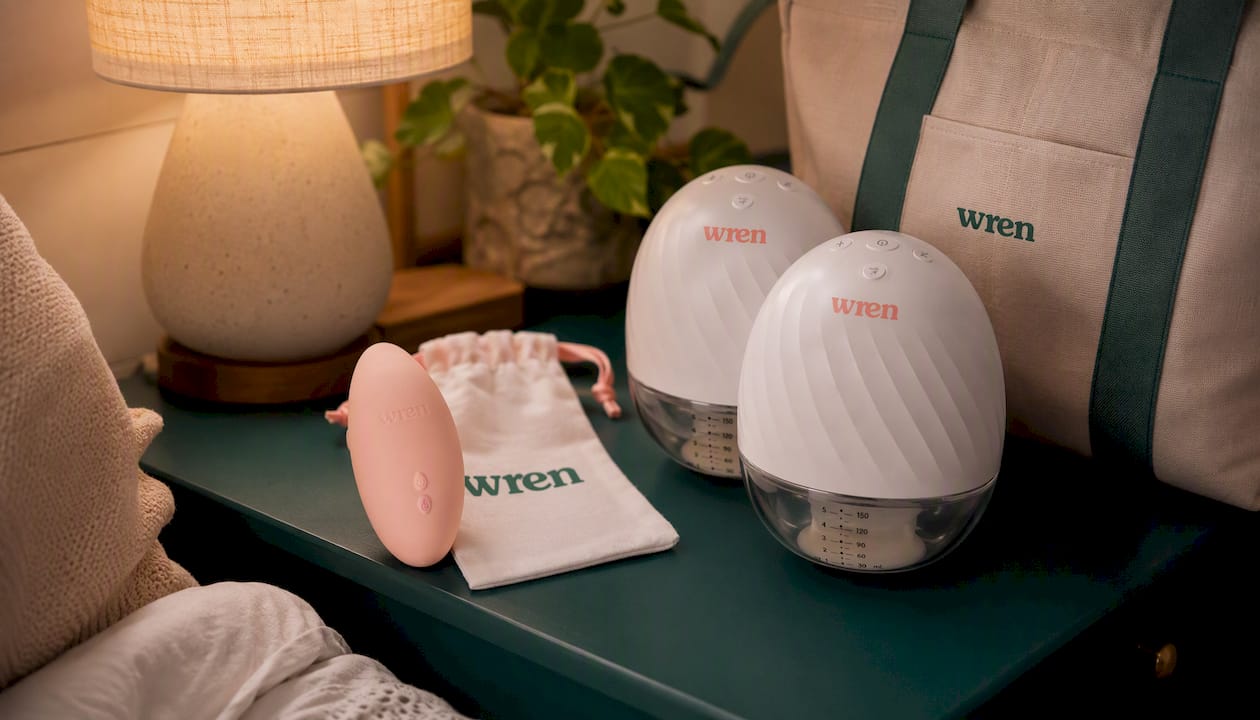
For expressing itself, Wren’s Hands-Free Double Electric Breast Pumps let you double pump discreetly under clothing, which supports the stimulation-then-expression rhythm that genuinely speeds up let-down, while freeing your hands for the compression technique that helps catch a second let-down. Reach for the massager when tension or a slow start is the problem; reach for professional support when pain, poor weight gain, or persistent low output continue despite consistent technique. Prices for both are listed in £ on the shop website, with no guesswork needed on checkout. If you’re ready to build a comfort-led pumping routine, start by browsing the Lactation Massager and pairing it with a hands-free pump that fits your day.
Sources
- Let-down Reflex: Too slow? - KellyMom
- The let-down reflex and your milk flow | Australian Breastfeeding Association
- How to Recognize and Optimize Your Milk Letdown Reflex: Guide for Nursing & Pumping Mothers — Cleveland Clinic
- Scientific literature on oxytocin and milk ejection (NCBI PMC)
FAQ
How do you stimulate a milk letdown?
Combine slow breathing, warmth (a compress or warm shower), gentle breast massage, and a consistent sensory cue like a photo or scent of your baby, repeated in the same order every session.
How do you trigger a second letdown while pumping?
Keep pumping or hand expressing for a couple of minutes after flow slows, and use hands-on massage and compression during that quieter phase. A small study found that pairing guided relaxation with viewing a baby photo increased pumping output in mothers of hospitalised infants.
What can trigger a milk letdown besides feeding directly?
Skin-to-skin contact, hearing your baby cry, warmth, gentle massage, and even a consistent routine like the same song or drink before pumping can all trigger oxytocin release and let-down independently of active feeding.
How long does it take to stimulate letdown?
A first let-down usually arrives within one to four minutes of stimulation, though a poor flange fit, pain, or stress can delay it; a second let-down may take several minutes longer to appear.
Can pumping equipment affect how well letdown works?
Yes. An ill fitting flange or worn valve causes pain, which raises cortisol and works against oxytocin, so checking pump parts regularly matters as much as any relaxation technique.


