


Rehearse Two Weeks: UK Pumping Schedules for Work That Keep Supply


For a standard 8‑hour workday, aim for three pumps at roughly 2.5 to 3‑hour intervals, with 15 to 20 minutes of active expression per session and a full 30 to 40 minutes once you count setup and cleaning. A 10‑hour shift usually needs a fourth pump to avoid long gaps, and nursing right before and after work covers the rest of your daily removals. Rehearse the whole routine at home for two weeks before your actual return date.
TL;DR:
- Most mothers should aim for three pumping sessions during an 8-hour shift spaced roughly three hours apart to maintain supply.
- A 10-hour shift usually requires four pumps to prevent long gaps, with specific times like 9:00am, 12:00pm, 3:00pm, and 6:00pm.
- Pumping sessions should last 30 to 40 minutes total, with only 15 to 20 minutes active expression, accounting for setup and cleaning.
- For night shifts, aligning pumps with sleeping and waking hours, rather than clock time, optimizes milk output.
- Practicing the routine two weeks before returning to work helps refine timing, storage, and coordination with caregivers.
Table of Contents
- Sample pumping schedules for 8‑hour, 10‑hour and night shifts
- How often should you pump and for how long?
- Practical tips for pumping at work: space, rights and letdown
- Maintaining supply and fixing drops before they become a problem
- Rehearse the routine before you’re back at work
- How Wren supports the work‑pumping routine
- A realistic take on the first fortnight back
- Find the right pump for your work routine
- Sources
- FAQ
Sample pumping schedules for 8‑hour, 10‑hour and night shifts
A schedule only works if it matches your actual hours, not a generic template. Here’s how the maths breaks down for the shift patterns most working mothers ask about.
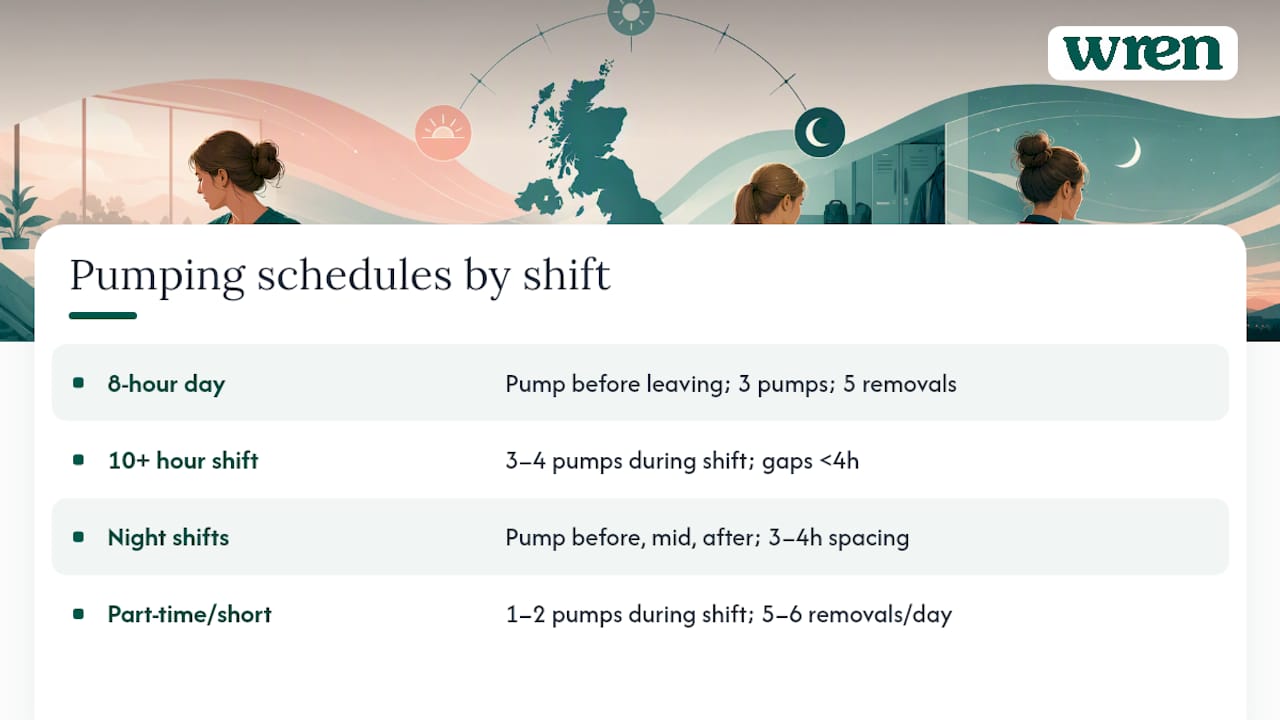
1. An 8‑hour day with a commute. Nurse or pump right before you leave the house, say 7:00am. At work, pump around 9:30am, 12:30pm and 3:30pm, spacing each session roughly three hours apart, which matches the example schedule Cleveland Clinic recommends for a typical shift. Nurse again as soon as you’re home, ideally within an hour of walking in. That gives you five total removals across the day without anyone rushing a session.
2. A 10‑hour or longer shift. Three pumps leaves too large a gap somewhere in a 10 or 12‑hour day, so plan for three to four sessions during the shift itself. A workable spread is 9:00am, 12:00pm, 3:00pm and 6:00pm, keeping every gap under four hours. Longer shifts are exactly where a dedicated newborn schedule guide helps if you’re also still in the early weeks postpartum, when your body responds better to tighter spacing.
3. Night shifts. Align pumps to your body’s rhythm rather than the clock on the wall. If you sleep during the day, pump once before your night shift starts, again roughly midway through, and once more before you go to sleep after your shift ends. The goal is the same three‑to‑four‑hour spacing, just rotated around your actual waking hours.
4. Part‑time or short shifts. On a five or six‑hour shift, one or two pumps plus nursing before and after may be enough. Count your total daily removals rather than obsessing over the work‑hours figure alone. Five to six removals across 24 hours is a reasonable target for most established feeding patterns.
How often should you pump and for how long?
Three pumps across an eight‑hour separation, plus nursing before and after work, gives most mothers the four to five daily removals that keep supply steady. The exact interval depends on your baby’s age and how established your supply is.
- Newborns and early returners often need tighter spacing, closer to every 2.5 hours, because supply is still calibrating to demand.
- Once supply is well established, typically after several months, longer gaps between pumping sessions tend to work without any dip.
- Occasional longer gaps between pumping are generally fine if comfort and output stay consistent, but making them a daily habit can lead to issues.
Statistic to remember: a pumping session should run 30 to 40 minutes total, with only 15 to 20 minutes of that being active expression. The rest is setup, cleaning and storage, and it’s the bit most new returners forget to budget for.
Practical tips for pumping at work: space, rights and letdown
Getting the logistics right matters as much as the timing. Start with the space itself: ask for a private space that offers privacy, a plug socket, a flat surface for your kit, and access to refrigeration or a cooler bag if refrigeration isn’t available. A toilet cubicle is not an acceptable substitute, whatever your employer might initially suggest.
For questions about your rights and how to raise this with your employer, ACAS is the standard UK reference point for both sides of the conversation, and it’s worth reading before you have that first meeting back.
Pack the same bag every day so nothing gets left behind:
- Pump, spare bottles or bags, and charging cable
- Cooler bag with ice packs
- Wipes or a quick‑clean spray for parts between sessions
- A hands‑free bra or top that makes access easy
- A spare top, just in case
Hand expressing for a minute or two before you switch the pump on can improve how well milk lets down, and a short calming routine, a photo of your baby, a voice note, even just closing your eyes for thirty seconds, often works better than staring at the clock.
Pro Tip: Warm your hands under the tap for thirty seconds before pumping. Cold hands on a cold flange genuinely slow letdown, and it’s the easiest fix nobody mentions.
For more on setting up the space itself, this collection of workplace pumping tips covers the conversation with HR in more depth.
Maintaining supply and fixing drops before they become a problem
Output varies through the day, and that’s normal, not a warning sign. Morning sessions tend to yield more than afternoon ones simply because supply has had all night to rebuild.
- Track daily totals, not single sessions. A rough guide some practitioners use is around 1 to 1.25 fl oz of milk needed for every hour you’re separated from your baby, useful for sanity‑checking your output without turning every pump into a stress test.
- Tighten spacing in the first month back. This is the highest‑risk window for a dip, and it’s usually solved by adding a short midday pump rather than overhauling the whole routine.
- Try power pumping if a dip persists. Ten minutes on, ten minutes rest, ten minutes on again, once a day for a few days, mimics cluster feeding and can nudge supply back up.
- Set a realistic freezer goal. One to two days’ worth of milk is genuinely sufficient once you’re feeding day to day; a bigger stash is nice but rarely necessary, and chasing one adds pressure you don’t need.
Rehearse the routine before you’re back at work
Two weeks of practice at home turns theory into something you can actually rely on. In week one, run the commute and time a full session from setup to storage so you know the real duration, not the estimate. In week two, practise labelling and cooling milk exactly as you will at your desk or in the car, and hand a bottle to your caregiver so the handover isn’t also a first for your baby.
On the actual day:
- Pack the bag the night before
- Tell whoever needs to know at work where and when you’ll be pumping
- Confirm where milk will be stored during the shift
- Note the real start and end time of each session so you can adjust the following week
More on the run‑up itself is in this guide to returning‑to‑work tips.
How Wren supports the work‑pumping routine
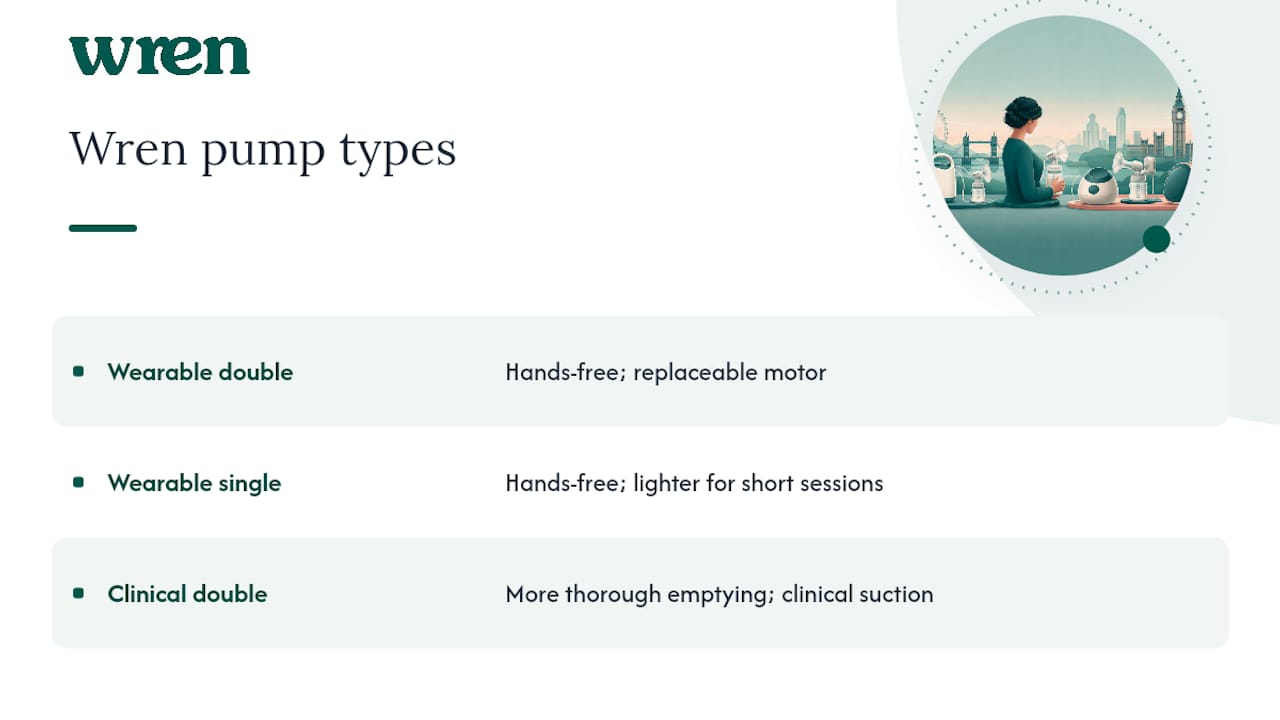
The schedules above only hold up if the kit behind them is reliable. Wren’s hands‑free double electric breast pump suits mothers who need to empty both breasts efficiently during a short desk break, while the hands‑free single pump works well for shorter sessions or a bag that needs to stay light. A replacement pump motor keeps suction consistent for double‑pump users, which matters more than most people expect once a motor starts to wear.
Wearable pumps make busy days genuinely feasible, though a clinical‑style double electric pump can empty the breast more thoroughly on days when output really matters. Match the tool to the shift, not the other way round.
A realistic take on the first fortnight back
The first two weeks back rarely go to plan, and that’s fine. The single most useful change is adding one extra midday pump the moment output dips, rather than waiting to see if it corrects itself. Most supply wobbles fix themselves with a small, boring adjustment, not a dramatic overhaul.
— Paul
Find the right pump for your work routine
There are plenty of ways to approach pumping at work, from clinical double pumps rented through the NHS to basic manual options, but most working mothers need something that fits a real desk, a real break, and a real bag. My-wren’s hands‑free double electric breast pump is built for exactly that: discreet enough for an office, efficient enough to keep a three‑pump day on schedule.

If portability matters more than double output, the hands‑free single pump is the lighter option for shorter sessions or a commute bag that’s already full. Existing double‑pump owners whose suction has started to fade can extend the life of their kit with a replacement motor rather than replacing the whole unit. Browse the full range at My-wren and pick the setup that matches your actual shift pattern, not just the one that looks best online. Prices across the range are shown in £ at checkout, with no hidden extras added later.
For broader postpartum recovery support alongside your pumping routine, this postpartum self‑care checklist covers the rest and stress‑management side that supply also depends on.
Sources
- Cleveland Clinic — Pumping at work: example schedule and helpful tips
- La Leche League International — Pumping milk
FAQ
What is a good pumping schedule for work?
For most 8‑hour workdays, three pumps spaced about 2.5 to 3 hours apart, plus nursing before and after your shift, is a solid starting point that keeps daily removals around four to five.
Is it better to pump for 20 minutes or 30 minutes?
Active expression of 15 to 20 minutes is typically enough once letdown is established, but plan for 30 to 40 minutes total once setup, cleaning and storage are included.
Is it okay to pump every 4 hours instead of every 3?
An occasional 4‑hour gap is usually fine if output and comfort stay normal, but making it a daily habit, especially in the first month back, raises the risk of a supply dip.
What’s a good breast pumping schedule for a 10‑hour shift?
Longer shifts generally need three to four pumps to keep every gap under four hours, for example around 9:00am, 12:00pm, 3:00pm and 6:00pm depending on start time.
How long should I practise my pumping schedule before returning to work?
Two weeks is a practical window to rehearse the commute, timing and storage steps, giving you time to adjust before the real first day back.


