


Best wearable breast pumps for work: UK guide 2026


For most parents returning to work in the UK, a hands-free wearable electric breast pump is the practical choice. The My-wren Hands-Free Electric Breast Pump fits inside a nursing bra, runs quietly enough for shared offices, and keeps parts to a minimum so cleaning between sessions stays manageable.
Why it suits most working parents:
- Quiet motor running at a noise level comparable to a low conversation
- Multiple sessions per charge on a standard wearable, sufficient for a typical office day
- Fewer parts to clean than a conventional double electric
Who this is for: parents returning to a desk role, clinic, or mobile job who need to express once or twice during a shift without leaving a meeting or finding a plug socket. The My-wren breastfeeding starter kit pairs the pump with the accessories covered below.
Table of Contents
- Why do wearable pumps suit workplace use?
- What to look for when choosing a pump for work
- Workplace practicalities and your rights in the UK
- Which My-wren products suit working parents?
- When is a conventional pump the better choice?
- What should you budget for a work pump in the UK?
- Key takeaways
- The routine that actually works
- My-wren: wearable pumps designed for working parents
- Useful sources
Why do wearable pumps suit workplace use?
A wearable pump sits inside the bra cup with no tubes, no trailing cable, and no need to hold anything in place. That hands-free freedom is the core advantage at work, whether you are at a desk in a shared open-plan office, on a video call, or moving between appointments.
Three common work scenarios where wearables outperform conventional double electrics:
- Shared office or hot-desk environment. A wired pump requires a private socket and a fixed seat. A wearable needs neither.
- Video calls. Motor noise matters here. A wearable running at 40–46 dB is far less audible than a conventional pump.
- Mobile or clinical roles. Carrying a full pump kit between wards or client sites is impractical. A wearable fits in a bag pocket.
The trade-off is real, though. Wearable pumps are designed for quiet, cordless operation; conventional double electrics usually offer stronger suction and greater capacity. If you express very frequently or rely on pumping to maintain supply, that difference matters. More on that in the section on when a wearable may not be the right fit.

What to look for when choosing a pump for work
The comparison dimensions below are the ones that actually affect daily use. Headline features matter less than how a pump performs across a full working week.
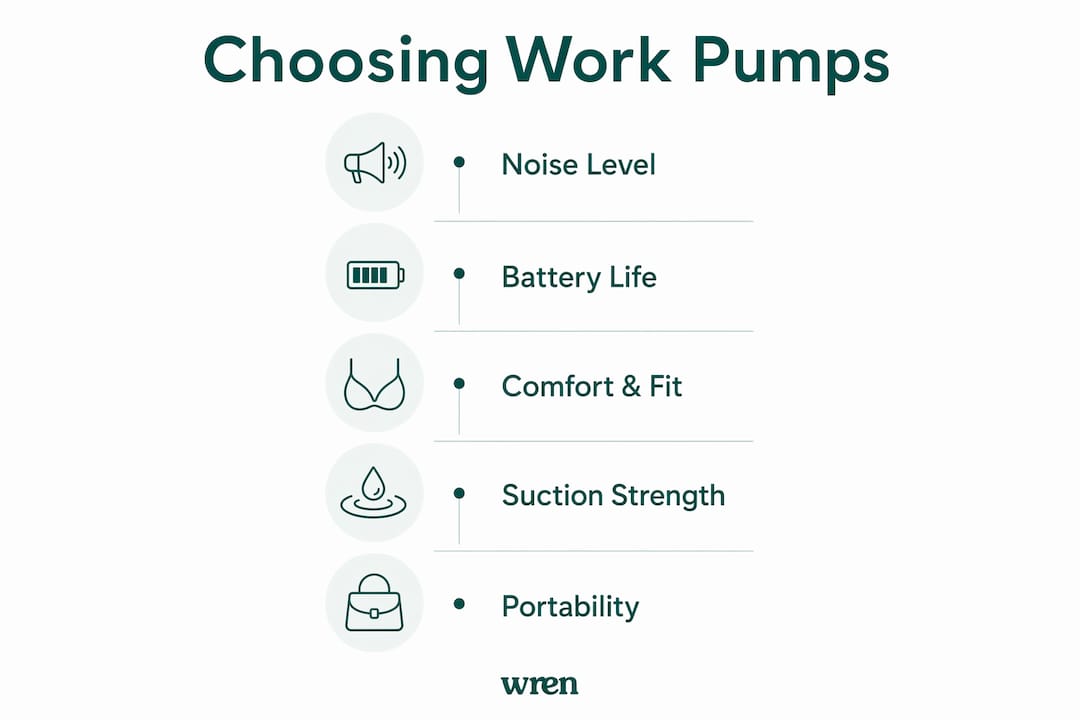
| Dimension | What to look for | Practical target |
|---|---|---|
| Noise level | Motor dB rating at standard suction | Low noise level suitable for shared office use |
| Battery life | Sessions per charge | Enough sessions per charge to cover a typical work shift |
| Parts to clean | Number of milk-contact components | Fewer parts = faster cleaning between sessions |
| Flange fit | Shield sizes and silicone liner options | Default flanges are often 24mm; check your nipple diameter |
| Spare parts | Availability of valves, seals, shields | Confirm spares are stocked in the UK |
| Warranty | Length and what it covers | Check return policy before purchasing |
Suction strength matters most for exclusive pumpers. For occasional expressing at work, comfort and fit tend to have a bigger effect on output than raw suction power. Prioritise low noise, solid battery life and a small number of parts to clean when your primary use case is the office.
Pro Tip: Before your first day back, do a full trial at home wearing the bra and top you plan to wear at work. Vibration can travel through fabric and milk hitting the collection cup is audible even when the motor is quiet, so consider practical noise-minimisation tips from Sleep-Zone Air Purification to reduce audible pump cues at home. Testing at home reveals real-world discretion issues before they become a problem in a meeting.
Workplace practicalities and your rights in the UK
Notify your employer in writing before you return, and request a risk assessment. This is the single most important step. Written notification triggers a mandatory employer risk assessment and makes it easier to secure a private space, fridge access, and paid expressing breaks as formal reasonable adjustments rather than ad-hoc favours.
Step-by-step setup before day one:
- Send written notification to your line manager or HR, stating you intend to express milk at work and requesting a risk assessment.
- Arrange a trial run, ideally a Keep in Touch day, to test the space, fridge, and your pump routine before your official return.
- Confirm a private room with a lockable door. A toilet is not a suitable space for expressing milk.
- Set up milk storage: label containers with your name and date, and confirm the fridge reaches 4°C or below. The NHS advises expressed milk can be stored in a fridge for up to 5 days at 4°C or lower.
- Plan your cleaning routine. Keep a spare set of pump parts at work so one set can dry while you use the other.
Pro Tip: Frame your request as a reasonable adjustment rather than a personal favour. This triggers formal procedures and makes it significantly easier to secure a non-toilet private space and dedicated fridge access. See the Workfeed rights at work guidance for the exact language to use.
Which My-wren products suit working parents?
Wren’s wearable pumps combine discreet noise levels, reliable battery performance, and a low parts count, the three criteria that matter most for workplace use. The Hands-Free Electric Breast Pump suits parents who express once or twice per shift; the Hands-Free Double Electric Breast Pump cuts session time for those who need to express both sides simultaneously.
Core product features to confirm before buying:
- Noise level at standard suction setting
- Number of milk-contact parts requiring daily cleaning
- Battery sessions per charge and USB charging compatibility
- Flange sizes included and whether silicone liners are available
Accessories that make a real difference at work:
- Bamboo Reusable Breast Pads: absorbent and discreet under work clothing; reduces leak anxiety between sessions
- Breast Shield 25mm Flange: keeping a spare flange at work means a worn or misplaced shield never cancels a session
- Lactation Massager: helps trigger let-down faster and can relieve blocked ducts during a short work break
- Nipple Bubble with storage case and bag: protects nipples during commuting and keeps accessories clean inside a work bag
Practical guidance on fit and cleaning is available on the My-wren blog for parents setting up their pump routine for the first time.
When is a conventional pump the better choice?
Choose a conventional double electric or a hired hospital-grade pump when you express very frequently or exclusively pump multiple times per day. Wearable pumps trade power for discretion; that trade-off is acceptable for one or two sessions at a desk, but less so for parents whose supply depends on consistent, efficient emptying.
Decision indicators that point away from a wearable:
- Exclusively pumping six or more times daily
- Supply-management concerns where maximum suction matters
- Needing faster emptying due to time constraints between feeds
A hybrid approach works well for many parents: a conventional double electric at home for the early morning and evening sessions, and a wearable for the one or two sessions during the working day. The hands-free double pump option from My-wren covers the middle ground for parents who want simultaneous double pumping with the portability of a wearable.
What should you budget for a work pump in the UK?
Plan for the initial pump purchase plus a small ongoing cost for spare parts. Valves and seals wear fastest with daily use; flanges may need replacing if sizing changes postpartum.
Typical UK cost bands:
- Entry level: £50–£100 for a basic wearable single pump; shorter warranty, fewer flange size options
- Mid range: £100–£180 for a wearable with USB charging, multiple suction modes, and spare parts availability
- Premium: £180–£300+ for hospital-grade suction, app control, and extended charging cases
Maintenance checklist for work use:
- Keep a spare set of valves and seals at work; these are the parts that wear fastest
- Store a second flange in your work bag in case sizing shifts
- Clean all milk-contact parts after every session; a pump setup and cleaning guide from My-wren covers the steps
- Open-system pumps are not suitable to share between users; buy new rather than borrowing
Key takeaways
A hands-free wearable pump with low noise operation and sufficient sessions per charge is the most practical choice for most parents expressing at work in the UK.
| Point | Details |
|---|---|
| Noise and discretion | Target 40–46 dB for shared office use; test with your actual work clothing before day one. |
| Battery and sessions | Most wearables provide 2–4 sessions per charge; confirm this covers your shift length. |
| Employer notification | Notify in writing before returning to work to trigger a formal risk assessment and secure a private space. |
| Spare parts at work | Keep spare valves, seals, and a second flange at your desk; these wear fastest with daily use. |
| My-wren recommendation | The My-wren Hands-Free Electric Breast Pump and accessories kit covers the core needs for workplace expressing. |
The routine that actually works
The conventional advice is to find a private room and schedule pumping breaks. That is correct, but it misses the detail that makes or breaks the routine: clothing. A wearable pump is only as discreet as the outfit around it. A loose-fit top over a well-fitted nursing bra conceals both the pump cups and any vibration far more effectively than a fitted shirt. Getting that combination right at home, before the first day back, removes the single biggest source of anxiety about pumping in a shared workplace.
The other underrated step is building a pumping schedule around your meeting calendar rather than around fixed clock times. Block the expressing slots in your diary the same way you would a meeting. Colleagues do not need to know what the slot is for.
My-wren: wearable pumps designed for working parents
My-wren builds wearable breast pumps and accessories specifically for parents who need to express at work without disruption. The Hands-Free Electric Breast Pump and Hands-Free Double Electric Breast Pump are the starting points for most working parents; the accessories range covers everything from spare flanges to bamboo breast pads and a lactation massager for faster let-down during short work breaks.
Before buying, check: spare flange sizes are available, the warranty covers at least 12 months, and the accessories you need are in stock. The breastfeeding accessories collection at My-wren includes everything needed to build a complete work kit. Browse the full pump range and add a spare cleaning set and a small storage bag for commuting at my-wren.com/collections/breast-pumps.
This article provides general information only. For advice specific to your situation, consult your midwife, health visitor, or a qualified lactation consultant, and check current UK workplace guidance directly with your employer or HR team.
Useful sources
- NHS: Breastfeeding and going back to work — NHS guidance on milk storage, fridge temperatures, and workplace facilities
- Workfeed: Mother Guide 04 — Your rights at work — University of Reading research project covering written notification, risk assessments, and reasonable adjustments
- Workfeed: Mother Guide 06 — Breast Pumps — Practical guidance on pump types, flange fit, and single-user considerations
- RUH NHS Trust: Advice on Breastfeeding Legal Rights — Factsheet covering employer obligations, risk assessment requirements, and flexible working rights
- Workfeed: Employer Guide 06 — Example Breastfeeding Policy — Template policy covering facilities, paid breaks, and storage arrangements
- My-wren: The ultimate guide to breast pumping — Practical setup, cleaning, and flange-fit guidance from My-wren


