


40 active minutes per hour: Power pumping schedule for UK parents


Power pumping can increase milk supply, and the classic “power hour” method (pump 20 minutes, rest 10, pump 10, rest 10, pump 10) is the routine to try. Do this once daily and most parents notice a change within 3 to 7 days. Avoid it in the very early postpartum weeks without clinical advice, and see an IBCLC if nothing shifts after a full week.
TL;DR:
- Power pumping is most effective when performed for a full hour once daily, with 40 minutes of active pumping divided into specific timed intervals.
- It typically produces noticeable increases in milk supply within 3 to 7 days, but response varies based on individual factors.
- Using a double electric pump, ensuring proper flange fit, and combining rest periods with massage or hand expression enhance results.
- For busy schedules, a shorter 30-minute version (10/5/5/5/5) can be equally effective when done consistently over several days.
- If no change occurs after a week of regular power pumping, consulting an IBCLC is recommended to check for underlying issues.
Table of Contents
- What is a power pumping schedule?
- Why does power pumping increase milk supply?
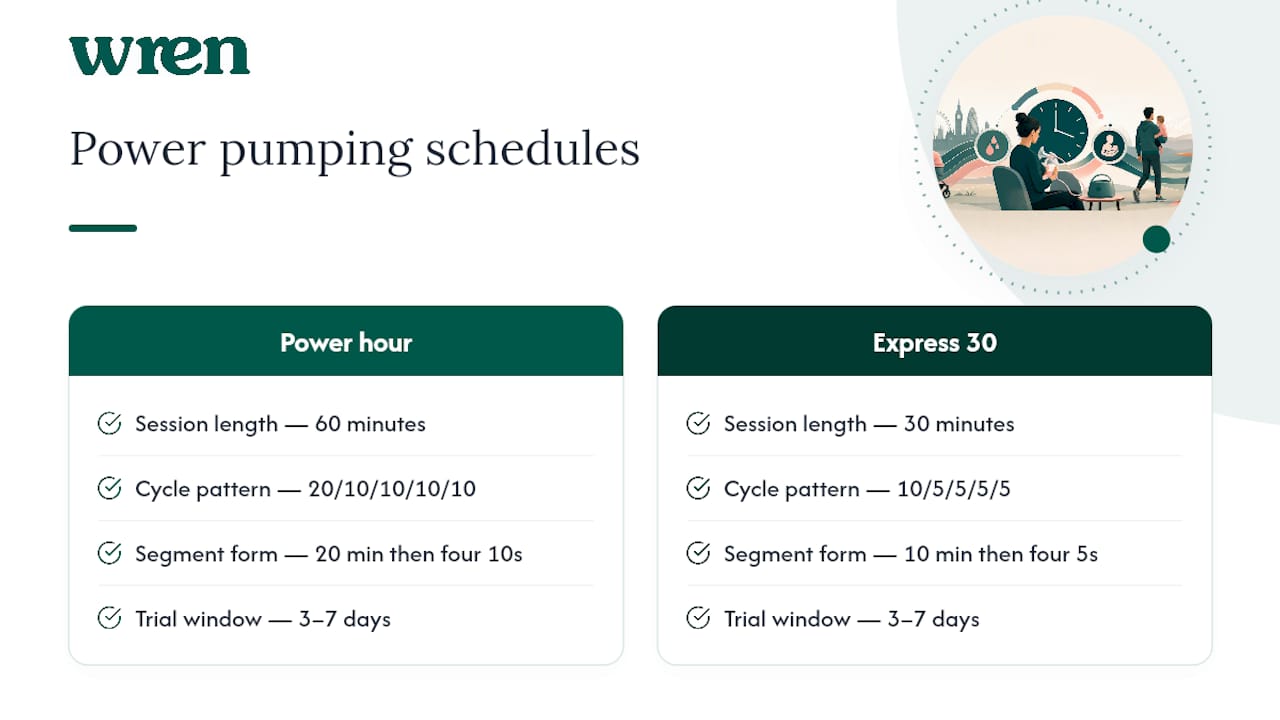
- The gold-standard one-hour power pumping schedule
- Shorter power pumping alternatives for busy schedules
- Sample power pumping routines for different lifestyles
- What equipment actually helps a power pumping session work
- Troubleshooting low output, sore nipples and oversupply
- When to stop and see an IBCLC or GP
- The short version: running a safe power pumping trial
- A publisher’s take on making power pumping work in real life
- Trial power pumping with the Main Pump Motor
- Sources
What is a power pumping schedule?
A power pumping schedule is a concentrated burst of pumping and resting, designed to copy what a baby does during a growth spurt: feeding hard and often for a short stretch, then settling back into a normal pattern. It’s not the same as simply pumping more often across the day, and it’s not the same as one long, extended session on the pump. The mechanism relies on short, repeated bursts of stimulation packed into a tight window, rather than steady, drawn-out demand.
That distinction matters for how you fit it into a day. Adding two extra 20-minute sessions spread hours apart doesn’t create the same effect as compressing stimulation into one concentrated hour. The repetition and the rest intervals are doing the work, not the total volume of time on the pump.
Power pumping tends to suit:
- Exclusive pumpers who’ve hit a plateau and want a targeted way to nudge output upward
- Parents heading back to work who need to build a freezer stash before the transition
- Anyone noticing a temporary dip in supply, often around growth spurts, illness, or a change in routine
- Parents whose baby has started sleeping longer stretches, reducing natural demand at the breast
It’s a short-term tool for a specific problem, not a permanent addition to your daily pumping routine.
Why does power pumping increase milk supply?
Milk supply runs on a supply-and-demand principle: the more consistently and completely milk is removed, the more your body makes. Two hormones drive this. Prolactin rises in response to stimulation and tells the breast tissue to synthesise milk. Oxytocin triggers the let-down reflex that moves milk out. Frequent, concentrated stimulation, repeated in a short window, pushes the physiology of prolactin signalling harder than the same amount of stimulation spread thinly across the day.
Power pumping mimics the pattern of cluster feeding, when a baby feeds repeatedly over an hour or two rather than at neat three-hour intervals. That repeated, close-together removal is read by the body as a signal to increase production, and it’s a pattern that genuinely raises prolactin output more than steady, evenly spaced sessions.
It doesn’t work identically for everyone. Response depends on how much breast tissue you have, hormonal factors, stress levels, hydration, and how established your supply already is. Some parents see a jump within days; others see a smaller change or none at all. Power pumping is a lever to pull, not a guarantee, and it works best as one part of a wider approach that includes good pump fit, feeding frequency, and rest.
The gold-standard one-hour power pumping schedule
The version most lactation professionals recommend, and the one referenced in NHS-affiliated patient guidance, breaks down like this:
- Pump for 20 minutes
- Rest for 10 minutes
- Pump for 10 minutes
- Rest for 10 minutes
- Pump for 10 minutes
That’s 40 minutes of active pumping within a 60-minute window.
Total active pumping time: 40 minutes out of every 60. This is the figure that separates power pumping from ordinary pumping sessions, where you’d typically pump for 15 to 20 minutes and stop.
Keep the pump running for the entire timed segment, even once the flow slows to a trickle. Maintaining suction for the full stretch, rather than stopping the moment milk stops flowing freely, is what sustains the hormonal signal. Use the rest periods for hand expression or breast massage rather than pumping.
Fit the power hour in by replacing one of your usual sessions, not stacking it on top of your existing routine. If you normally pump six times a day, one of those six becomes the power hour; the other five stay as they are. Piling extra pumping onto an already full day is a fast route to exhaustion and sore nipples, and it isn’t necessary for the method to work.
Track your output at each pump for the week: write down the volume from every session, not just the power hour. Most parents notice a shift somewhere between day 3 and day 7, though some take closer to two weeks to see a clear change. If your existing pumping routine already feels tight, our guide on building a pumping routine that sticks covers how to slot a power hour in without disrupting the rest of your day.
Shorter power pumping alternatives for busy schedules
Not every day allows for a spare, uninterrupted hour, and that’s fine. A shorter, express version keeps the same repeated stimulate-rest pattern on a smaller scale:
- Pump for 10 minutes
- Rest for 5 minutes
- Pump for 5 minutes
- Rest for 5 minutes
- Pump for 5 minutes
That’s roughly 30 minutes total, with 20 minutes of active pumping. It follows the same logic as the full hour, just compressed.
Whether to run this once or twice a day depends on your starting point and your schedule. If you’re already pumping frequently and just need a gentle nudge, one 30-minute session daily is often enough. If your supply has dropped more noticeably, or you have longer gaps between feeds during the day, two shorter sessions (morning and evening, for example) can give you two chances at that concentrated stimulation without needing to find a full free hour twice.
A few pointers for choosing between the two:
- If you can reliably block out 60 minutes once a day, the full power hour tends to produce a stronger response.
- If your day is genuinely fragmented, two 30-minute sessions beat one power hour you keep cancelling.
- Baseline output matters: parents already pumping close to their baby’s needs often see faster results from the shorter version than those starting from a lower supply.
- Consistency across 3 to 7 days matters more than which version you pick, so choose whichever one you’ll actually repeat every day.
Sample power pumping routines for different lifestyles
Exclusive pumper
- Keep your usual five or six sessions in place
- Swap one session, ideally your highest-yield time of day, for the full power hour
- Log output at every session in a notebook or app for the week
- Compare day 1 totals against day 7 totals rather than judging any single session
Working parent
- Run the 30-minute express version before your commute, when prolactin levels tend to be naturally higher
- If mornings aren’t workable, do it as your last pump before bed instead
- Two shorter sessions (one before work, one after) suit days with back-to-back meetings better than trying to protect a full hour at your desk
Stay-at-home parent alongside cluster feeding
- If your baby is already cluster feeding in the evening, don’t stack a power hour on top of that same window; choose a separate part of the day instead
- A morning power hour, while your baby naps or feeds on the other side, tends to fit more naturally around baby-led demand
- Adjust timing week to week as your baby’s feeding pattern shifts, rather than locking into one fixed slot forever
Our piece on combining breastfeeding with a pump schedule goes further into slotting sessions like these around a baby who’s still feeding directly.
What equipment actually helps a power pumping session work
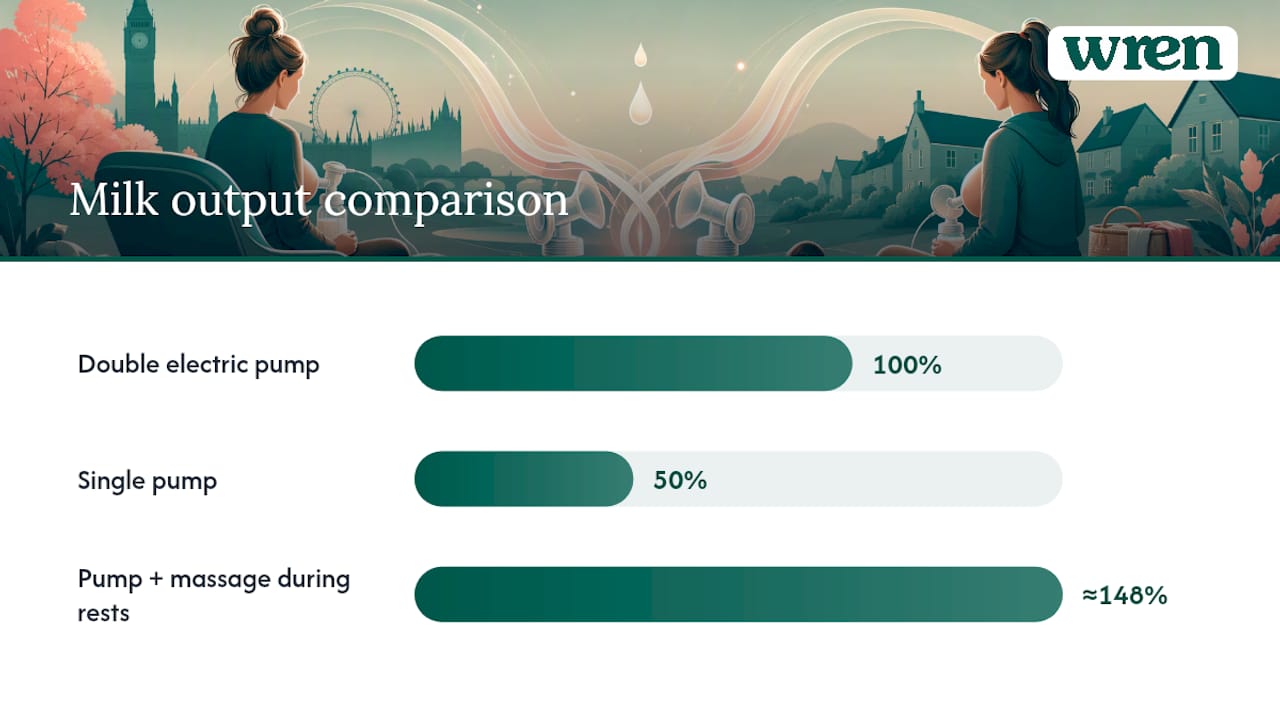
A double electric pump is worth prioritising for power pumping specifically, because you’re trying to maximise stimulation within a fixed window and single pumping simply halves your efficiency in that time. Removing milk from both breasts simultaneously also triggers a stronger let-down response than single pumping, which matters most during the tight, timed segments of the power hour.
Flange fit affects everything else. A flange that’s too small or too large causes friction, poor suction, and lower yield, which undermines the entire point of the exercise. Nipples should move freely in the tunnel without rubbing, and you shouldn’t see excessive areola being pulled in. If you’ve never measured properly, it’s worth checking before starting a power pumping trial rather than troubleshooting mid-week.
Hands-free pumping bras make the rest periods genuinely useful, since you can massage or hand-express without holding the pump in place.
A short hygiene checklist for a week of intensive pumping:
- Wash all pump parts after every session, or use a steam steriliser bag for speed between sessions
- Check tubing for condensation and dry it fully to avoid mould build-up
- Replace membranes and valves if suction feels weaker than usual, since worn parts reduce output regardless of technique
Pro Tip: Combine hand expression or breast massage with your rest periods rather than sitting idle. One clinical review found parents who massaged and hand-expressed alongside pumping produced roughly 48% more milk than pumping alone, and the rest intervals in the power hour are the perfect place to do it.
Troubleshooting low output, sore nipples and oversupply
Low output in the first day or two is normal and doesn’t mean the method isn’t working. Bodies need repeated signalling before production ramps up, so don’t judge the schedule by day one alone. If output stays flat by day three, check three things first: flange fit, pump suction strength, and whether you’re using massage during rest periods. Adjusting any of these often makes a bigger difference than the schedule itself.
Sore nipples usually point to an incorrect flange size or suction set too high. Drop the suction level slightly and recheck fit before assuming the discomfort is just something to push through.
Roughly 40 minutes of active pumping per session is the benchmark that distinguishes power pumping from ordinary sessions, but more isn’t automatically better. Overdoing frequency or duration can tip some parents into oversupply, which brings its own problems: engorgement, blocked ducts, and a higher risk of mastitis.
Watch for these red flags, which need prompt attention rather than more pumping:
- A fever, chills, or flu-like aching alongside breast pain
- A red, hot, or swollen area on the breast that’s spreading rather than settling
- Lumps that don’t soften with feeding, pumping, or massage over 24 hours
If you suspect mastitis or oversupply, seek medical advice promptly. La Leche League’s guidance on oversupply explains safe ways to keep removing milk without making inflammation worse, and our article on pumping through mastitis covers how to protect supply while treating an infection. If a full week of consistent power pumping produces no change at all, that’s the point to stop repeating the same routine and get it checked instead.
When to stop and see an IBCLC or GP
Contact an IBCLC if a full week of consistent, daily power pumping brings no increase in output. Continuing the same routine for a second or third week without a professional check rarely solves the problem on its own, since a plateau after a genuine week’s effort usually points to something the schedule alone can’t fix.
Some signs need medical attention immediately rather than waiting for a lactation appointment: a fever above 38°C, breast pain that’s severe or worsening, or redness that’s visibly spreading across the breast.
An IBCLC will typically check pump suction and flange fit, review your feeding or pumping frequency across the whole day, and ask about factors like thyroid function, hydration, stress, and any medications that can affect supply. Bring your output log from the week, note the times and durations of every session, and mention anything else that changed recently, from sleep to stress to your baby’s feeding pattern.
The short version: running a safe power pumping trial
Stick to the power hour (20/10/10/10/10) if you can protect the time, or the 30-minute express version (10/5/5/5/5) if you can’t. Choose one time of day, check your flange fit first, log your output at every session, and commit to 3 to 7 days before judging results. If nothing has shifted by day seven, stop guessing and speak to an IBCLC. Most parents who stay consistent see some movement within that window, but a lack of change isn’t a failure. It’s simply information about what to check next.
A publisher’s take on making power pumping work in real life
Practical experience helping parents build routines that actually survive a real week, rather than a perfect one on paper, is where most power pumping advice falls down. The schedule itself is simple. Sticking to it for seven consecutive days while juggling a baby, a job, and broken sleep is the hard part.
At My-wren, our mission is built around expressing with less friction, not more discipline. Product design should absorb the difficulty of a routine like this, not add to it. A pump with reliable suction and a comfortable fit makes the difference between finishing day seven and quietly giving up on day three.
— Paul
Trial power pumping with the Main Pump Motor
Consistency, not intensity, is what makes a power pumping schedule work, and that’s exactly what the Main Pump Motor is built to support. Its motor is designed to hold steady suction through longer timed segments, which matters most during the 20-minute opening stretch of the power hour, when flagging suction is what usually derails a session.
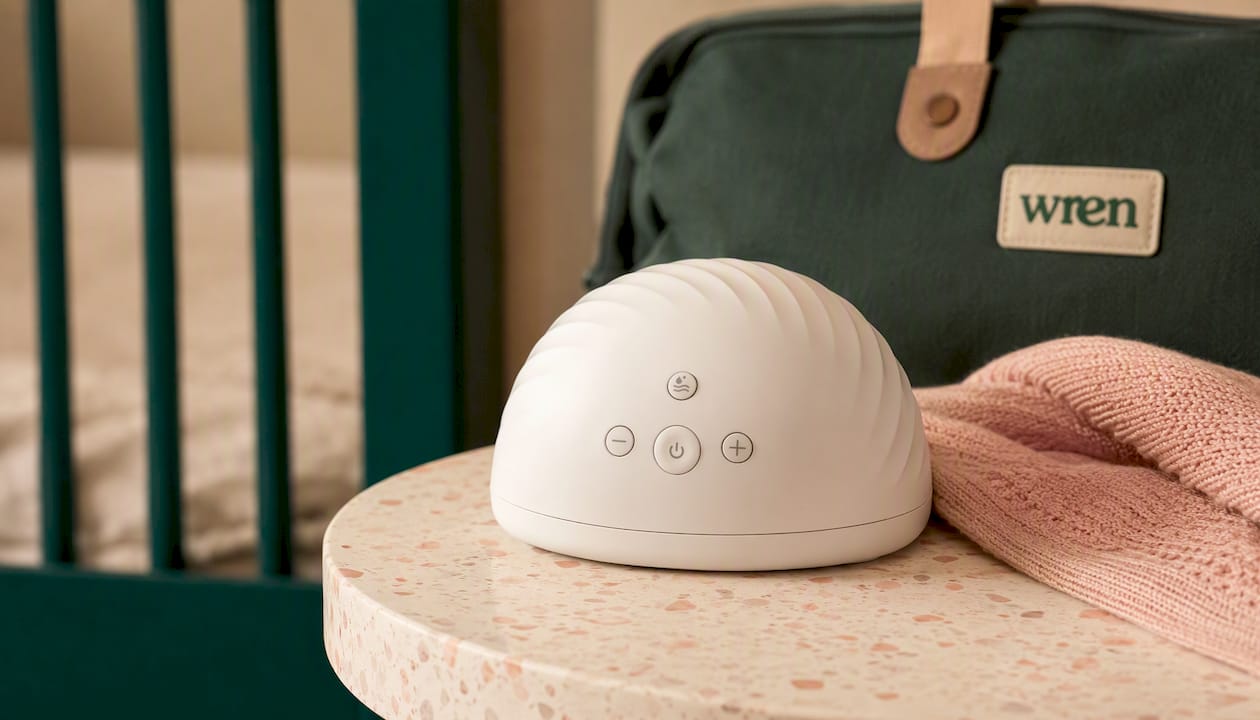
Double pumping cuts your active time in half compared with single pumping, so running the full hour becomes far more realistic on a normal day. The Main Pump Motor is designed for exactly that kind of double session, and its hands-free compatibility means you can use rest periods for massage or hand expression instead of holding equipment in place.
If you’re planning a 3 to 7 day trial, check the Main Pump Motor product page for current specifications and pricing in £, and pick up the correct flange size before you start rather than partway through the week.
Sources
For patient-facing instructions and safety context beyond this guide, the UHSussex NHS resource on breastfed babies getting enough milk sets out the protocol in full clinical detail. Alder Hey’s power pumping patient leaflet covers early postnatal caution specifically. For the physiology behind why this works, the NCBI overview of lactation physiology explains prolactin and oxytocin in more depth than most parent-facing guides attempt.
This article is general information, not a substitute for advice from a qualified doctor. Consult a qualified healthcare professional about your own circumstances before acting on anything here.
- Helping your breastfed baby to get all the milk they need (UHSussex)
- Physiology of lactation (NCBI Bookshelf)
- Oversupply guidance (La Leche League International)


