


3–5 Days to Ease Foremilk and Hindmilk Imbalance for Mothers


Foremilk and hindmilk describe one continuous milk supply changing in fat content, not two separate liquids, so most babies need no intervention at all. If your baby is settled, gaining weight, and feeding well, there’s nothing to fix. If you’re seeing green, frothy stools, relentless gassiness, or screaming after feeds, the fix starts simply: let your baby stay on one breast until they pause naturally, lengthen each feed, and speak to a lactation adviser if things don’t settle within a few days.
TL;DR:
- Lactation produces one milk supply with gradually increasing fat content, not two separate types of milk, making feeding adjustments unnecessary.
- Green, frothy stools, excessive gassiness, and fussiness after feeds indicate a possible lactose overload caused by oversupply and fast milk flow.
- Effective management involves slowing flow with positioning and longer feeds, not restricting to one side or cutting dairy, which do not resolve supply issues.
- Signs like poor weight gain, dehydration, or severe distress require prompt professional assessment from a health visitor or IBCLC.
- Using flow-slowing techniques and tools like controlled expression and appropriate breast shields assist in alleviating oversupply without disrupting natural milk production.
Table of Contents
- What foremilk and hindmilk imbalance actually means
- Signs your baby may have lactose overload
- What causes the imbalance, and what else could it be
- How to manage it: practical steps that actually help
- When to get professional help
- Wren’s evidence-based approach to breastfeeding support
- The perspective the internet keeps getting wrong
- Wren essentials that support flow management and comfort
- Sources
What foremilk and hindmilk imbalance actually means
Your breasts don’t switch between two different milks partway through a feed. They produce one continuous supply, and its fat content rises gradually as the breast empties, because fat globules cling to the walls of the milk ducts and get released progressively as milk flows out. Milk composition genuinely does change to meet an infant’s needs, but that shift is a gradient, not a switch. Lactation groups have been explicit about this for years: there aren’t two separate milks at all, just one milk whose fat percentage climbs as your breast drains.
That distinction matters because so much “advice” is built on the wrong premise. A few examples worth retiring:
- “Feed on one side only for hours to force hindmilk.” This risks engorgement and mastitis, and it’s not how fat delivery works.
- “Cut dairy from your diet to fix your milk.” Your diet doesn’t directly change your milk’s fat content; breast fullness and feed timing do.
- “Watch the clock, not the baby.” Fat content depends on how empty the breast is, not a fixed number of minutes.
Understanding how milk fat actually rises as a feed progresses is the foundation for everything else in this article.
Signs your baby may have lactose overload
The clinical term for what’s often loosely called foremilk hindmilk imbalance is lactose overload, and it has a fairly distinctive symptom pattern. It shows up when a baby gets a large volume of milk quickly, taking in more lactose than their gut can process efficiently in one go.
In your baby, watch for:
- Green, frothy or explosive stools
- Marked gassiness with visible tummy discomfort
- Inconsolable crying in the hour or so after a feed
- Very short, fussy feeds where baby comes off and on repeatedly
In you, watch for:
- Breasts that feel constantly overfull, even soon after a feed
- Frequent plugged ducts
- A forceful, almost overwhelming let-down
Pro Tip: An occasional loose or yellow stool with normal wind is usually nothing to worry about. It’s the combination of green frothy stools, real distress, and steady weight gain that points to lactose overload rather than a single symptom in isolation.
Green, frothy, explosive stools alongside marked gassiness and pain are the pattern lactation specialists look for, not any one symptom on its own.
What causes the imbalance, and what else could it be
Oversupply, sometimes called hyperlactation, is the most common driver; for guidance on healing and recovery after birth, see our Postpartum Nutrition Essentials: Your Recovery Guide. When you produce more milk than your baby needs, they take in a large volume quickly, which is naturally lower in fat early in the feed, before their gut has time to process the lactose properly. Long gaps between feeds make this worse, because the breast fills further and the initial flow becomes even more lactose-heavy relative to fat.
A few other things can produce near-identical symptoms:
- Tongue tie or an ineffective latch can change how efficiently your baby removes milk, leaving them unsettled in a way that mimics lactose overload.
- Cow’s milk protein allergy can cause green stools and real distress that look almost identical to a flow problem.
- Other gastrointestinal issues occasionally overlap with the same picture.
This overlap is exactly why assessment matters before you assume it’s a supply issue. Clinicians generally treat oversupply and flow as the practical target, while keeping allergy and tongue tie on the list if symptoms don’t respond to flow management.
How to manage it: practical steps that actually help
Most of what helps here is about slowing flow and easing volume, not forcing your baby onto “hindmilk” through rigid rules.
Feeding strategy Let your baby finish the first breast fully, waiting until they release it or show clear signs of satisfaction, before offering the second side. Rigid one-breast-per-feed schedules aren’t necessary unless a lactation specialist has specifically recommended one for you.
Positioning to slow the flow Laid-back nursing, side-lying, and leaning back all use gravity to your advantage, softening a forceful let-down. Paced offering, where you pause and let your baby catch up if they’re gulping or sputtering, gives their swallowing a chance to keep up with your flow.
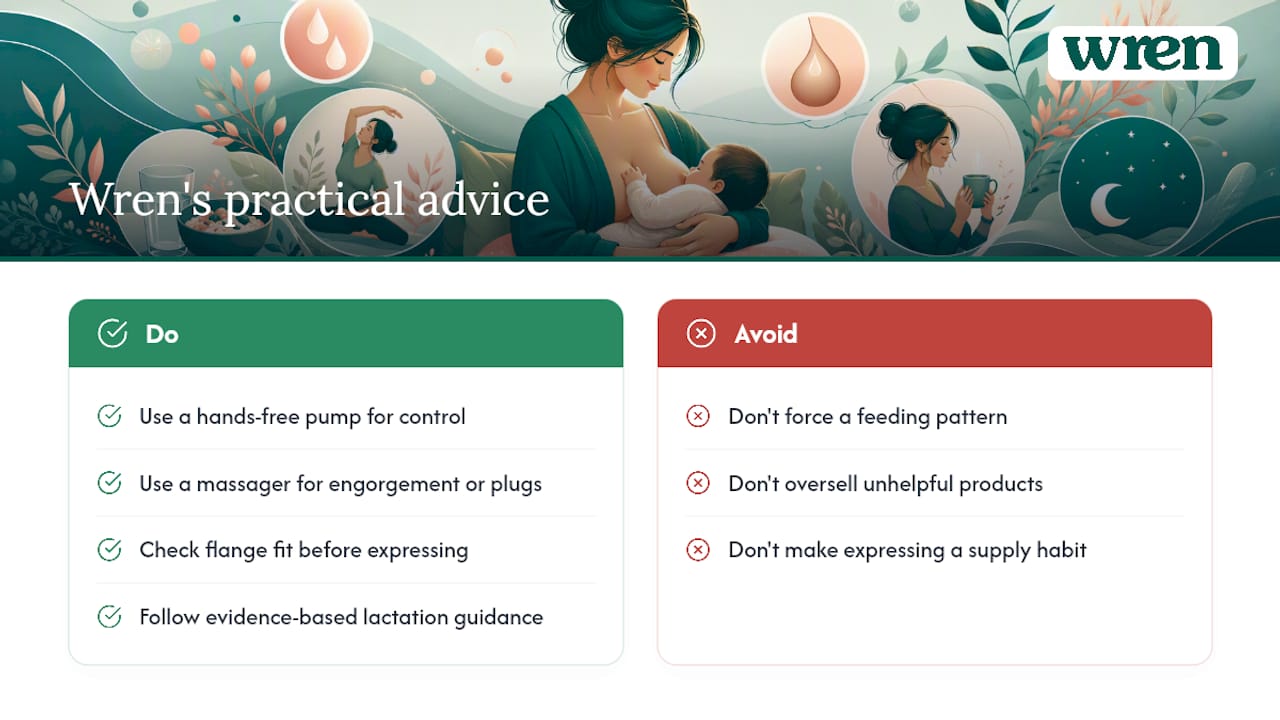
Expressing, done carefully If let-down is genuinely overwhelming, hand expressing a small amount before latching can take the edge off the initial spray. Keep this minimal, though, because expressing too much or too often signals your body to make even more milk, deepening the oversupply you’re trying to solve. A hands-free electric breast pump makes this kind of brief, controlled expression far easier to manage on your own.
Work through it in this order:
- Observe and note the pattern of symptoms over a few days, including stool colour and feed behaviour.
- Try longer feeds on one side plus a flow-slowing position for three to five days.
- Add gentle, minimal expression before feeds if let-down is still overwhelming.
- Contact a health visitor or IBCLC if you’re not seeing improvement.
Our guide on managing your milk supply covers oversupply in more depth if you want to go further.
When to get professional help
Most cases settle with the steps above, but certain signs need a proper assessment rather than more DIY troubleshooting.
Contact someone promptly if you notice:
- Poor weight gain or weight loss
- Signs of dehydration, such as fewer wet nappies
- Distress that doesn’t ease despite trying flow-management steps
- Blood in the stools or vomiting
A health visitor can check weight and observe a feed directly. An IBCLC can assess latch and supply in detail. A GP or paediatrician should be your first call if allergy or another medical cause is suspected. Bring a feed diary, recent weight records, and a description or photo of stool changes to the appointment, since these details speed up an accurate assessment considerably.
Wren’s evidence-based approach to breastfeeding support
We built My-wren around what actually helps mothers, not around forcing a feeding pattern that fights your own physiology. Paul, who leads our editorial content, works from peer-reviewed sources and lactation-specialist guidance, including La Leche League’s own material, rather than folk wisdom about “milk stages.”
Where a product genuinely helps, we say so plainly, and where it doesn’t, we don’t oversell it. A hands-free pump gives you controlled expression when let-down is overwhelming, without turning expressing into a supply-boosting habit. A lactation massager can ease the discomfort of engorgement or a stubborn plugged duct while you work through flow-management steps. Getting your flange size right also matters more than most mothers realise, since a poor fit reduces how effectively milk is expressed. Our blog on maximising expression walks through the technique side in more detail.
The perspective the internet keeps getting wrong
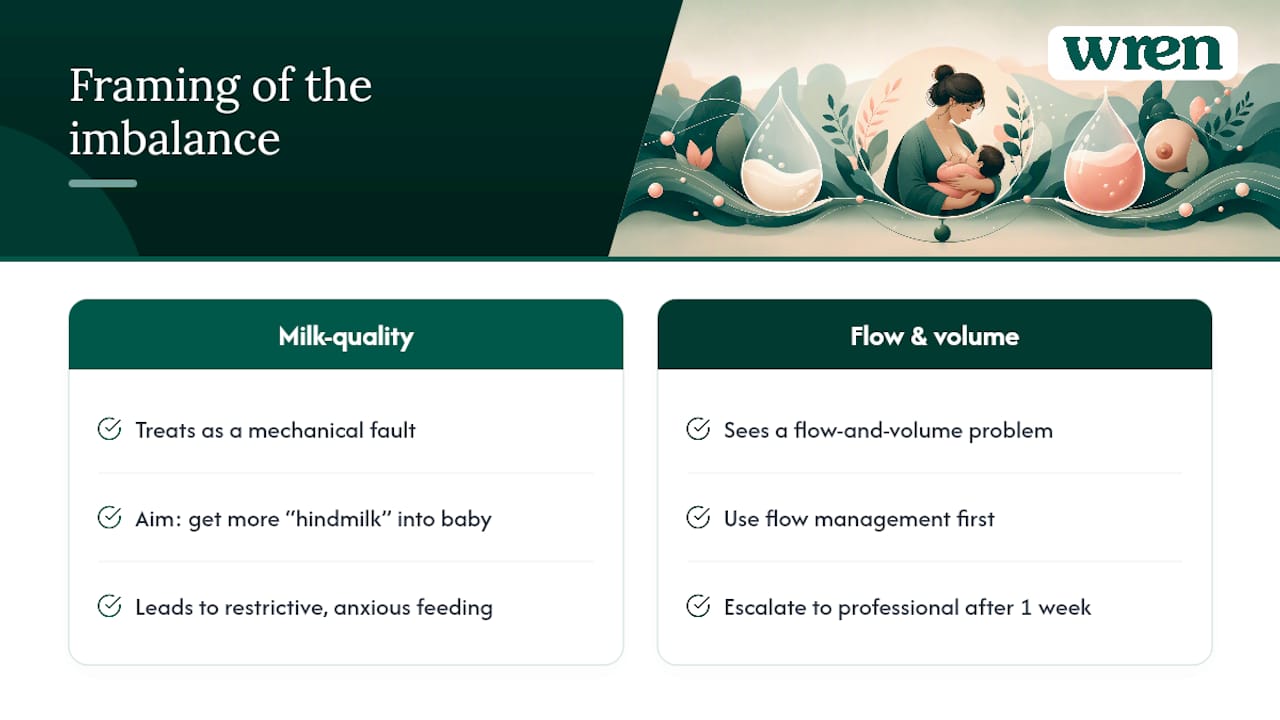
The conventional advice on foremilk hindmilk imbalance treats it like a mechanical fault: get more “hindmilk” into the baby, and the problem’s solved. That framing is the actual issue. It isn’t a milk-quality problem, it’s a flow-and-volume problem, and treating it as the former leads mothers into exactly the restrictive, anxious feeding patterns that make oversupply worse.
What gets underrated is how much a clear symptom checklist reduces panic. A parent staring at a green nappy at 3am doesn’t need a lecture on lactation physiology. They need to know whether this is the pattern that needs action, or a normal variation that will pass. Get that distinction right, and most of the anxiety around this topic dissolves on its own.
My honest read is that professional escalation gets pushed too far down most self-help articles. If flow management hasn’t helped within a week, or weight gain is in question, that’s not a failure requiring more DIY fixes. It’s the point where an IBCLC or health visitor should be looking at your baby directly, not a screen.
— Paul
Wren essentials that support flow management and comfort
Managing oversupply and forceful let-down is easier with the right tools on hand, not a different feeding philosophy. A few from our range are worth knowing about specifically for this situation.

The Hands-Free Electric Breast Pump lets you take the edge off a forceful let-down with brief, controlled expression, without needing to hold a pump against your body. If you need to relieve fullness on both sides at once, our Hands-Free Double Electric Breast Pumps do the same job more efficiently. For the plugged ducts and engorgement that often come with oversupply, the Lactation Massager eases discomfort while you work through positioning changes. And if leaking between feeds is part of the picture, our Bamboo Reusable Breast Pads are softer against sore skin than most disposable options. Browse the full breastfeeding accessories range to find what fits your situation, priced in pounds sterling with no hidden costs at checkout.
This article is general information, not a substitute for advice from a qualified doctor. Consult a qualified healthcare professional about your own circumstances before acting on anything here.
Sources
- Foremilk and Hindmilk - Myths and Facts
- Fat content of breastmilk – FAQs
- Hindmilk and foremilk imbalance - Physician Guide to Breastfeeding
- Nutritional physiology of breast milk (NCBI Bookshelf)


