


Engorgement relief when breastfeeding: fast, safe steps


Feed from the engorged breast first. If your baby cannot latch, hand-express or use a pump briefly, removing only enough milk to soften the areola, not to fully drain the breast. Apply a warm compress for a few minutes before feeding to encourage let-down, then switch to a cold pack between feeds to reduce swelling. If the areola is too firm for your baby to latch, try reverse pressure softening for 30–60 seconds before putting baby to the breast.
- Feed or express first: offer the fuller breast at the start of each feed.
- Warm before, cold after: a warm flannel or short warm shower before feeding; a cold pack or chilled flannel for up to 20 minutes between feeds.
- Hand-express to comfort only: remove just enough milk to soften the breast. NHS guidance and the Academy of Breastfeeding Medicine both stress this point: fully draining an engorged breast signals your body to produce more milk.
- Reverse pressure softening (RPS): place fingertips around the base of the nipple and apply steady inward pressure for 30–60 seconds to temporarily move fluid back into the breast.
- Safe pain relief: paracetamol or ibuprofen at standard adult doses are safe to take while breastfeeding in the UK.
Pro Tip: Keep a cold gel pack in the freezer from day one. Wrapping it in a muslin and applying it for 15–20 minutes after a feed can make a noticeable difference to swelling within the first 48 hours.
Key takeaways
Engorgement usually resolves within a couple of days when you feed or express frequently, use warmth before feeds and cold after, and remove only enough milk to ease discomfort rather than fully draining the breast.
| Point | Details |
|---|---|
| Express to comfort only | Remove just enough milk to soften the areola; full drainage signals your body to produce more. |
| Warm before, cold after | Brief warmth before a feed encourages let-down; a cold pack for up to 20 minutes after reduces swelling. |
| Use reverse pressure softening | Hold steady inward pressure around the nipple base briefly to improve latch when the areola is firm. |
| Seek help for red flags | Fever of 38°C or above, a red painful area, or inability to feed needs same-day clinical assessment. |
| My-wren tools for home relief | The Lactation Massager, Nipple Bubble, and Hands-Free Double Electric Breast Pump support comfort expression and gentle technique at home. |
Table of Contents
- What is breast engorgement and when does it happen?
- How to relieve engorgement: before, during and after a feed
- How to perform reverse pressure softening and gentle massage safely
- How to prevent engorgement from recurring
- When should you contact a health professional?
- A note from Paul
- My-wren tools that can help with engorgement at home
- Sources
What is breast engorgement and when does it happen?
Engorgement is the overfilling of breast tissue with milk, blood, and interstitial fluid. The breast becomes tight, heavy, and painful, and the skin may look shiny or feel warm. The areola can harden to the point where a baby struggles to latch.
Physiological engorgement typically appears around days 2–5 postpartum, when mature milk first comes in and blood flow to the breast increases sharply. It usually settles within 24–48 hours when feeding is frequent and effective.
Secondary engorgement can occur at any point during breastfeeding:
- A missed or delayed feed.
- A sudden reduction in feeding frequency (for example, when a baby starts sleeping longer stretches).
- A poor latch that leaves milk inadequately drained.
- Returning to work and not expressing at the same intervals as previous feeds.
The Children’s Hospital of Philadelphia notes that engorgement commonly appears 2–5 days after birth and that frequent feeding combined with alternating which breast is offered first are among the most reliable early preventive steps.
With correct management, most cases of physiological engorgement resolve within a few days. Secondary engorgement usually settles within 24 hours once normal feeding or expressing resumes.
How to relieve engorgement: before, during and after a feed
Before a feed
- Apply a warm, damp flannel or stand under a warm shower for two to three minutes. Brief warmth encourages let-down and softens the breast slightly.
- Perform gentle lymphatic strokes: using flat fingers, stroke lightly from the nipple outward toward the armpit and collarbone. Keep pressure very light.
- If the areola is firm, use reverse pressure softening. Place the pads of two or three fingers around the base of the nipple and press steadily inward for 30–60 seconds. This temporarily moves subareolar oedema back into the breast, making it easier for your baby to latch.
- Hand-express a small amount of milk if the breast is still too full for a comfortable latch. Stop as soon as the areola softens.
During a feed
Position your baby so their chin and lower jaw lead the latch, drawing in a good mouthful of breast tissue. A deep latch maximises milk removal and reduces the risk of nipple damage. Gentle breast compressions, pressing lightly with your whole hand, can encourage milk flow when it slows. Let your baby finish the first breast before offering the second.
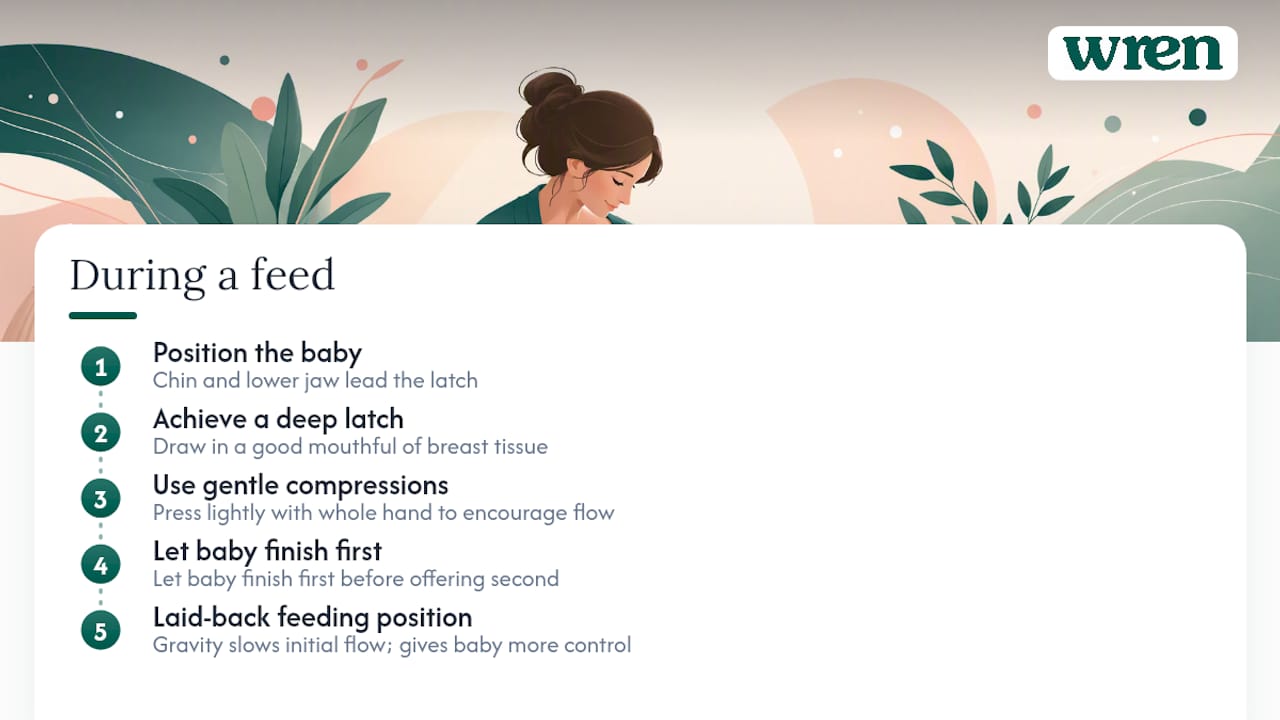
Pro Tip: A laid-back or reclined feeding position can help when the breast is very full, because gravity slows the initial flow and gives your baby more control.
After a feed
- Apply a cold pack or chilled flannel for up to 20 minutes to reduce swelling and ease discomfort.
- If your breasts still feel uncomfortably full after feeding, express briefly, to comfort only, not to empty. Use a pump on the lowest comfortable suction setting for a short session. KellyMom advises short, low-suction sessions specifically to avoid signalling increased supply.
- Take paracetamol or ibuprofen at standard adult doses if pain is significant. Both are considered safe during breastfeeding in the UK.
- Chilled cabbage leaves, applied for no more than 20 minutes, can act as a cold, conforming compress. According to Healthychildren, prolonged or repeated use may reduce overall milk supply, so discontinue once swelling eases.
Avoid:
- Prolonged heat between feeds, which can worsen swelling.
- Vigorous massage or squeezing.
- Pumping to full emptying, which reinforces oversupply.
- Wearing a tight or underwired bra that compresses breast tissue.
How to perform reverse pressure softening and gentle massage safely
Reverse pressure softening: step by step
Reverse pressure softening works by applying steady pressure around the base of the nipple for a short period, moving subareolar oedema backward into the breast and temporarily softening the areola. KellyMom recommends partner assistance in the earliest, most painful days when reaching your own breast comfortably is difficult.
- Wash your hands.
- Place the pads of two or three fingers from each hand on either side of the nipple base, or use both thumbs above and below.
- Press steadily inward toward the chest wall. Hold for 30–60 seconds without releasing.
- You should see and feel a small ring of softened tissue form around the nipple. Latch your baby immediately while this softening remains.
- Repeat before each feed if needed.
Gentle lymphatic drainage
Use flat fingertips only. Begin at the nipple and stroke outward toward the axilla (armpit) and collarbone in slow, light sweeping movements. The goal is to encourage fluid movement, not to squeeze milk out. This technique is sometimes called therapeutic breast massage in lactation (TBML).
Evidence note: A systematic review published in PMC found that current trials of engorgement treatments, including massage, cold packs, and cabbage leaves, are heterogeneous and limited in quality. No single treatment has been shown to be clearly superior. Gentle techniques carry low risk and are widely recommended by lactation clinicians, but mothers should set realistic expectations about the certainty of the evidence.
Cleveland Clinic guidance cautions that deep or vigorous massage may worsen swelling rather than relieve it. Stick to light fingertip pressure and outward strokes. If you feel a hard, painful lump that does not ease with gentle technique, contact a midwife or lactation consultant rather than attempting to massage it out.
What to avoid:
- Forceful squeezing or kneading.
- Aggressive mechanical devices on high settings.
- Prolonged high-suction pumping.
- Any technique that causes sharp or worsening pain.
How to prevent engorgement from recurring
Consistent feeding habits are the most reliable protection against repeat engorgement.
- Feed on demand, 8–12 times in 24 hours in the early weeks. Frequent removal of milk prevents the build-up that leads to engorgement.
- Alternate the breast you offer first at each feed. This distributes drainage evenly and prevents one breast from becoming consistently fuller than the other.
- Let your baby finish the first breast before switching. Cutting feeds short leaves milk behind and can trigger engorgement on that side.
- Wake a sleepy baby if your breasts become uncomfortably full. A gap of more than three to four hours in the early weeks is long enough to cause problems.
- Wear a supportive, well-fitting bra that holds breast tissue without compressing it. Tight bands or underwiring can restrict drainage and contribute to blocked ducts.
- Reduce expression gradually if you suspect oversupply. Drop one expressing session every few days rather than stopping abruptly, which risks acute engorgement and mastitis.
- Plan ahead for changes in routine. If you know you will miss a feed (returning to work, a medical appointment), express at that time to maintain your normal drainage pattern.
When should you contact a health professional?
Most engorgement resolves with the steps above. Contact your midwife, health visitor, GP, or a lactation consultant if you notice any of the following:
- A fever of 38°C or above, or flu-like symptoms such as aching muscles and chills.
- A painful, red, or hot area on the breast that does not ease after a feed.
- A hard lump that remains after expressing or feeding.
- Pain that is rapidly worsening rather than improving.
- You are unable to feed or express at all.
- Your baby is not feeding well or appears unwell.
Red flag: Persistent fever combined with a red, painful area of the breast is the classic presentation of mastitis. Left untreated, mastitis can progress to a breast abscess, which requires surgical drainage. Seek same-day assessment from your GP or call NHS 111 if you cannot reach your surgery.
Mastitis is usually treated with antibiotics alongside continued breastfeeding or expressing. Stopping feeding abruptly when mastitis is present can worsen the condition. A clinician will advise on the appropriate antibiotic and confirm it is safe to continue breastfeeding.
For persistent or one-sided symptoms that do not follow the usual pattern, a midwife or lactation consultant can assess latch, positioning, and drainage to rule out a blocked duct or other complication.
A note from Paul
Engorgement is one of the most common reasons mothers consider stopping breastfeeding in the early days, and that is entirely understandable. The discomfort can be severe, and the advice available is often contradictory. The steps in this guide are grounded in NHS guidance and clinical protocols, not anecdote.
The most important thing to hold onto is this: engorgement is temporary. With frequent feeding, the express-to-comfort principle, and the right technique for your situation, most mothers find significant relief within 24–48 hours.
My-wren products are designed as practical comfort tools to support at-home management, not as replacements for clinical care. If you are struggling, please contact your midwife, health visitor, or a local lactation consultant. The NHS and La Leche League Great Britain both offer direct support lines.
My-wren tools that can help with engorgement at home
Engorgement management works best when you have the right kit to hand. My-wren offers three products that fit directly into the relief steps covered in this guide.
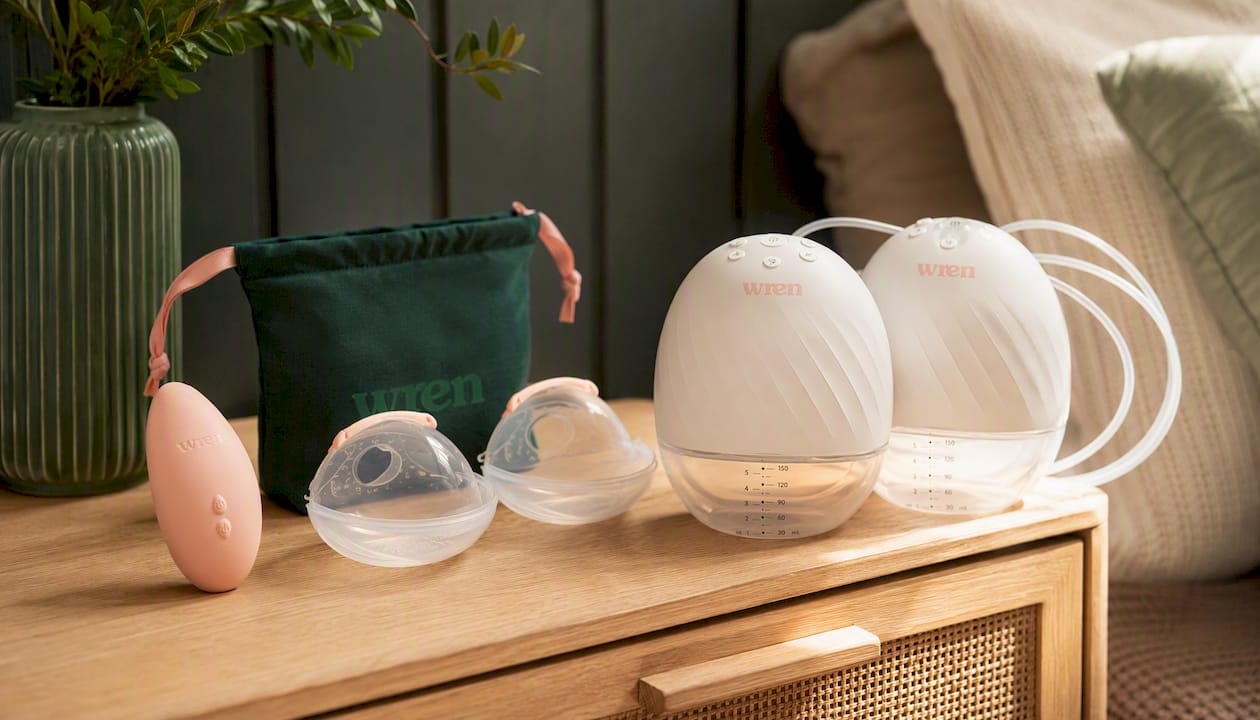
The Lactation Massager (typically £25–£60) is designed for gentle lymphatic stimulation. Use it on the lowest setting with light outward strokes before a feed to encourage let-down and fluid movement. It is not a substitute for hand expression, but it can make the pre-feed softening routine easier to sustain, particularly in the first week. See the My-wren guide on lactation massager use for technique details.
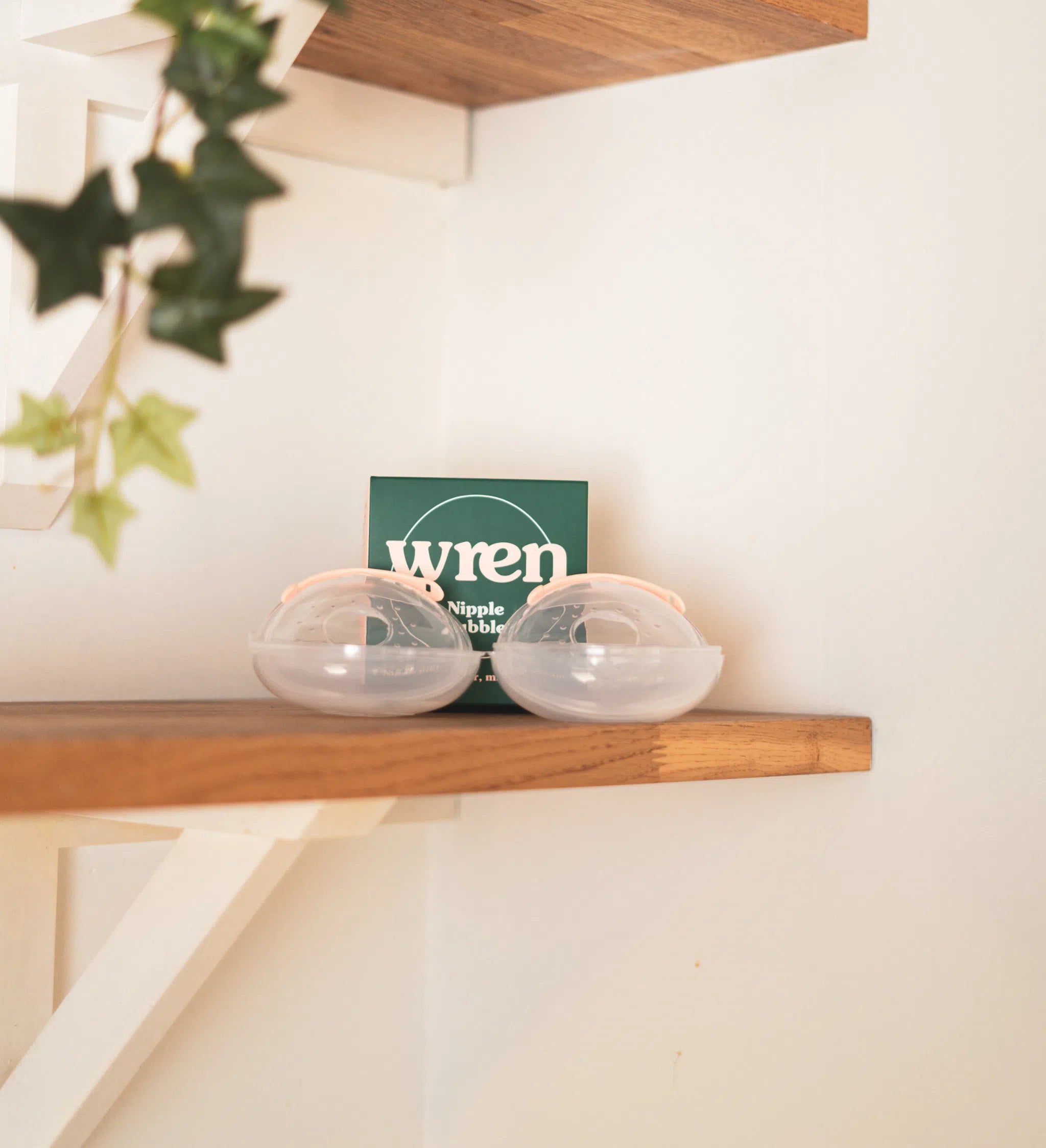
The Nipple Bubble with storage case and bag collects small volumes of expressed milk and protects the nipple between feeds, useful when the areola is tender and clothing contact is uncomfortable.
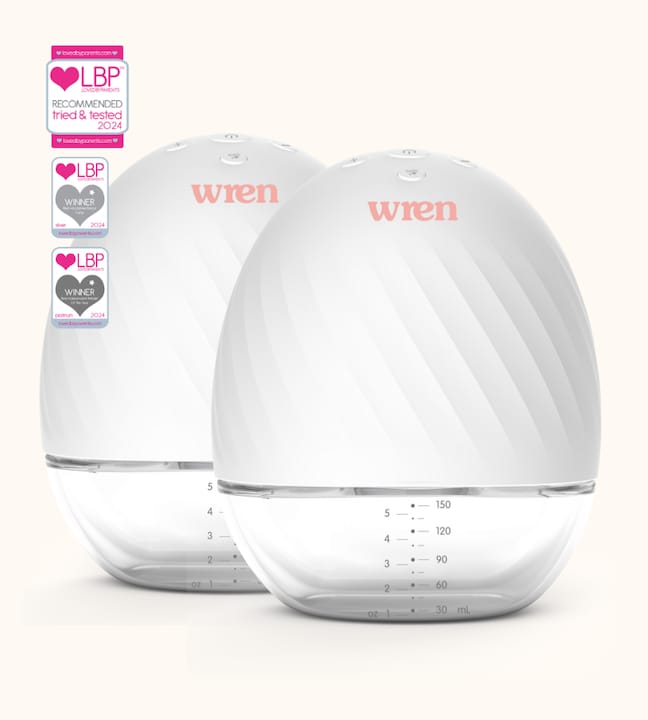
The Hands-Free Double Electric Breast Pump (typically £200–£350) allows short, low-suction expressing sessions without needing to hold a flange in place. Set suction to the lowest comfortable level and limit sessions to under 10 minutes for comfort expression. If pumping is causing pain, the My-wren pumping pain guide covers fit and settings adjustments.
These products support comfort and at-home management. They are not medical devices and are not a replacement for clinical assessment or treatment.
Sources
- Breast pain and breastfeeding - NHS
- Treatments for breast engorgement during lactation - PMC - NIH
- Engorgement protocol (Academy of Breastfeeding Medicine)
- Healthychildren


