


Clogged duct relief for breastfeeding mums


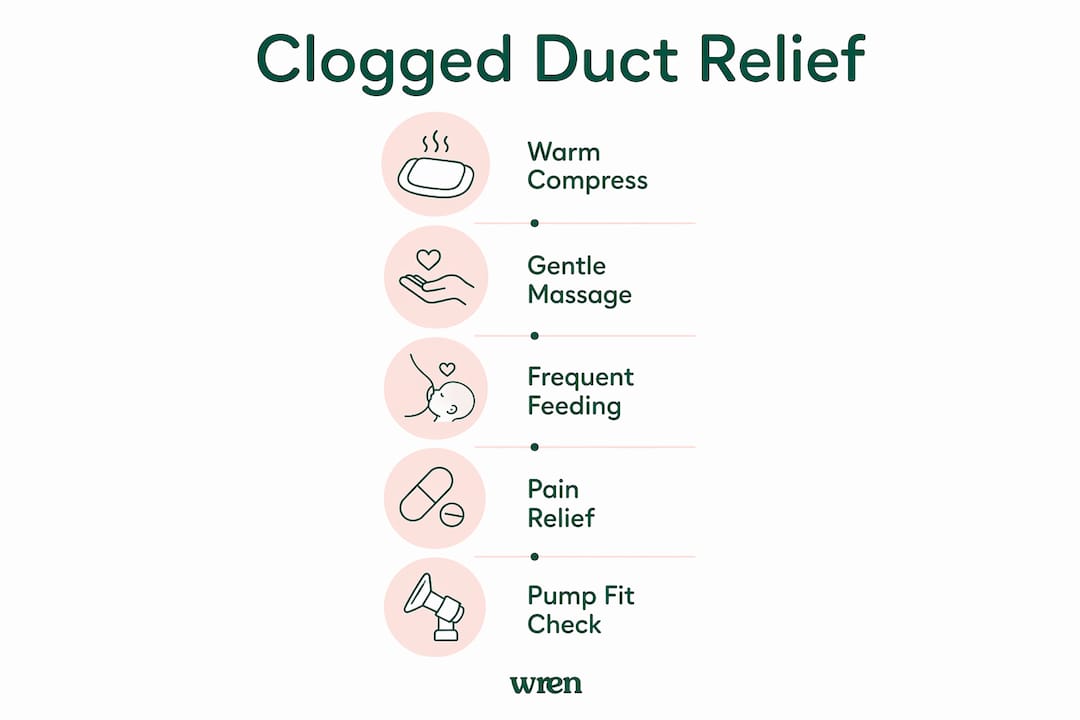
A clogged milk duct typically responds well to a simple, consistent routine: apply a warm compress for a few minutes before feeding, start nursing or pumping on the affected side, use gentle lymphatic-style massage during drainage, then cool the area afterwards. Most people see improvement within 48 hours with this approach.
Start here — steps to try right now:
- Apply a warm flannel or compress to the affected breast for 2–3 minutes before feeding or pumping.
- Begin nursing or pumping on the clogged side first, when the let-down reflex is strongest.
- During feeding or pumping, use light strokes from the lump toward the armpit and collarbone, not toward the nipple.
- After feeding, place a cool cloth or chilled gel pack on the breast for 10–15 minutes to reduce inflammation.
- Take paracetamol or ibuprofen at the recommended dose if pain is significant. Both are considered safe during breastfeeding per NHS guidance on paracetamol.
Red flag: If you develop a fever above 38°C, flu-like aching, or notice redness spreading beyond a small area, stop self-managing and contact your GP, midwife, or NHS 111 the same day. These are signs of mastitis or, rarely, a breast abscess, and may need antibiotic treatment.
Table of Contents
- What is a clogged milk duct?
- What are the signs and causes of a clogged duct?
- When should you see a clinician instead of managing at home?
- How to clear a clogged milk duct: step-by-step treatment
- How can you prevent clogged ducts from recurring?
- Why the inflammation-first approach changes how you treat a blocked duct
- Key takeaways
- The case for getting support early
- My-wren tools that support clogged duct relief
- Where this advice comes from
What is a clogged milk duct?
A plugged or blocked milk duct is a localised blockage within one of the many small channels that carry milk from the milk-producing tissue toward the nipple. When milk cannot drain freely, it backs up, causing the surrounding tissue to swell and become tender.
Picture the breast as a cluster of small lobes, each draining through its own duct toward the nipple. If one duct narrows or becomes partially blocked, milk accumulates behind it. The result is a firm, often pea-sized lump that feels sore to the touch.
“A plugged duct is an area of the breast where milk flow is obstructed. The duct may be plugged at the nipple or further back in the ductal system.” — Mayo Clinic Health System
Blocked ducts occur most often in the first six to eight weeks after birth, when supply and feeding patterns are still settling. They can, however, happen at any point during breastfeeding, including during weaning.
What are the signs and causes of a clogged duct?
Symptoms to look for
- A firm, localised lump in one part of the breast
- Tenderness or aching at the lump site, which may worsen during or just before a feed
- Localised redness or warmth over the affected area
- A slight reduction in milk flow from that breast
- No fever, or only a very low-grade temperature (below 38°C)
The absence of a high fever is the key distinction from mastitis. If the lump is accompanied by a temperature of 38°C or above and flu-like symptoms, the condition has likely progressed.
Common causes and risk factors
- Skipped or delayed feeds, which allow milk to pool
- Incomplete drainage, often from a short or distracted feed
- Poor latch, which prevents efficient milk removal
- Tight clothing, underwired bras, or a poorly fitting nursing bra that compresses ducts
- Oversupply, where more milk is produced than the baby removes
- An ill-fitting pump flange, which leaves some areas of the breast undrained
Pro Tip: Check your pump flange size if you experience recurring clogs. The Children’s Hospital of Philadelphia notes that an incorrect flange size is a non-obvious but common cause of incomplete drainage. Your nipple should move freely in the tunnel without the areola being pulled in excessively.
When should you see a clinician instead of managing at home?
Most blocked ducts respond to home care within about 48 hours. If you are not seeing any improvement after two days of consistent treatment, contact your GP or midwife rather than continuing to wait.
Seek help the same day if any of the following appear:
Escalation signs: Fever of 38°C or above; flu-like symptoms (chills, body aches, fatigue); redness spreading beyond the original lump; a lump that grows harder or larger despite feeding; skin that looks shiny, hot, or discoloured over a wider area; or any sign of pus or discharge from the nipple.
These signs suggest mastitis or, in more serious cases, a breast abscess. A breast abscess is a collection of infected fluid that usually requires drainage by a clinician and is distinct from a simple blocked duct.
For UK readers, the practical contacts are:
- NHS 111 (call or online) for same-day triage if your GP is unavailable
- Your GP for a same-day or urgent appointment when mastitis is suspected
- Your community midwife in the early postnatal weeks
- An IBCLC (International Board Certified Lactation Consultant) for persistent or recurring blockages, latch issues, or supply concerns
When you call, mention the location of the lump, how long it has been present, your temperature, and any systemic symptoms. This helps the clinician triage you quickly.
How to clear a clogged milk duct: step-by-step treatment
The modern approach to duct blockage solutions is captured in the B.A.I.T. framework: Breast rest, Anti-inflammatory analgesia (Advil/ibuprofen), Ice, and Tylenol/paracetamol. This reflects a shift away from aggressive heat and forceful massage, which can worsen tissue inflammation.

The lump you feel is often as much swollen tissue as it is backed-up milk. Reducing inflammation is therefore as important as encouraging drainage.
Massage technique
- Before feeding or pumping, apply a warm compress for 2–3 minutes to encourage let-down. Do not use prolonged heat, as this can increase swelling.
- Position your fingers above the lump, between it and the armpit.
- Use light, rhythmic strokes moving from the lump toward the armpit and collarbone, following the direction of lymphatic drainage. Gentle, lymphatic-style strokes are more effective than hard pressure and carry less risk of tissue damage.
- Continue gentle massage during the feed or pumping session.
- After feeding, apply a cool cloth or chilled gel pack for 10–15 minutes to reduce post-feed inflammation.
Avoid deep, kneading pressure. Forceful massage can increase inflammation and delay recovery.
Feeding and pumping tips
- Start every feed on the affected side while the let-down is strongest.
- Try a position where the baby’s chin or nose points toward the lump, as this helps direct suction toward that area.
- Aim for comfortable, complete drainage rather than frequent short feeds. Power-pumping or over-nursing the affected side can increase engorgement and worsen the blockage.
- If using a breast pump, check that the flange fits correctly. Browse My-wren’s breast pump range for sizing guidance.
Pain relief
Paracetamol and ibuprofen are both appropriate for pain and inflammation. Ibuprofen has the added benefit of reducing tissue swelling. Follow standard UK dosing instructions on the pack and confirm suitability with your pharmacist if you have any health conditions.
Summary of main treatment measures
| Measure | Purpose | When to use | Key caution |
|---|---|---|---|
| Warm compress | Encourages let-down and milk flow | 2–3 minutes before feeding only | Avoid prolonged heat; can worsen swelling |
| Cool compress | Reduces post-feed inflammation | 10–15 minutes after feeding | Do not apply directly to skin; use a cloth barrier |
| Gentle lymphatic massage | Encourages drainage and reduces swelling | During feeding or pumping | Light strokes only; avoid deep pressure |
| Paracetamol / ibuprofen | Pain relief and anti-inflammatory effect | As needed per pack instructions | Confirm with pharmacist if unsure |
| Feeding / pumping | Removes milk and relieves pressure | Regularly, starting on affected side | Aim for comfortable drainage, not forced expression |
How can you prevent clogged ducts from recurring?
Prevention centres on consistent, complete drainage and avoiding anything that compresses or restricts the breast.
Daily habits
- Feed or pump regularly and avoid long gaps between sessions.
- Vary your feeding position across the day so different areas of the breast drain in turn. Good positioning and latch are the most reliable prevention tools.
- Avoid tight bras, underwired styles, or clothing that digs into breast tissue. A well-fitted, non-underwired nursing bra is the practical choice.
- Rest when possible. Fatigue and stress are associated with reduced immune response and can make the breast more vulnerable.
Pump fit checklist
| Check | What to look for |
|---|---|
| Nipple movement | Nipple moves freely in the flange tunnel without rubbing |
| Areola pull | Little or no areola is drawn into the tunnel |
| Comfort | No pinching, blanching, or pain during pumping |
| Drainage | Breast feels softer and more even after pumping |
Supplements: lecithin and probiotics
Lecithin may reduce the stickiness of milk and is sometimes recommended for people who experience frequent plugged ducts. Some research also points to certain probiotics (specifically Lactobacillus fermentum and L. salivarius) as potentially reducing mastitis incidence. The evidence for both remains limited, and neither should be started without discussing it with your GP, midwife, or lactation consultant first.
Why the inflammation-first approach changes how you treat a blocked duct
Modern clinical guidance has moved away from the older advice of applying prolonged heat and massaging hard. The reason is straightforward: the palpable lump in a blocked duct often reflects tissue oedema (swelling) as much as milk accumulation. Applying sustained heat or aggressive pressure to already-inflamed tissue can make that swelling worse, not better.
Cooling after drainage, resting the breast, and using anti-inflammatory analgesia address the underlying tissue response. Gentle, rhythmic strokes toward the armpit move lymphatic fluid and reduce swelling without adding mechanical stress to the duct.
“The goal is to reduce inflammation and encourage drainage — not to force milk through a blocked duct with pressure.” — Cleveland Clinic guidance on clogged milk duct treatment
The emotional side of this deserves acknowledgement too. A painful lump that does not clear quickly, combined with the pressure to keep feeding, is genuinely distressing. Healthcare providers recognise the emotional toll of breast inflammation and recommend normalising those feelings alongside physical treatment. If you are struggling, speaking to a lactation consultant or your midwife is not a last resort; it is a practical, efficient step.
Pro Tip: If a clog recurs in the same spot repeatedly, that pattern is worth investigating with an IBCLC. Recurring blockages in one location can indicate a structural issue with latch, flange fit, or milk flow that a single consultation can often resolve.
Key takeaways
Gentle, consistent drainage combined with cooling and anti-inflammatory pain relief resolves most clogged ducts within 48 hours; seek same-day clinical help if fever or spreading redness develops.
| Point | Details |
|---|---|
| Start with warm, end with cold | Use a warm compress before feeding to aid let-down, then cool the breast for 10–15 minutes afterwards to reduce inflammation. |
| Gentle massage, correct direction | Light lymphatic-style strokes toward the armpit are more effective and safer than hard pressure toward the nipple. |
| Most clogs clear within 48 hours | Consistent feeding or pumping on the affected side, with simple measures, typically resolves the blockage within about 48 hours. |
| Know the red flags | Fever of 38°C or above, flu-like symptoms, or spreading redness require same-day contact with a GP, midwife, or NHS 111. |
| My-wren lactation tools | My-wren’s lactation massager supports gentle drainage technique as an adjunct to the home-treatment steps above. |
The case for getting support early
There is a tendency to treat a blocked duct as something to push through alone, partly because the advice to “keep feeding” sounds simple. It is simple, but the technique details matter more than most guides acknowledge. Gentle massage in the wrong direction, prolonged heat, or over-pumping can each extend recovery rather than shorten it. The shift toward an inflammation-aware approach is not a minor update; it changes the practical steps in ways that make a real difference to how quickly the lump resolves.
Seeking help from a lactation consultant at the first or second recurrence is not excessive. It is the most efficient route to identifying whether latch, flange fit, or supply patterns are the underlying cause. My-wren’s guidance is built around that same principle: practical, evidence-aligned support that helps you feed with confidence rather than manage discomfort in isolation.
My-wren tools that support clogged duct relief
Two My-wren products are worth knowing about when managing a blocked duct, used alongside the home-treatment steps above.

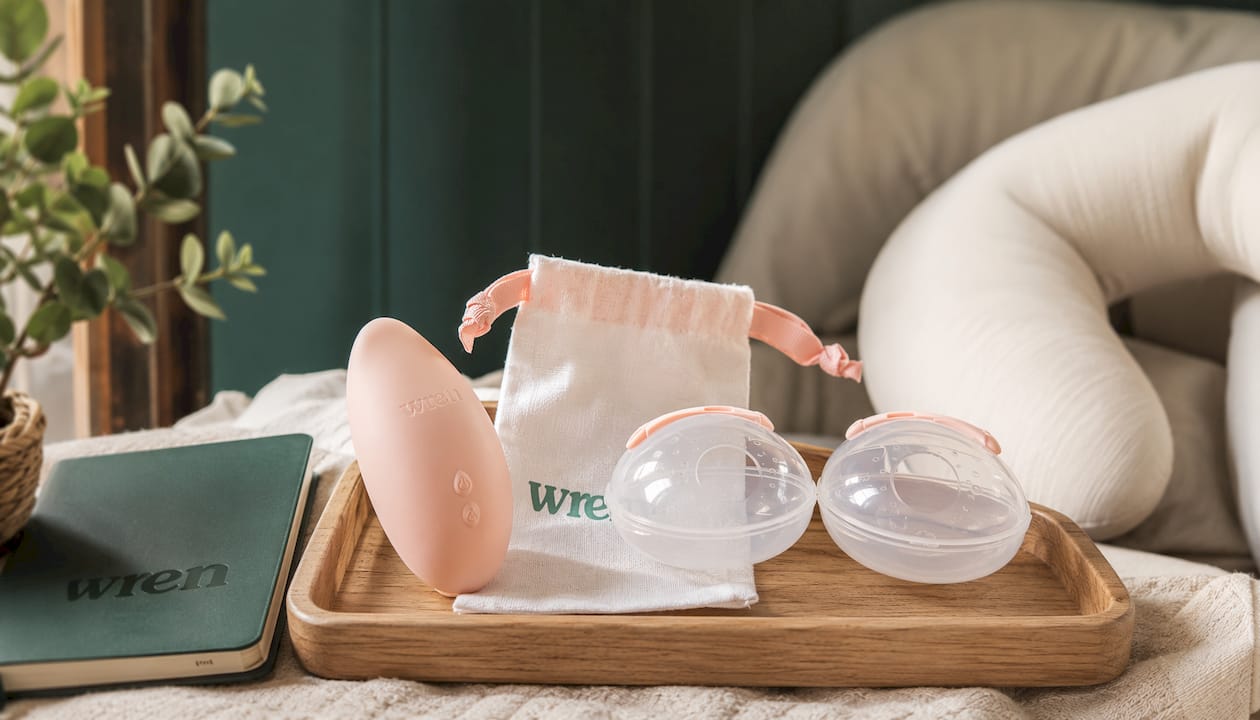
The My-wren Lactation Massager is designed to support the gentle, lymphatic-style technique described in this article. It delivers targeted vibration to help encourage milk flow and ease localised discomfort during feeding or pumping sessions. It is not a replacement for correct technique, but it makes consistent, gentle massage easier to maintain, particularly during a night feed. For more on how massagers support drainage, see My-wren’s guide on why use a lactation massager.
The Nipple Bubble with storage case and bag offers a protective option for sore or sensitive nipples between feeds. If nipple discomfort is adding to the difficulty of feeding through a clog, a nipple bubble can reduce friction and allow the skin to recover.
Both products are adjuncts to the core steps in this article. If red flags are present, contact a clinician first. Browse the full range at my-wren.com.
This article provides general information only and is not a substitute for professional medical advice. Always confirm current guidance with your GP, midwife, or a qualified lactation consultant for your own situation.
Where this advice comes from
This article draws on clinical guidance from recognised medical sources and lactation-specialist organisations. The primary references are listed below.
- Clogged milk duct: causes, symptoms and treatment — Cleveland Clinic
- Managing plugged ducts, mastitis when breastfeeding — Mayo Clinic Health System
- Easing clogged milk ducts — WebMD
- Plugged or blocked milk ducts — Children’s Hospital of Philadelphia (CHOP)
- Clogged milk ducts and mastitis treatment — Medela
- Using paracetamol during breastfeeding — NHS Specialist Pharmacy Service
For same-day triage or urgent advice in the UK, contact NHS 111 (online or by phone), your GP, or your community midwife. For persistent or recurring blockages, an IBCLC can provide personalised assessment and support.


