


15–30 Minute Pumping Sessions for UK Parents


Aim for 15 to 30 minutes per pumping session, depending on how old your baby is and which pump you’re using. Stop when milk flow slows to a trickle or your breasts feel soft and drained, whichever comes first. Newborn feeding and exclusive pumping tend to need the longer end of that range; once supply settles, most parents are done in 15 to 20 minutes.
TL;DR:
- Pump sessions should last 15 to 30 minutes, with longer times needed during the first six weeks and shorter times after supply stabilizes.
- Not all pumps are equal; hospital-grade pumps empty breasts faster than personal or wearable pumps, which require longer sessions of 25 to 30 minutes.
- Pump multiple times every 2 to 3 hours during the newborn stage, and avoid long gaps that risk decreasing supply, especially when returning to work.
- Stop pumping when milk flow slows to a trickle and breasts feel soft, typically not exceeding 30 minutes, to prevent fatigue and diminishing returns.
- For exclusive pumping, full emptying is necessary for supply maintenance, while shorter sessions suffice for topping up or combined nursing and pumping routines.
Table of Contents
- How long to pump milk: session lengths by stage and scenario
- How pump type changes session length and what to expect
- How often to pump: scheduling for supply, work and sleep
- Signs you should stop a session (and when it’s gone on too long)
- Practical tips to improve pumping efficiency and comfort
- Exclusive pumping versus topping up: different timing needs
- Where Wren’s experience with real feeding routines comes in
- What pumping actually feels like week to week
- Pumping made easier with the right equipment
- Sources
How long to pump milk: session lengths by stage and scenario
There’s no single correct answer to how many minutes to pump, because the right number shifts as your supply and routine change. What stays constant is the principle: pump until flow slows right down, not for a fixed number of minutes on a kitchen timer.
1. Newborn stage and establishing supply (0 to 6 weeks) Budget 20 to 30 minutes per session. Your body is still learning how much milk to make, so longer, more frequent sessions send a clearer “make more” signal than short, rushed ones. Expect multiple sessions in 24 hours during this window, roughly matching a newborn’s own feeding pattern.
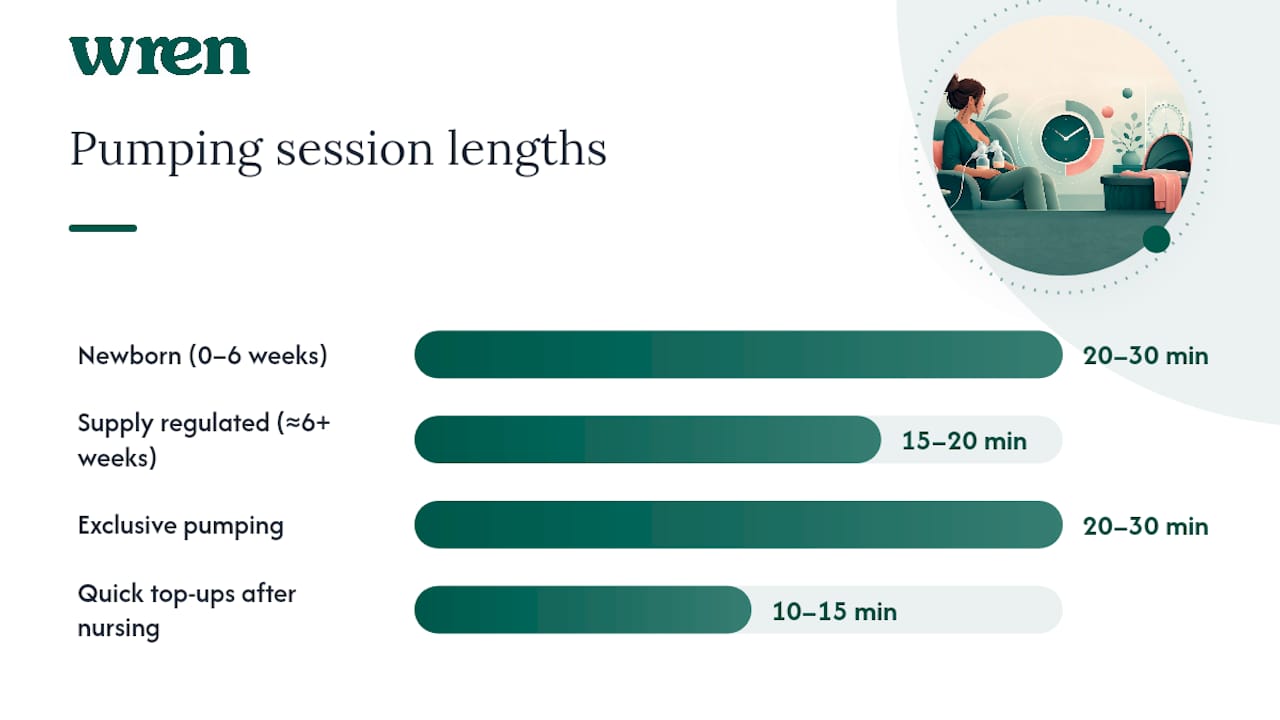
2. Once supply regulates (around 6 to 12 weeks onward) Most mothers can drop to 15 to 20 minutes a session once their body has settled into a rhythm. Most pumping sessions last about 15 to 20 minutes, according to the Australian Breastfeeding Association, and pumping beyond 30 minutes rarely adds meaningful volume at this stage. This is a common pump volume pattern most working parents settle into a few months postpartum.
3. Exclusive pumping If you’re pumping instead of nursing at all, budget the full 20 to 30 minutes per session while supply is still being established. Exclusive pumpers often need this longer window because there’s no baby at the breast helping trigger extra let-downs, and full emptying every time is what keeps output steady. Once your supply is well established, many exclusive pumpers can trim sessions down, though rarely as short as combination feeders manage.
4. Quick top-ups after nursing If your baby has already fed and you’re pumping simply to build a stash or ease engorgement, 10 to 15 minutes is usually enough. The breast is already partly drained, so there’s less to remove and less need to chase a second let-down.
The common thread across every stage is this: session length follows what your body is doing that day, not what worked last week. A session that ran long on Tuesday because your baby slept through a feed doesn’t mean Wednesday’s session needs the same treatment.
How pump type changes session length and what to expect
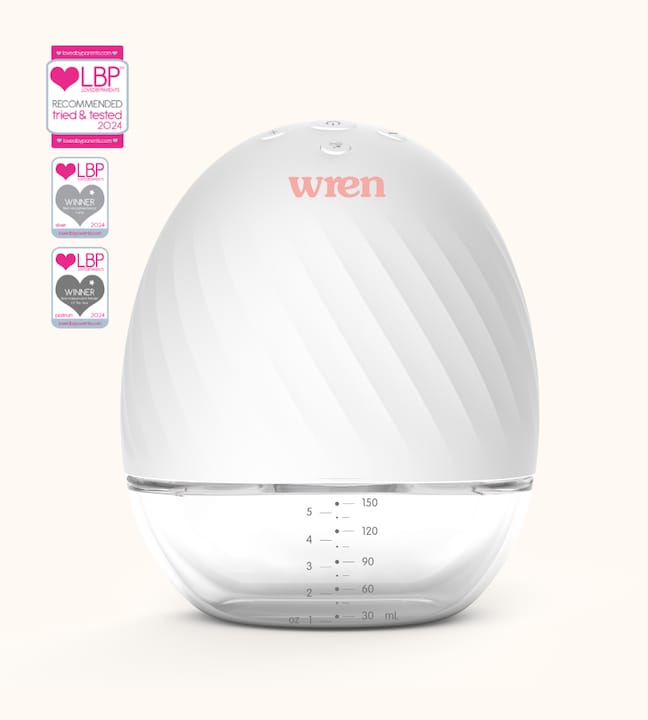
Not all pumps extract milk at the same rate, and expecting a wearable pump to behave like a hospital-grade one sets you up to feel like something’s wrong when nothing is.
- Hospital-grade pumps tend to empty breasts fastest thanks to stronger, more consistent suction. Many mothers using one need less time per side than they would with a personal pump.
- Personal double electric pumps are the middle ground most people settle into, typically 15 to 20 minutes once milk flow is established.
- Wearable, hands-free pumps are generally lower-power by design, trading some suction strength for the freedom to move around, which usually means sessions of 25 to 30 minutes rather than 15.
None of this means a wearable pump is doing a worse job. It’s a genuine trade-off between raw extraction speed and being able to answer emails, drive to nursery pickup, or sit through a meeting without being tethered to a wall socket. Our guide to hands-free pumping covers this balance in more detail if mobility is your priority.
Whatever pump you’re using, let milk flow and breast comfort set the pace rather than a strict clock. Two mornings with the same pump can produce different session lengths depending on how recently your baby fed, how well you slept, or whether you’re stressed about being late for work.
Pro Tip: If you’re switching from a wearable to a stronger personal pump (or vice versa), give yourself a week before comparing volumes. Your body needs a few sessions to adjust to a new suction pattern, and early numbers on a new pump are rarely representative.
How often to pump: scheduling for supply, work and sleep
Frequency usually matters more than how long any single session runs. Pumping every 2 to 3 hours does more for your supply than stretching one session to 40 minutes and then going five hours before the next.
- Newborn stage: aim for 8 to 12 sessions across 24 hours, roughly every 2 to 3 hours, mirroring how often a baby this age would nurse.
- Returning to work: a common pattern is a mid-morning session, a lunchtime session, and a mid-afternoon session, spaced to avoid uncomfortable gaps of more than 4 hours. Double pumping at each of these makes the most of limited break time, since it empties both breasts simultaneously rather than sequentially.
- Night sessions: at least one pump in the early part of the night (before midnight, roughly) helps protect supply in the early weeks, when prolactin levels that drive milk production are naturally higher overnight. As supply becomes more established, many parents can drop this without a noticeable dip.
- Reducing sessions: cut one session at a time, wait 3 to 4 days, and watch total daily output before dropping another. A sudden two-session drop is far more likely to dent supply than a gradual one.
Work schedules rarely map neatly onto a “textbook” pumping timetable, and that’s fine. What tends to cause problems isn’t an imperfect schedule. It’s long, unplanned gaps between sessions that leave breasts overfull and signal your body to slow production. If your day involves back-to-back meetings, blocking three fixed pump slots in a calendar, the same way you’d block a client call, protects supply better than pumping “whenever there’s a gap.” Our piece on combining a breastfeed and pump schedule has sample timetables if you’re juggling both nursing and pumping across a working day.
Signs you should stop a session (and when it’s gone on too long)
Your body gives clearer signals than a clock ever will.
- Flow slows to a slow drip. This is the main cue that a session is finished, not the number of minutes elapsed.
- Breasts feel soft and drained, rather than still firm or heavy.
- Try a few extra minutes once flow slows, since a second let-down sometimes follows shortly after the first tapers off.
- Avoid routinely pumping past 30 minutes. For most parents, extending well beyond half an hour yields diminishing returns and mostly adds fatigue rather than milk.
- Watch trends across several sessions, not the volume in a single bottle. One low session after a bad night’s sleep or a skipped snack means very little on its own.
- Seek advice for pain, a sudden drop in output, or a marked, ongoing difference between breasts. These aren’t things to just push through.
Reading these cues takes a bit of practice, and most parents get better at judging “done” by feel within the first couple of weeks. If you’re consistently uncertain, a simple log of session length and rough output over a week will usually reveal a pattern faster than trying to judge it session by session.
Practical tips to improve pumping efficiency and comfort
Small technique adjustments tend to shift output far more than adding extra minutes to an already long session.
- Check your flange size first. A flange that’s too small pinches and restricts flow; too large, and it can cause excess areola tissue to be pulled into the tunnel, reducing efficiency and sometimes causing pain.
- Signs your flange is wrong: nipple rubbing against the tunnel wall, little to no areola movement, pain that wasn’t there before, or noticeably lower output than usual with no other explanation.
- Use the pump’s let-down or stimulation mode first, then move into a stronger expression setting once milk starts flowing. Suction should sit at the strongest comfortable level, never the strongest setting your pump has.
- Add gentle breast massage or hand expression during and after pumping. Working from the outer breast toward the nipple while the pump runs can help release milk that suction alone leaves behind.
- Trigger let-down with warmth or skin-to-skin contact before starting, or by looking at a photo or video of your baby. Some parents find a warm compress for a couple of minutes beforehand makes a real difference to how quickly milk starts flowing.
- Track sessions over time, not just one bottle at a time. A simple note of time and rough volume across a week shows real trends, where a single session can be misleading.
- Don’t treat pump volume as your total supply. How much milk collects in a bottle depends on time of day, how recently your baby last fed, and your individual breast storage capacity, not purely on how much milk your body makes.
Pro Tip: If one breast consistently produces less than the other, start your session on that side, or give it an extra minute or two at the end. This ensures both breasts get adequate stimulation over time, which matters more for long-term supply than any single session’s total.
If you feed your baby directly some of the time, it’s also worth reading about what happens to supply when you pump alongside nursing, since the two interact more than most people expect.
Exclusive pumping versus topping up: different timing needs
How long you pump depends heavily on whether pumping replaces feeding entirely or simply supplements it.
- Exclusive pumping requires full emptying at every session to keep supply steady, since there’s no baby at the breast providing the extra stimulation nursing gives. This generally means longer sessions, particularly in the first couple of months.
- Combination feeding (nursing plus occasional pumping) usually allows shorter sessions, often 10 to 15 minutes, since you’re topping up rather than fully replacing a feed.
- Building a stash after nursing follows the same shorter logic, since the breast is already partly drained before you start.
- Watch baby’s weight gain and your own output trends together, rather than fixating on one measure alone. A baby gaining well on a mixed routine of nursing and shorter top-up pumps doesn’t need you to chase exclusive-pumping session lengths.
If you’re deciding whether to pump after a feed at all, our article on whether you should pump after breastfeeding walks through when it helps and when it’s unnecessary.
Where Wren’s experience with real feeding routines comes in
Wren designs wearable breast pumps and feeding essentials built around how pumping actually fits into a working parent’s day, not how it looks in a lab. The engineering behind Wren’s pumps focuses on comfort and discretion at the desk, on the commute, or mid-nappy-change, without asking parents to compromise on getting a proper, efficient session in.
This guide was written by Paul, drawing on published NHS and breastfeeding-organisation guidance alongside Wren’s practical experience supporting parents through every stage of feeding. [author_bio]
A short list of things worth flagging to a midwife, health visitor, or lactation consultant rather than working through alone: persistent pain during or after pumping, symptoms of mastitis such as fever or a red, tender patch on the breast, a marked and sustained drop in output, a large ongoing difference between breasts that isn’t improving, or any concern about your baby’s weight gain. None of these are things to just wait out.
What pumping actually feels like week to week
Pumping rarely goes the way the schedules suggest it should, and that gap between the neat guidance and the messy reality is worth naming honestly. Some days you’ll hit 20 minutes and feel completely drained; other days the same pump, same settings, same time slot leaves you wondering if something’s gone wrong. Usually nothing has. Sleep, stress, hydration, and how recently your baby fed all move the numbers around more than most guides admit.
Chasing an exact volume session after session tends to backfire, turning something that should be routine into a source of daily anxiety. A better approach is picking a realistic session target for your stage, logging roughly what happens for a week, and making one small change at a time, like adjusting flange size or trying massage, rather than overhauling everything at once.
— Paul
Pumping made easier with the right equipment
Session length only tells half the story. The other half is whether your pump actually fits your day. For parents doing multiple sessions in a working day, Hands-Free Double Electric Breast Pumps cut total pumping time roughly in half compared with single-side pumping, since both breasts empty at once rather than one after the other.
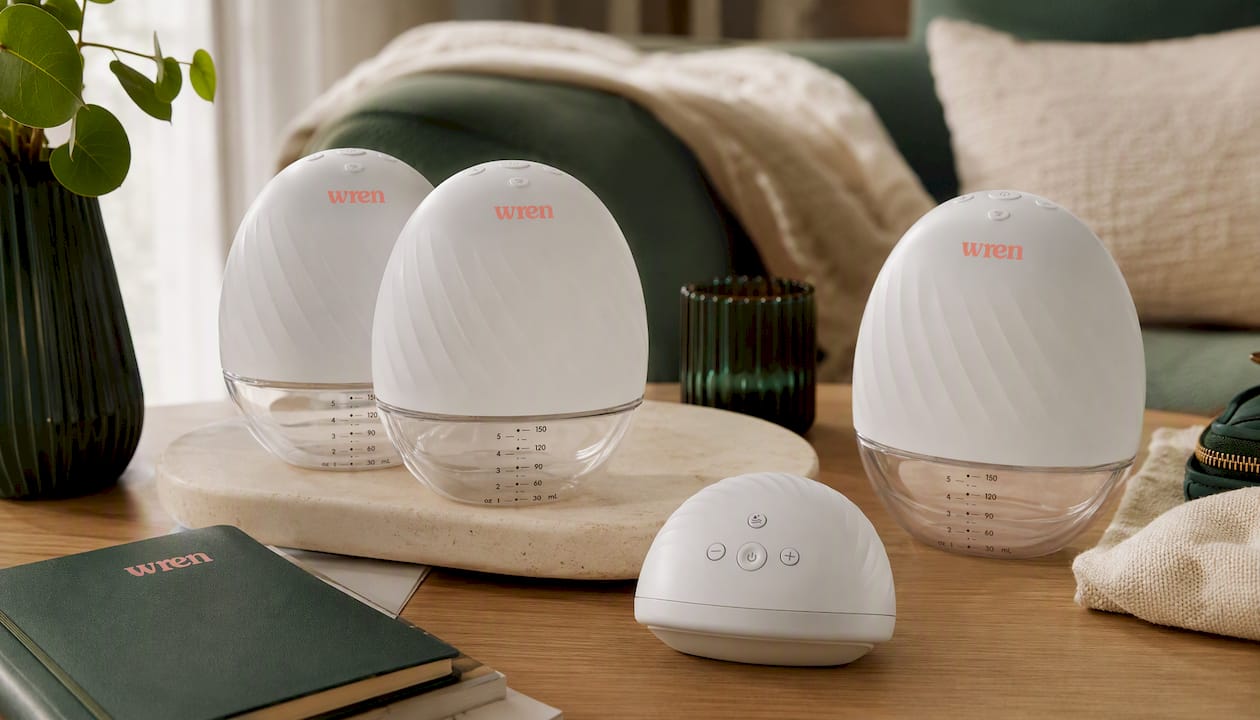
If you need something for the occasional top-up rather than a full working schedule, the Hands-Free Electric Breast Pump covers single sessions without the bulk of a double set-up, useful for a quick pump before a school run or a top-up after a nursing session. And if your existing pump has started underperforming, a worn Main Pump Motor is often the reason sessions creep from 20 minutes to 35 for no clear reason; replacing it can restore suction without buying a whole new device.
Prices for Wren’s range are listed on each product page in £, with full specifications so you can match a pump to your actual routine rather than guessing. Browse the double pump or single pump options and pick whichever fits how your day actually runs.
Sources
This guide draws on NHS guidance on expressing breast milk, the Australian Breastfeeding Association’s practical expressing advice, La Leche League International’s guidance on pumping milk, and stage-specific session guidance from Pumping Schedule. For related reading on skin and body changes during breastfeeding, see The Injection Room’s guidance on microneedling during pregnancy.
- Expressing - the basics | Australian Breastfeeding Association
- How Long to Pump — Session Length by Age and Stage 2026 | Pumping Schedule
- Pumping milk | La Leche League International


