


Should you pump after breastfeeding?


Yes, in most cases: pump after breastfeeding rather than before, and let your goal decide the timing. If you want a stash, pump once daily after the first morning feed. If you want to boost supply, pump for a minute or two after milk flow stops, right after nursing. If you just need comfort relief, a short session or hand expression is enough.
Two things to do straight away:
- Nurse your baby fully first, then decide: pump immediately for supply signalling, or wait 30 to 60 minutes if you’re chasing volume for a bottle.
- Keep sessions short and stop when you’re comfortable, not empty. Overdoing it invites oversupply and blocked ducts.
Watch for tenderness, lumps, or a sudden jump in output. These are signs to ease off, not push harder.
Key Takeaways
Pumping after breastfeeding works best when you nurse first, keep sessions short, and match your timing and technique to a specific goal rather than a fixed clock.
| Point | Details |
|---|---|
| Nurse before you pump | Always breastfeed first so your baby gets priority, then pump for stash or supply. |
| Match timing to your goal | Pump immediately for supply signalling; wait 30 to 60 minutes for extra volume. |
| Technique beats duration | Hands-on pumping and a hand expression finish collect more milk than pumping alone. |
| Expect small yields | 15 to 30 ml per breast after a feed is normal and not a sign of low supply. |
| Use power pumping sparingly | Run it for one to two weeks only, then scale back to avoid oversupply. |
| Choose the right pump for your routine | My-wren’s hands-free double pump suits stash-building and work, while the single pump and lactation massager cover occasional sessions and comfort relief. |
Table of Contents
- When to pump after breastfeeding: timing that matches your goal
- How to pump effectively after breastfeeding
- How often and how long should you pump after breastfeeding?
- How to increase milk supply by pumping after feeds
- Risks and when to seek help
- What the research actually supports about pumping after nursing
- Which Wren products help once you start pumping after breastfeeding
- Sources
When to pump after breastfeeding: timing that matches your goal
There’s no single correct minute to start pumping. It depends on what you’re trying to achieve, and both main approaches have a solid case behind them.
Pumping immediately after a feed works with your body’s existing let-down reflex, so you’re not waiting around for a second one to kick in. It’s the faster option and it plays directly into supply building: continuing to pump for a minute or two after the flow of milk stops signals your body to produce more, which is exactly the mechanism behind most supply-boosting routines.
Waiting 30 to 60 minutes gives your breasts a short window to refill slightly, so you’ll often collect a bit more per session. The trade off is timing against the next feed. Leave it too long and you risk your baby getting a fuller breast right when you wanted spare milk in the fridge.
Matching timing to your actual goal:
- Morning stash building: pump straight after the first morning feed, when supply tends to be highest.
- Pre-work sessions: pump immediately after nursing so you’re not cutting into a tight schedule.
- Comfort relief: short pump or hand expression whenever you feel too full, no strict timing needed.
- Taking the edge off before latch: a very brief pump softens the breast for a baby struggling with a fast or forceful let-down.
Pro Tip: If you’re building a stash and worried about disrupting your baby’s next feed, aim for the first morning session. Supply is typically at its highest then, so what you collect is genuinely “extra”, not milk your baby needed later that day.
Healthline’s guidance on combining breastfeeding and pumping backs this up: breastfeed first, pump after, so your baby always gets priority access.
How to pump effectively after breastfeeding
Technique matters more than most new mothers expect. A pump handled well can nearly match what a baby achieves at the breast; handled badly, it leaves milk behind and leaves you sore.
Before you start:
- Wash your hands and assemble your pump kit.
- Check your flange size. A flange that’s too tight or too loose is the single biggest cause of poor output and nipple pain.
- Warm the breast briefly with a warm flannel or a few minutes of gentle massage.
Once you’re set up, follow this sequence:
- Nurse your baby first, always.
- Start the pump on low suction to encourage let-down.
- Increase suction gradually to a level that’s strong but never painful.
- Add gentle breast compressions or massage while pumping. Squeeze and release rhythmically around the breast rather than pressing hard in one spot.
- Finish with one to two minutes of hand expression.
That last step isn’t optional padding. A 2018 review of expression methods notes that pumping alone is generally less effective than a baby’s latch at clearing the breast, and combining pumping with hand expression closes much of that gap. The Australian Breastfeeding Association makes the same point: hands-on pumping and a hand expression finish routinely increase the amount collected compared with pumping alone.
Pro Tip: Watch for the visual cue of let-down, milk spraying or dripping steadily rather than in weak dribbles. If it doesn’t happen within a couple of minutes, pause, massage, and try again rather than cranking up the suction.
Clean every part that touches milk after each session, and know how expressed milk should be stored and handled before you freeze or fridge it.
How often and how long should you pump after breastfeeding?
Expect small numbers, particularly at first. Collecting somewhere around 15 to 30 ml per breast after a full feed is entirely normal, your baby has already taken the bulk of what was available.
Small post-feed yields aren’t a sign that something’s wrong. They usually mean your baby is feeding efficiently, which is the point.
Frequency depends entirely on your goal:
- Building a stash: once daily, typically after the first morning feed.
- Increasing supply: multiple short sessions across the day, or a short burst of power pumping.
- Comfort relief only: occasional short sessions or hand expression, no fixed schedule needed.
A typical session with a decent double electric pump runs 8 to 15 minutes. Stop once you’re comfortable rather than chasing an empty breast, that’s not how lactation works and it’s not necessary. If you notice engorgement, hard lumps, or output climbing well beyond what your baby needs, that’s your cue to scale sessions back rather than add more.
How to increase milk supply by pumping after feeds
Power pumping is the most commonly recommended technique for a genuine supply bump, and it works by mimicking the frequent, clustered feeding pattern that naturally tells your body to make more milk.
A simple schedule to try:
- Pump for 20 minutes.
- Rest for 10 minutes.
- Pump for 10 minutes.
- Rest for 10 minutes.
- Pump for 10 minutes.
Do this once a day for one to two weeks, not indefinitely. Power pumping is meant as a short-term tactic, and stretching it into a permanent daily habit raises your odds of oversupply and blocked ducts rather than a stable increase.
Alongside power pumping, an extra morning session, consistent hands-on pumping, staying hydrated, and simply getting more rest all support the same goal. If supply still isn’t moving after a couple of weeks, a lactation consultant can check for something a routine tweak won’t fix. Our guide on ways to improve your milk supply covers the wider toolkit beyond pumping schedules alone.
Pro Tip: Track output for a week before judging whether power pumping is working. Day-to-day numbers bounce around naturally; a real supply shift usually shows up as a trend, not a single big session.
Risks and when to seek help
Most pumping problems are minor and fixable at home, but a few signs deserve faster action.
- Plugged ducts feel like a tender, hard lump. Warm compresses, gentle massage toward the nipple, and continued nursing or pumping on that side usually clear it within a day or two.
- Engorgement shows up as tight, painful fullness, often in the early weeks or after skipping a session. Short, gentle pumping and hand expression bring relief without overstimulating supply.
- Mastitis brings flu-like symptoms, redness, and fever alongside breast pain. This needs a GP or midwife promptly, not just home care.
- Nipple pain during pumping is almost always a flange fit or suction problem. Adjust the size or lower the suction before assuming something else is wrong.
- Bottle refusal after introducing a pump is common. Paced bottle feeding, holding the bottle horizontally and pausing often, helps avoid nipple confusion.
Sample short routines for common goals
- Stash-building: nurse, then pump 10 to 15 minutes after the first morning feed only.
- Return-to-work prep: pump once after a midday feed, using a hands-free pump so you can eat lunch or answer emails at the same time.
- Supply-boosting: run a power pumping block once daily for a week, then reassess.
- Comfort relief: brief hand expression or a two to three minute pump whenever you feel overly full.
- Night-time: skip pumping unless you’re actively engorged. Prioritise sleep.
Prep your kit the night before to save fumbling at 6am, and once you’ve hit your goal, taper extra sessions gradually rather than stopping abruptly, dropping too fast can trigger the same fullness and blocked ducts you were trying to avoid. Our return-to-work breastfeeding tips go into more detail on building a workday routine that holds up under real scheduling pressure.
What the research actually supports about pumping after nursing
The conventional advice on this topic tends to overcomplicate timing and undersell technique. Mothers get told to watch the clock, pump at exactly this hour or that one, when the evidence points somewhere else: what you do during the session matters more than when you start it.
Hands-on pumping and a hand expression finish consistently outperform pumping alone at clearing the breast, yet most guidance treats the pump as a passive appliance you switch on and walk away from. That’s the real gap. A £200 pump used passively will underperform a modest one used with proper massage and compression technique.
The other underrated point is restraint. Power pumping works, but it’s a short-term tool, not a lifestyle. Mothers chasing a bigger stash often keep going well past the one to two week window that actually produces results, and end up managing oversupply instead of enjoying it.
Prioritise your baby’s feed first, always. Everything else, timing, volume, schedule, is a secondary decision you get to make on your own terms once that’s settled.
Which Wren products help once you start pumping after breastfeeding
Once you know your goal, matching the right kit to it makes the routine sustainable rather than a daily chore. If you’re building a stash or heading back to work, a hands-free double electric breast pump lets you express from both sides at once, cutting session time roughly in half compared with single pumping, while leaving your hands free for everything else on your list.
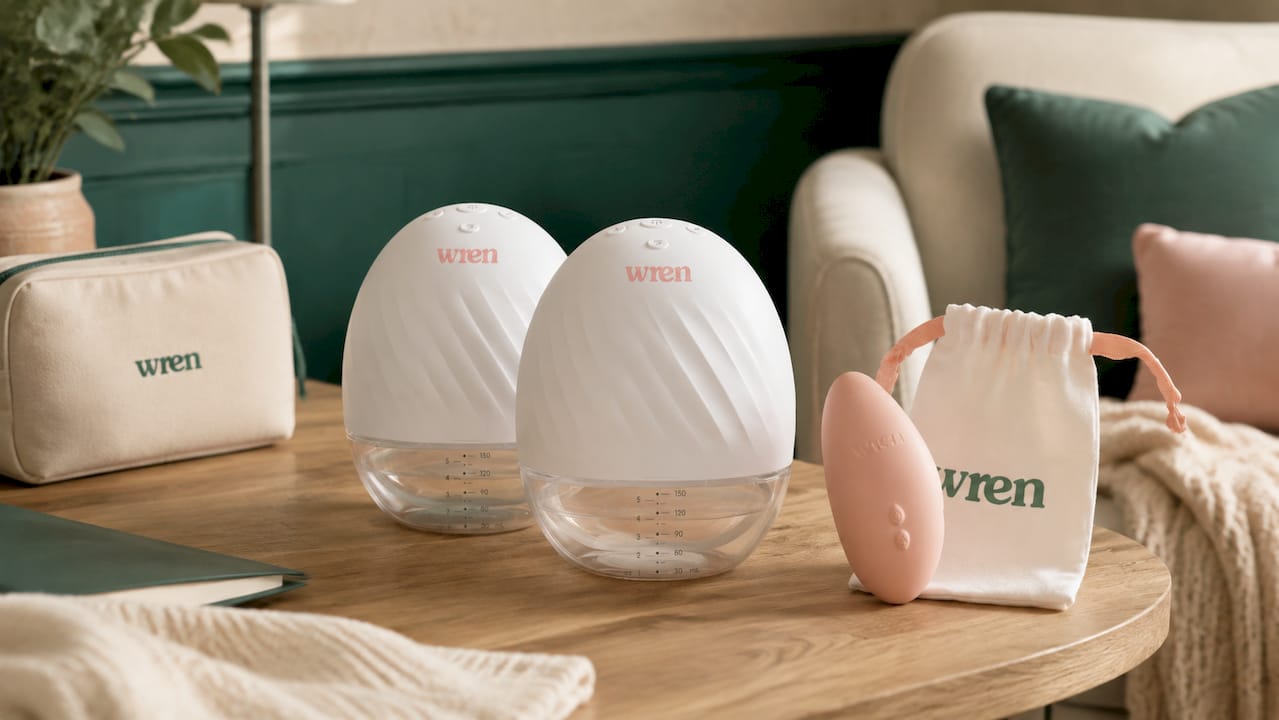
For occasional sessions, comfort pumping, or when you’re out and about, the compact hands-free electric breast pump covers mobility without the bulk of a full double set-up. And if engorgement or a sluggish let-down is slowing you down, the lactation massager is built specifically to soften the breast and encourage flow before you even switch the pump on.
Before you commit to daily use, run a one-session trial: check the flange fits comfortably, confirm suction feels strong but never painful, and clean every part thoroughly after that first go. My-wren’s product pages set out sizing and fit guidance for each pump, so you can check compatibility before you buy.
Sources
- Breastfeeding challenges: milk supply | NHS
- How to combine breastfeeding and pumping | Healthline
- Using a breast pump | Australian Breastfeeding Association
- Article on breastfeeding and expression methods | NCBI


