


From £10 to £400: UK Breast Pump Prices and How to Save


Manual pumps cost £10 to £35, single electrics run £40 to £130, double electrics sit at £100 to £300 or more, and premium wearables reach £130 to £400. Buy a manual for occasional use, an electric for regular expressing, or rent a hospital-grade pump for short-term, high-strength needs. The breakdown below shows exactly where your money goes and how to spend less of it.
TL;DR:
- Double electric pumps offer significant time savings but can cost up to £300, making them more suitable for regular and intensive expressing routines.
- Rental hospital-grade pumps start around £40 per month and are ideal for short-term, high-strength use, especially in neonatal care situations.
- Consider manual or silicone pumps priced between £10 and £35 if expressing only a few times weekly, avoiding unnecessary expenditure on features you won’t use.
- Features like app connectivity, stronger motors, and rechargeable batteries can add £20 to £50 to the price, but only justify the cost based on your actual pumping frequency.
- Buying secondhand is an option for the motor unit and outer casing, but replacement parts and proper sterilization are essential to ensure safety and hygiene.
Table of Contents
- How much do breast pumps cost in the UK?
- Where can you buy or hire a breast pump in the UK?
- What makes one breast pump cost more than another?
- How can you save money on a breast pump?
- Why trust Wren on breast pump costs?
- Comfort or cost: what actually matters most
- Complete your pumping kit with Wren essentials
- Sources
How much do breast pumps cost in the UK?
Breast pump prices in the UK split cleanly by type, and knowing which category you actually need saves you from overspending on features you won’t use.
Manual and silicone pumps are the entry point, typically priced at £10 to £35. These suit occasional relief or the odd missed feed rather than regular expressing sessions. Single electric pumps step up to £40 to £130, offering motorised suction without the double-pumping speed. Double electric pumps, which express both breasts simultaneously and cut expressing time roughly in half, commonly cost £100 to £300 or more, according to UK reviews tested by mums.
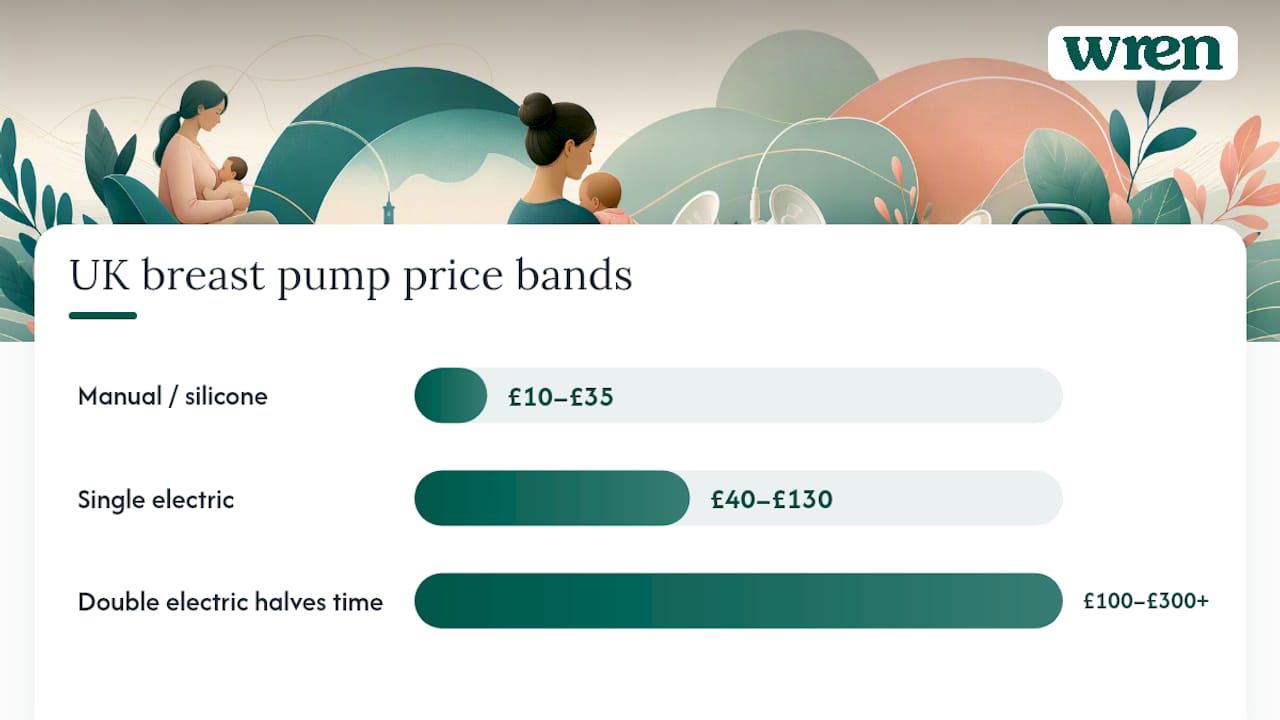
Wearable pumps sit at the premium end, often £130 to £400 or above. You’re paying for hands-free discretion, not necessarily stronger suction. The Independent’s testing notes wearables often trade raw pumping strength for comfort and portability, which matters if you’re expressing at a desk rather than at home.
Here’s the quick reference:
- Manual/silicone: £10 to £35
- Single electric: £40 to £130
- Double electric: £100 to £300+
- Wearable/premium wearable: £130 to £400+
- Hospital-grade rental: from around £40 per month depending on supplier
Pro Tip: If you’re only expressing a handful of times a week, a £20 manual pump does the job a £250 double electric was built for. Match spend to frequency, not to what looks most impressive on the shelf.
Price-comparison listings on sites like PriceRunner show genuine spread even within the same category. Two double electrics with near-identical specs can differ by £80, purely on brand and retailer margin.
Where can you buy or hire a breast pump in the UK?
Retail options range from supermarket baby aisles to specialist online shops, and each channel handles stock and pricing differently.
High-street pharmacies and baby specialists stock entry-level manual and single electric pumps, usually the cheapest place to grab something in a hurry. Specialist baby retailers and brand-direct websites carry the fuller range, including wearables and double electrics, often with better warranty support than a generic marketplace listing. Online marketplaces undercut on price but vary wildly on genuine stock versus grey-market imports, so check seller ratings before you buy a pump that may lack UK warranty cover.
- High-street pharmacies and supermarkets (manual and basic electric)
- Specialist baby retailers and brand-direct sites (full range, better warranty)
- Online marketplaces (cheapest, but check seller legitimacy)
- Dedicated rental services (hospital-grade, monthly hire)
- NHS maternity services (clinical need only)
Rental has become a genuinely useful middle path. Hospital-grade pump hire from specialist providers can start from around £40 a month, which beats buying outright if you only need serious suction for a few weeks, say while establishing supply for a premature baby. Most rental agreements run month-to-month with a deposit, delivery, and a collection fee once you’re done.
The NHS doesn’t routinely supply breast pumps to every new mother, but NHS guidance on expressing confirms some hospitals provide hospital-grade pumps where there’s a clinical need, such as a baby in neonatal care unable to feed directly. Ask your midwife or maternity unit directly rather than assuming it isn’t available.
What makes one breast pump cost more than another?
Price differences usually come down to a short list of features, not marketing gloss.
- Single vs double pumping – double pumps cost more but halve session time.
- Wearable design – hands-free, in-bra pumps carry a premium for engineering and battery tech.
- Battery life and app connectivity – rechargeable batteries and smartphone tracking add £20 to £50 to the price tag.
- Motor strength – hospital-grade motors, built for durability across multiple users, cost more than consumer motors designed for one household.
- Spare parts and accessories – flanges, valves, and membranes wear out and need replacing every few months, a cost that reviewers flag as an ongoing expense many buyers overlook at purchase.
- Warranty length – some brands offer just 12 months, others extend to two years, which matters for a product you’ll use daily.
Pro Tip: Before paying extra for app connectivity or a stronger motor, be honest about how often you’ll actually pump. Someone expressing twice a day at home has very different needs to someone pumping at work three times a week.
For a deeper look at matching motor strength and features to your routine, see our guide on choosing an electric breast pump that fits life.
How can you save money on a breast pump?
If you’re only expressing occasionally, a manual or silicone pump at £10 to £35 covers it. Save the electric spend for genuine regular use.
Buying secondhand can work, but only for the outer casing and motor unit. Never share or reuse flanges, valves, or membranes that come into direct contact with milk. Sterilise everything that touches milk, and buy fresh spare parts regardless of what the secondhand pump comes with.
- Check voucher codes and seasonal sales before checkout, particularly around Black Friday and Amazon Prime Day
- Use price-comparison sites like PriceSpy to spot the same model priced differently across retailers
- Ask retailers about interest-free instalment plans, which many UK sellers now offer on higher-ticket electrics
- Rent hospital-grade for short, intense need instead of buying a pump you’ll use for six weeks and shelve
Rental beats buying when your need is temporary and intense, such as boosting a low supply in the early weeks. Buying wins when you’re planning months of regular expressing, since rental fees add up past the three or four month mark.
Why trust Wren on breast pump costs?
My-wren exists to help mothers express with comfort and confidence, without the guesswork that usually comes with comparing pump prices. Our wearable pumps and feeding accessories are built to fit real routines, whether that’s exclusive pumping or the occasional session between work calls.
Understanding the price bands above helps you see where accessories fit into the total spend. A pump is the headline cost, but items like reusable pads and nipple care sit in the smaller, recurring column of your budget. For a wider view of brand options at every price point, our guide to the best breast pump brands in the UK breaks down what you get at each tier.
Comfort or cost: what actually matters most
Cost dominates most pump decisions, and rightly so when budgets are tight. But comfort determines whether you’ll actually use the pump you bought.
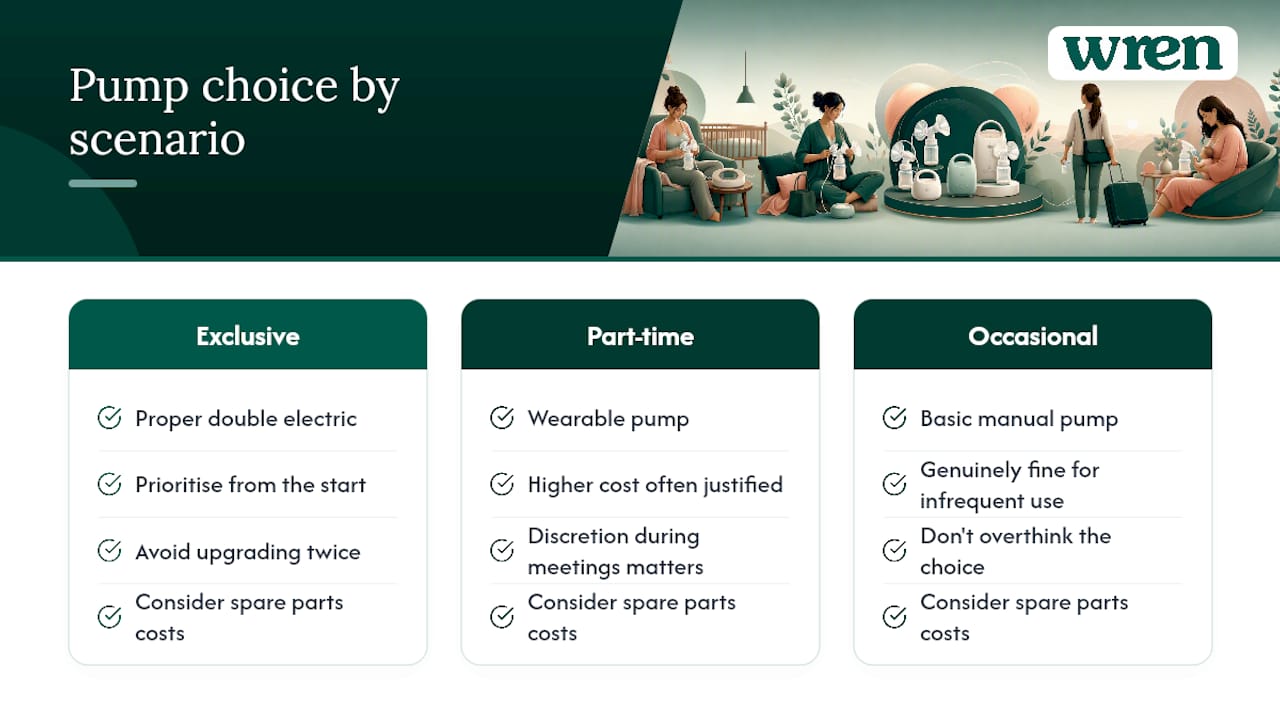
A cheaper double electric that pinches or leaks defeats its own value, however low the price tag. If you’re planning exclusive pumping, prioritise a proper double electric from the start rather than upgrading twice. Returning to work part-time usually justifies a wearable, even at the higher end, because discretion during a meeting is worth more than most people budget for upfront. For occasional need, don’t overthink it. A basic manual pump is genuinely fine.
Whatever your scenario, weigh the running costs of spare parts alongside the sticker price before you decide. My-wren’s own range is built around that same principle: comfort and cost working together, not traded off against each other.
— Paul
Complete your pumping kit with Wren essentials
Once you’ve settled on a pump, the accessories around it make the daily routine easier, not harder. My-wren’s kit is built to complement any pump setup, filling the gaps that pump price bands don’t cover.

Our Bamboo Reusable Breast Pads cut the ongoing cost of disposable pads, a small but real saving over months of daily use. The Wren Go-To Balm nipple salve soothes soreness that even a well-fitted pump can cause during the early weeks. Both sit at the lower end of the accessory spend, the kind of purchase that actually gets used every day rather than gathering dust in a drawer.
Browse the full range at My-wren and build a kit that matches your pump, your routine, and your budget.
Sources
- Expressing breast milk | NHS
- Best breast pumps to buy in UK for 2026, tried and tested by mums | MadeForMums
- Electric Breast Pumps • Compare today & find prices » PriceRunner


