


Hospital bag checklist UK: what to pack and when


Pack a small labour bag, a separate postnatal bag, and a baby essentials bag. Have all three ready by the later stages of pregnancy. The non-negotiables: maternity notes, birth plan, phone and charger, front-opening nightwear, a suitable quantity of maternity pads, a going-home outfit for your baby, and a correctly fitted car seat.
Core items to pack now:
- Maternity notes and photo ID
- Birth plan (printed copy)
- Phone, charger, and a long cable or power bank
- Front-opening nightdress or loose T-shirts (x2–3)
- 12–24 super-absorbent maternity pads
- Nursing bras (x2–3) and breast pads
- Baby going-home outfit, vest, and blanket
- Fitted car seat (installed and tested before the due date)
BabyCentre advises packing by the late stages of pregnancy. If you are driving to hospital, leave the postnatal bag in the boot so the labour bag stays accessible indoors.
Table of Contents
- What goes in the labour bag?
- What to pack for your postnatal stay
- What to pack for your baby
- What the birth partner should pack
- If you are planning a caesarean birth
- What hospitals provide, and what you need to bring
- How the three-bag system makes packing simpler
- Key takeaways
- Packing light is the right call
- Breastfeeding essentials from My-wren for your postnatal bag
- Useful sources and further reading
What goes in the labour bag?
This is the small bag you carry into the birth room. Keep it light. You will not need much, and ward storage is limited.
Documents and admin:
- Maternity notes, ID, and birth plan
- Small change or a card for the car park
- NHS number and a list of key contacts
Comfort and coping:
- Lip balm (gas and air dries lips quickly), water bottle with a straw or bendy straw, and a small water spray
- Snacks and isotonic drinks for energy during labour
- Slippers or flip-flops, a loose nightdress or old T-shirt
- Music playlist and earphones
- Massage oil or roller, heat pack if permitted
Practical extras:
- TENS machine with spare batteries and leads (check whether your Trust loans them first)
- Glasses or contact lens kit if needed
- Power bank for long labours
Pro Tip: Check your hospital or birth centre’s policy before packing. Many NHS Trusts supply birthing balls, TENS machines, and other equipment — bringing duplicates wastes space you do not have.
What to pack for your postnatal stay
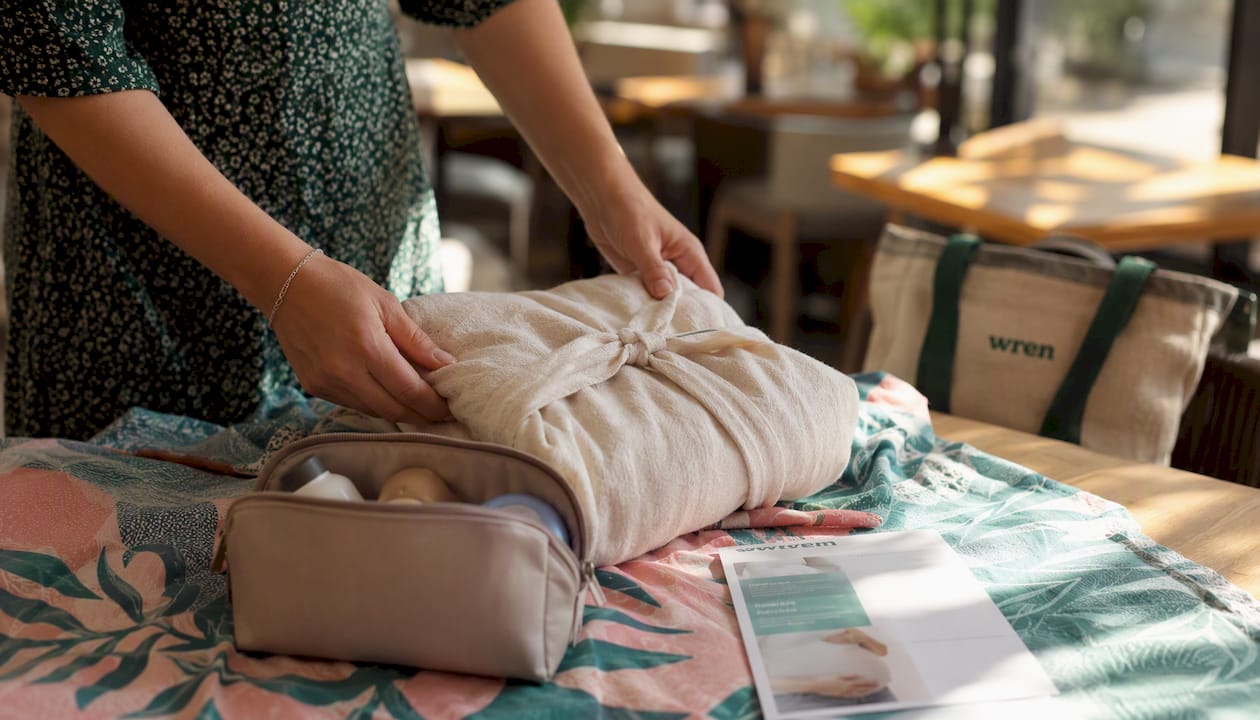
Recovery and feeding take up most of the postnatal stay. Pack for comfort and practicality, not variety.
Clothing:
- 2–3 front-opening nightdresses or button-front T-shirts. NHS guidance specifically recommends front-opening nightwear to make skin-to-skin contact and breastfeeding easier.
- Loose going-home outfit
- Dressing gown and non-slip slippers
- Choose dark colours or busy patterns. BabyCentre notes this helps disguise stains and makes moving around the ward more comfortable.
Feeding essentials:
- 2–3 supportive nursing bras
- Breast pads (reusable bamboo or disposable)
- Nipple balm
- Any breastfeeding notes or class handouts
Hygiene and recovery:
- 12–24 super-absorbent maternity pads. This is the quantity hospitals commonly recommend for the postnatal period.
- Disposable or large cotton pants (pack more than you think you need)
- Unscented toiletries, face wipes, toothbrush and toothpaste
- Towel if you prefer your own
Practical extras:
- Earplugs and eye mask for postnatal wards, which are rarely quiet
- Plastic bag for dirty laundry
- Pain relief as advised by your midwife
Pro Tip: Pack a small separate pouch for dirty items so clean clothes stay clean. A zip-lock bag works perfectly.
What to pack for your baby
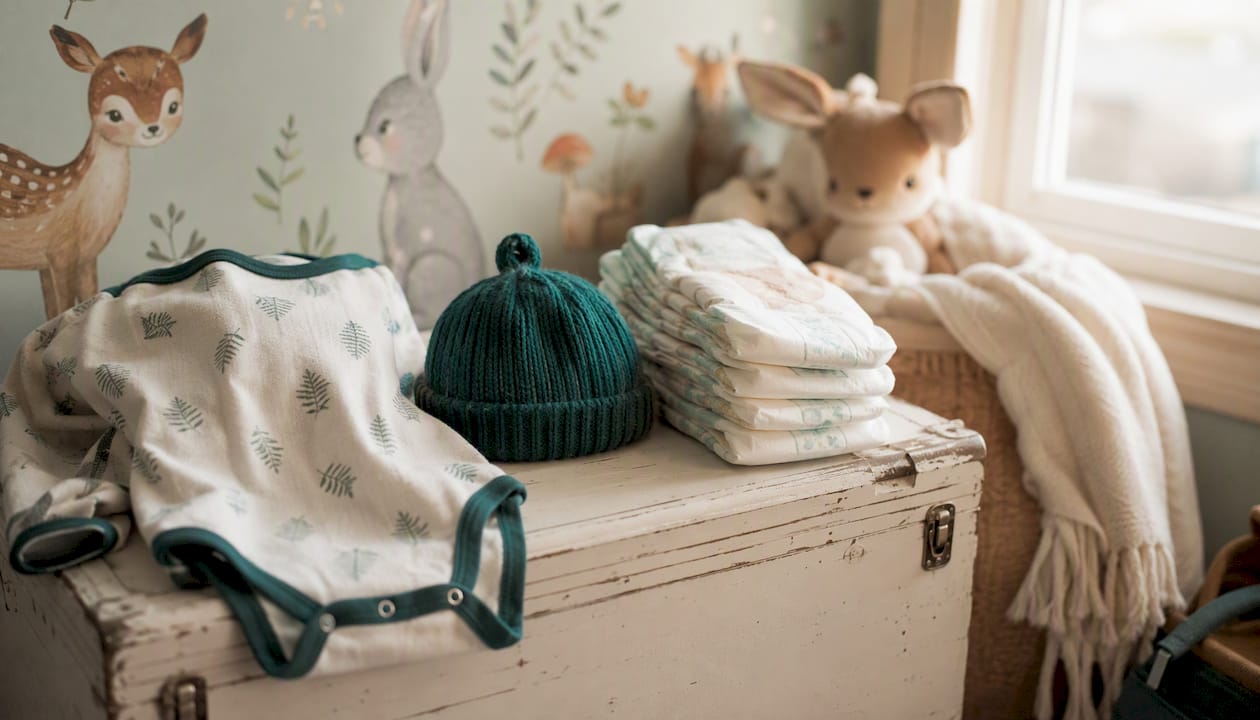
Most short stays require very little. A newborn’s needs are simple.
Immediate essentials:
- Fitted car seat, correctly installed. Hull University Teaching Hospitals NHS Trust advises practising the installation with a teddy or cushion before the due date. Hospitals may not permit discharge without one in place.
- 2–3 vests and sleepsuits
- Going-home outfit
- Blanket or shawl
Hygiene basics:
- Muslin squares (x3–6)
- Cotton wool or fragrance-free wipes
- Nappies. Many Trusts supply them, but a small starter pack is sensible. Expect up to 12 nappy changes a day in the first few days.
Feeding note:
Some Trusts do not provide formula, bottles, or sterilising facilities. If you plan to formula feed, check with your unit and bring sealed ready-made starter packs if required.
Seasonal and safety notes:
- Add a hat and extra layers in winter.
- Remove bulky snowsuits before strapping your baby into the car seat. The harness must sit against the body, not over padding.
- If using public transport, a sling or carrier is easier than a pram for a newborn.
What the birth partner should pack
Labour can last many hours. The birth partner needs to be self-sufficient.
Essentials:
- Snacks, drinks, and cash or card for parking and vending machines
- Phone and charger, plus a small power bank
- Spare clothes and basic toiletries
- Printed list of contacts and directions to the hospital
Support kit:
- Copy of the birth plan
- Bendy straw, water spray, and massage oil for practical support during labour
- Pillow or blanket if staying overnight
- Book or tablet for long waits
Pro Tip: Pack the partner bag separately from the labour and postnatal bags. It stays ready to grab at any point without disrupting the birthing parent’s kit.
If you are planning a caesarean birth
A planned caesarean has different practical needs. Recovery from surgery affects what clothing and items are useful.
Pack for surgery and recovery:
- Paperwork, ID, and consent forms
- Front-opening or loose clothing that does not pull across the abdomen
- High-waisted or disposable pants that sit above the scar line
- 2–3 nursing bras
- Extra maternity pads and comfortable underwear
Practical hospital notes:
Some hospitals advise bringing your own dressing gown and slippers. Chewing gum or peppermint tea can help with trapped wind after surgery. Check with your midwife before packing either.
Mobility is limited in the first day or two. Pack personal items in a small bag you can keep on or beside the bed rather than in a large holdall at the foot of it.
Pro Tip: Choose garments that fasten above the scar, not across it. High-waist knickers and loose button-front tops are the most practical choices for the first few days.
What hospitals provide, and what you need to bring
Provisions vary significantly between NHS Trusts and birth centres. Somerset NHS Foundation Trust is clear that what equipment is available differs by unit. Always check your specific Trust’s page before packing.
| Item | Hospital/Trust typically provides | Bring yourself |
|---|---|---|
| Maternity pads | Basic supply only (limited) | 12–24 super-absorbent pads |
| Nappies | Often yes, but not always | Small starter pack as backup |
| Towels | Rarely | Your own if preferred |
| Birthing ball | Many Trusts, not all | Check first |
| TENS machine | Some Trusts loan them | Personal unit if preferred |
| Formula/bottles | Not always | Sealed starter packs if needed |
| Breast pump | Not routinely | Compact hands-free pump |
What not to bring:
- Large gadgets or items not cleared with the unit
- Excessive clothing (storage is very limited)
- Valuables or large amounts of cash
- Unapproved oils or aromatherapy products (check with your midwife)
Printable checklist: Download or print a copy of this checklist to tick off items as you pack. The NHS hospital bag checklist is a reliable starting point.
How the three-bag system makes packing simpler
NCT and BabyCentre both recommend splitting your kit across two or three distinct bags. It reduces stress, keeps the birth room uncluttered, and means the postnatal bag stays in the car until it is actually needed.
- Labour bag (kept in the house, ready to grab): maternity notes, birth plan, ID, phone and charger, comfort items, snacks, loose clothing, and your TENS machine.
- Postnatal bag (left in the car or at home): recovery clothing, maternity pads, nursing bras, breast pads, nipple balm, toiletries, and baby clothes.
- Partner bag (separate from both): snacks, spare clothes, toiletries, phone charger, power bank, and support items.
Label each bag clearly on the outside. Tape a short contents list to each one so the birth partner can find items without unpacking everything.
Packing timeline:
- By 36 weeks: labour bag packed and by the door
- By 37 weeks: postnatal bag and partner bag ready; car seat installed
- Well before the due date: practise fitting the car seat with a teddy to check for errors
Key takeaways
A complete hospital bag checklist for UK births comes down to three labelled bags, packed by 37 weeks, with the car seat fitted and tested before the due date.
| Point | Details |
|---|---|
| Pack by 37 weeks | Labour bag in the house, postnatal bag in the car, partner bag ready to grab. |
| Maternity pads quantity | Hospitals recommend 12–24 super-absorbent pads for the postnatal period. |
| Car seat is non-negotiable | Fit and test it before the due date; hospitals may not allow discharge without one. |
| Check your Trust’s provisions | What each unit supplies varies; always confirm before packing to avoid overpacking. |
| My-wren breastfeeding kit | Add bamboo reusable breast pads, nipple balm, and a compact hands-free pump to your postnatal bag. |
Packing light is the right call
Most first-time parents overpack. The instinct is understandable: you are preparing for an unknown length of stay, an unfamiliar environment, and a situation where you want everything to hand. But hospital wards have very little storage, and a large, disorganised bag creates more stress than it solves.
The three-bag system works precisely because it separates the urgent from the optional. The labour bag is small and focused. The postnatal bag stays out of the way until it is needed. The partner bag keeps support items accessible without cluttering the birth room. That structure is not just tidy. It means the birth partner can find the lip balm or the bendy straw without unpacking half a holdall mid-contraction.
One thing that does get underestimated: feeding support items. Many parents assume breastfeeding will be straightforward, or that the hospital will provide everything. In practice, midwives and infant feeding teams are available to help, but the ward is busy. Having your own breast pads, nipple balm, and a compact pump means you are not waiting for someone to bring supplies from home on day two.
Pack the basics. Label the bags. Know where the car seat is. Everything else can follow.
Breastfeeding essentials from My-wren for your postnatal bag
If you are planning to breastfeed or express, a few compact items make a real difference in hospital. My-wren’s Bamboo Reusable Breast Pads are soft, absorbent, and washable. They take up almost no space in a postnatal bag and are gentler on sensitive skin than disposable alternatives.
For parents planning to express from the start, the Hands-Free Electric Breast Pump fits discreetly inside a nursing bra, so you can express without being tied to a bedside machine. The Hands-Free Double Electric Breast Pump suits parents who want to express both sides simultaneously and build supply quickly. Both are compact enough to pack without adding significant weight.
The Nipple Bubble offers protection for sore or cracked nipples in the early days, and the Lactation Massager can help with milk flow and comfort. If you are building a full pump kit, check that you have the right Breast Shield size before you pack.
Check your hospital’s policy on electrical items and battery charging before bringing any device. Most units permit personal breast pumps, but it is worth confirming with your midwife.
Browse the full breastfeeding accessories range or explore breastfeeding kits and bundles to pack everything in one order.
Useful sources and further reading
- NHS hospital bag checklist — the standard NHS guidance on what to pack
- Tommy’s: packing your hospital bag — practical advice from Tommy’s maternity charity
- NCT hospital bag checklist — NCT’s phased packing approach
- BabyCentre hospital bag checklist — detailed list with midwife input
- Somerset NHS Foundation Trust: packing your hospital bag — example of a Trust-specific provisions list
- Hull University Teaching Hospitals NHS Trust: hospital bag — car seat guidance and unit-specific advice
This article provides general information only. For advice specific to your pregnancy, birth plan, or medical needs, speak with your midwife or healthcare provider.


