


Milk blister breastfeeding: treat a bleb and keep feeding


A milk blister, also called a nipple bleb, is a tiny white, yellow, or clear dot on the nipple caused by a thin layer of skin blocking a milk duct opening. Apply a warm, moist compress for a few minutes, then feed or pump straight away to restore flow.
Most blebs are safe to manage at home while you continue breastfeeding. If you develop a fever, spreading redness, or worsening pain that does not settle within a few days, contact your GP or call NHS 111.
What to do right now:
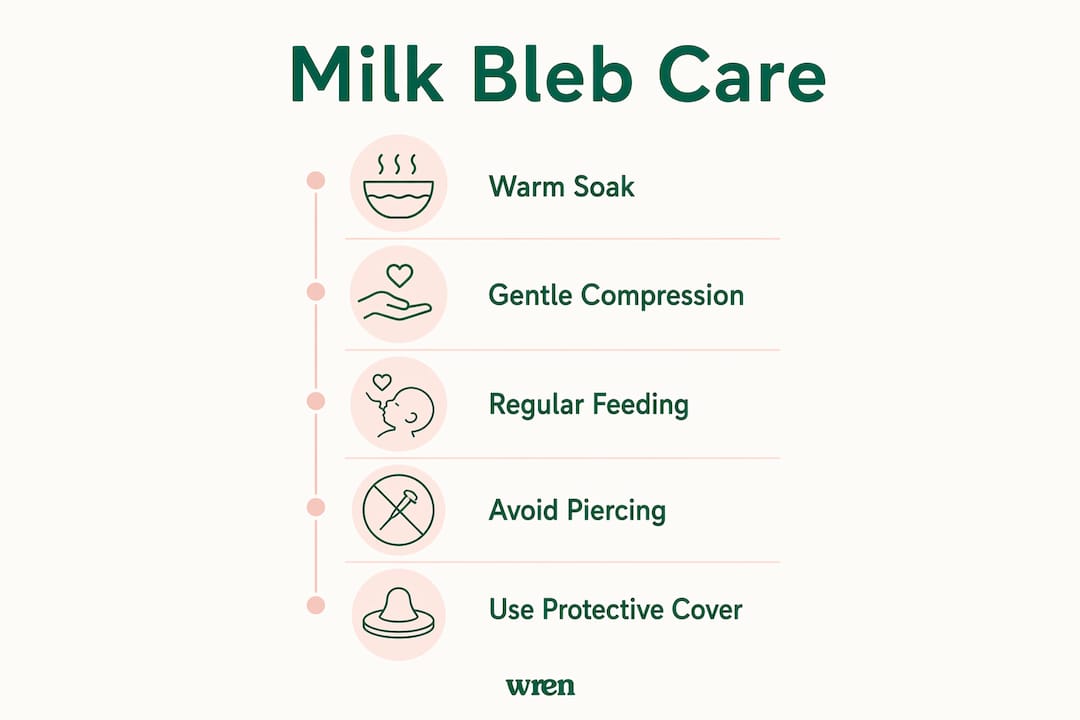
- Soak a clean flannel in warm water, hold it against the nipple for 3–5 minutes
- Feed your baby or pump immediately while the skin is softened
- Use gentle hand expression directed from behind the bleb towards the nipple tip
- Take paracetamol or ibuprofen if the pain is sharp, following standard UK dosing guidance
- Leave a painless bleb alone — painless blebs often resolve without any active treatment
Table of Contents
- What does a milk blister look like?
- How do you tell a bleb from a friction blister or thrush?
- What symptoms should you expect, and when is it urgent?
- How to treat a milk blister: a step-by-step plan
- What to try if milk blisters keep coming back
- How to reduce the chance of milk blisters coming back
- Products and tools that can help during recovery
- Key takeaways
- A note on blebs and keeping breastfeeding on track
- My-wren products for nipple care and milk flow
- Useful sources and UK help contacts
What does a milk blister look like?
A bleb appears as a small, focal white, yellow, or clear dot on the nipple or areola, usually no bigger than a pinhead. It often looks shiny or dome-shaped, and may bulge slightly when the breast is compressed.
What you will feel: sharp or shooting pain that is concentrated at one spot on the nipple, sometimes radiating deeper into the breast during or after a feed. The pain is typically focal — one precise point — which is the clearest distinguishing feature.
The mechanism is straightforward: a thin layer of skin grows over a milk pore, milk backs up behind it, and the resulting ductal inflammation causes that characteristic sting. The dot itself is the blocked pore, not an infection.
Not every white spot needs treatment. If the bleb causes no pain and milk flow is unaffected, watchful waiting is a reasonable first step.
How do you tell a bleb from a friction blister or thrush?
Blebs, friction injuries, and suspected thrush can all produce discomfort at the nipple, but they look and feel different and need different approaches.
| Feature | Milk bleb | Friction blister / blood blister | Nipple thrush |
|---|---|---|---|
| Appearance | Single, dome-shaped white or clear dot | Fluid-filled or blood-tinged blister; raw skin | No distinct dome; skin may look pink or flaky |
| Pain pattern | Sharp, focal, at one point | Soreness across the nipple surface | Burning, often bilateral; pain between feeds |
| Common triggers | Ductal plugging, oversupply, pressure | Poor latch, ill-fitting flange | Rare; often misdiagnosed |
| Usual approach | Warm compress, feed/pump, topical care | Latch correction, wound care | Confirmed antifungal treatment |
Blebs are associated with ductal inflammation, hyperlactation, local pressure, epidermal overgrowth, and occasionally mammary dysbiosis. Friction blisters follow visible trauma — a flange that is the wrong size, or a shallow latch that drags the nipple.
True nipple thrush is rare. Assuming a white spot is thrush can lead to antifungal treatments that irritate the nipple and delay the correct care. A single, dome-shaped dot with focal pain is far more likely to be a bleb.
Pro Tip: Do not pierce or unroof a bleb at home. Unskilled or repeated unroofing raises the risk of infection, hypertrophic scarring, and chronic recurrence. If the skin needs opening, a clinician can do this under sterile conditions.
What symptoms should you expect, and when is it urgent?
The typical experience with a bleb is a sharp, stinging sensation at one point on the nipple that peaks during a feed and eases off afterwards. There may be mild local swelling or a visible bulge when the breast fills.
Routine symptoms (manage at home):
- Focal pain at the bleb site during or after feeds
- Visible white or clear dot that may change slightly in size between feeds
- Temporary relief after feeding or pumping
Red flags — contact your GP or NHS 111:
- Fever or flu-like symptoms
- Spreading redness, warmth, or swelling in the breast
- Purulent (pus-like) discharge from the nipple
- Pain that is worsening rather than improving after several days of home care
- A blister that does not resolve after one to two weeks
An unresolved bleb can progress to mastitis if milk flow stays blocked and ductal stasis continues. Mastitis can, in turn, develop into a breast abscess requiring drainage — so acting on red flags promptly matters. In the UK, your GP, an NHS urgent treatment centre, or NHS 111 (call 111 or visit 111.nhs.uk) are the right first contacts. Many areas also have lactation clinics or IBCLC practitioners who can assess the breast directly.
How to treat a milk blister: a step-by-step plan
First-line home care follows a clear sequence. Work through these steps before each feed until the bleb resolves.
- Apply moist heat. Soak a clean flannel in warm (not hot) water and hold it against the nipple for 3–5 minutes. Alternatively, soak the nipple in a shallow bowl of warm saline or an Epsom salt solution for the same duration. This softens the skin over the blocked pore.
- Massage gently behind the bleb. Using clean fingers, apply light pressure behind the dot and stroke towards the nipple tip. This encourages thickened milk to move towards the opening.
- Feed or pump immediately. While the skin is still soft and warm, put your baby to the breast or use a pump. The suction and milk flow are often enough to clear the pore. Hand expression directed from behind the bleb towards the tip is frequently more effective than a long pump session alone.
- Finish with topical care. After the feed, pat the nipple dry and apply a breastfeeding-safe balm — lanolin or a water-soluble nipple balm — to protect the skin. A soft, breathable breast pad or nipple cover can reduce friction from clothing between feeds.
Do not do: aggressively scrub the bleb, apply caustic agents such as Gentian violet, or attempt to pierce the skin with a needle at home. These approaches increase infection risk and can cause scarring.
For pain between feeds, a cold pack wrapped in a cloth held against the breast for a few minutes can reduce discomfort. Paracetamol and ibuprofen are both compatible with breastfeeding at standard UK doses — check the patient information leaflet or ask your pharmacist.
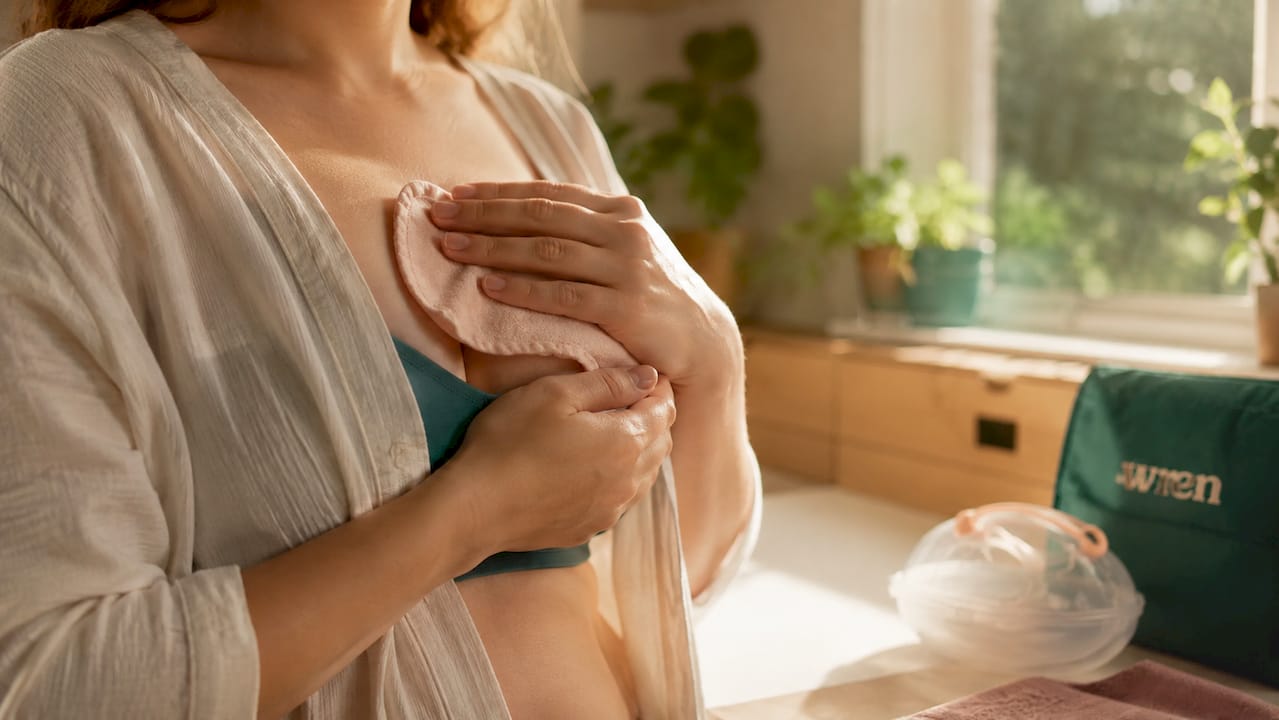
Pro Tip: After the warm soak, try a short breast compression: cup the breast firmly with both hands and squeeze gently while your baby feeds or while you pump. This added pressure behind the bleb can dislodge thickened milk that the suction alone does not shift.
What to try if milk blisters keep coming back
Recurrent or multifocal blebs usually signal an underlying issue — oversupply, ductal dysbiosis, or a technique problem — rather than a skin condition that needs repeated local treatment.
Clinical practice increasingly favours a combined approach for persistent blebs: topical triamcinolone (a mid-potency steroid cream applied as directed by a clinician) to reduce surface inflammation, alongside oral sunflower lecithin as an emulsifier to reduce the stickiness of milk in the ducts. This combination has been used in specialist breastfeeding medicine practice with good outcomes in many patients.
Conservative steps to try first:
- Sunflower lecithin: available in capsule form from health food retailers; used by some lactation clinicians to reduce recurrent plugging by making milk less viscous
- Block feeding: feeding from one breast for a set block of time before switching, to reduce oversupply and lower the pressure driving bleb formation
- Pumping adjustments: reduce suction to the lowest effective setting; check flange sizing
Antibiotics, ultrasound therapy, and sterile unroofing are clinical decisions. A GP or breastfeeding medicine specialist will assess whether any of these are appropriate. Multifocal blebs — multiple dots across one or both nipples — often indicate a supply or dysbiosis problem and are more likely to need a combined medical and lactation plan.
When to ask for a referral (show this to your clinician):
- Blebs recurring more than once a month
- Multiple blebs on one or both nipples simultaneously
- Chronic scabbing or skin changes at the nipple
- Suspected mammary dysbiosis or persistent ductal plugging
- No improvement after four to six weeks of home management
How to reduce the chance of milk blisters coming back
Prevention centres on three areas: feeding technique, equipment fit, and nipple skin care.
Feeding technique and latch:
- Aim for a deep latch where the baby takes a large mouthful of breast tissue, not just the nipple tip; check that the chin is pressed into the breast and the nose is clear
- Vary feeding positions between sessions to change the pressure points on the nipple
- If you need breastfeeding positioning tips, a lactation consultant or your midwife can assess latch in person
Equipment checklist:
- Pump flange size: the nipple should move freely in the tunnel without the areola being pulled in excessively; most manufacturers provide sizing guides
- Nipple shields: use only if advised by a clinician and ensure the shield fits the nipple correctly
- Suction level: always start low and increase only to the minimum needed for comfortable, effective expression
Supply management:
- Signs of oversupply include frequent engorgement, fast let-down, and a baby who gulps or pulls off during feeds
- Block feeding (one breast per feed block) and paced bottle feeding can help balance production and removal
- Oversupply is linked to bleb formation; addressing it reduces recurrence risk
Nipple skin care:
- Cleanse gently with water only; soap can strip natural oils and dry the skin
- Apply a lanolin nipple balm after feeds to maintain skin integrity
- Wear soft cotton bras; avoid underwired styles or tight synthetic fabrics that press on the nipple
- Change breast pads frequently to prevent moisture build-up
Products and tools that can help during recovery
A small number of practical adjuncts can support the home care steps above. The following are used alongside the warm compress and feed/pump sequence, not instead of it.
My-wren Nipple Bubble (with storage case and bag)
The Nipple Bubble is a dome-shaped cover that sits over the nipple between feeds, protecting it from clothing friction and pressure. During bleb recovery, it can hold a soft oil-soaked pad (such as a gauze pad dampened with olive oil or saline) against the nipple to maintain gentle moisture between feeds. Keep it clean by rinsing with warm water and mild soap after each use. Prices are shown in £ on the My-wren site.
My-wren Lactation Massager
A lactation massager provides gentle vibration to encourage milk flow and relieve localised engorgement. Used before or during a feed, it can help shift thickened milk behind a bleb when combined with hand expression. Apply it to the breast tissue behind the bleb, not directly on the dot itself, and keep sessions short — two to three minutes is typically enough. For more detail on how a lactation massager works, the My-wren blog covers safe usage and technique.
Nipple balm
A breastfeeding-safe balm applied after feeds protects the skin between sessions. Lanolin-based options and water-soluble balms are both suitable; the My-wren Go-To Balm is designed for this purpose. If you are considering a natural breast skin-care cream as an additional emollient, check that any product is safe for use while breastfeeding before applying it near the nipple, such as the DROP - VOLUPTE DES BIO CREAM for breast beauty skin care.
Usage notes:
- Stop using any mechanical device directly on the bleb if pain increases
- Check with your GP or IBCLC before introducing new topical products if the skin is broken
- All My-wren products are available at my-wren.com with prices in £ and UK shipping
Key takeaways
A milk blister resolves most quickly when you apply moist heat, feed or pump immediately, and keep milk flowing rather than waiting for the bleb to clear on its own.
| Point | Details |
|---|---|
| Recognise the bleb | A single, dome-shaped white or clear dot with sharp focal pain is the hallmark sign. |
| Act with heat and feeding | Warm compress followed immediately by feeding or pumping is the most effective first step. |
| Avoid home piercing | Self-unroofing raises infection and scarring risk; leave sterile unroofing to a clinician. |
| Know the red flags | Fever, spreading redness, or worsening pain after several days needs GP or NHS 111 contact. |
| My-wren adjuncts | The Nipple Bubble and Lactation Massager support protection and flow during recovery. |
A note on blebs and keeping breastfeeding on track
Blebs are common and, in most cases, manageable without stopping breastfeeding. The conventional advice to “just push through the pain” misses the point. The goal is not to tolerate discomfort but to restore milk flow, because maintaining flow is what prevents a bleb from escalating to mastitis.
What tends to get overlooked is the differential diagnosis step. Many mothers are told they have thrush when the real problem is a bleb — and the antifungal treatment that follows does nothing for a blocked pore while potentially irritating already-sensitive skin. A single dome-shaped dot with focal pain deserves a bleb assessment first, not a thrush assumption.
Recurrent blebs are also frequently treated as a local skin problem when the underlying driver is oversupply or a technique issue. Addressing the root cause — flange fit, latch depth, supply balance — is what breaks the cycle. Local measures alone rarely do it.
If pain continues beyond a week of consistent home care, an IBCLC assessment is worth requesting through your GP or maternity services. They can observe a feed, assess latch, and advise on whether a referral to a breastfeeding medicine specialist is appropriate.
My-wren products for nipple care and milk flow
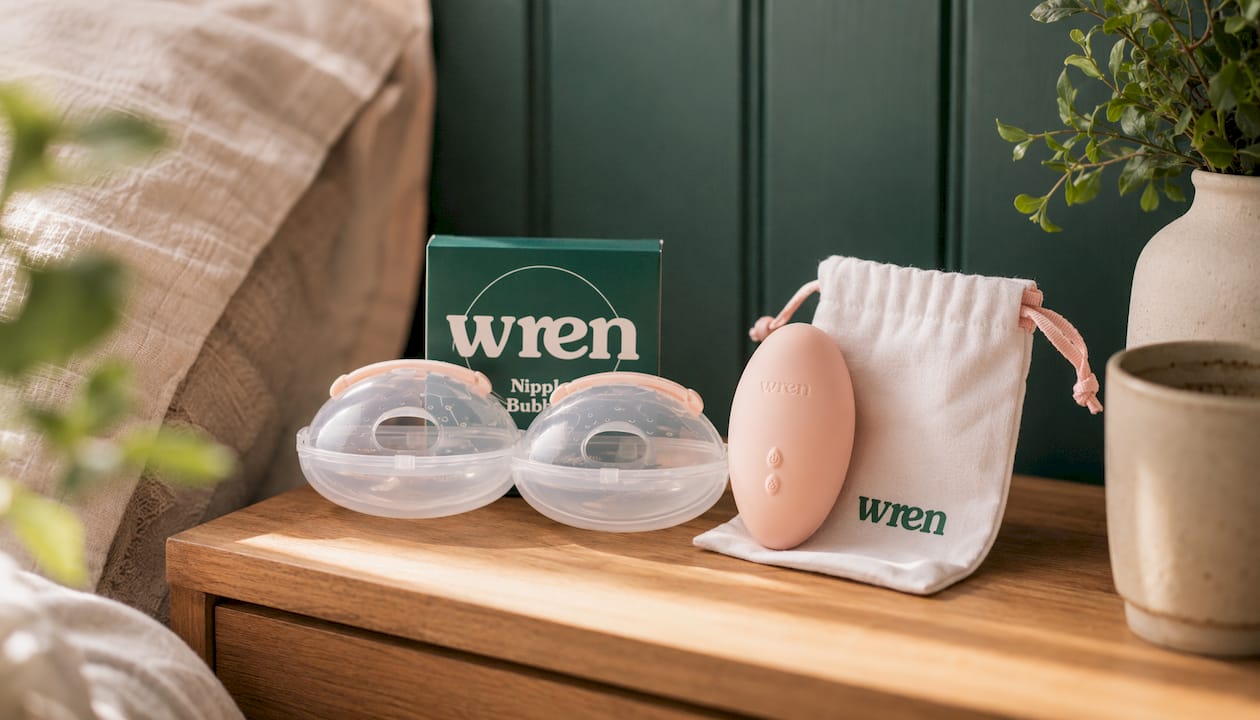
Recovering from a bleb means protecting the nipple between feeds and keeping milk moving. My-wren’s breastfeeding accessories are designed to support both.
The Nipple Bubble shields the nipple from clothing friction and holds a soothing pad in place between feeds. The Lactation Massager encourages flow before and during expression, reducing the ductal stasis that allows blebs to form. Both are available now at my-wren.com with prices in £ and UK delivery. Check the product pages for current shipping and returns information, and speak to your clinician before starting any new treatment if the skin is broken or the bleb is not improving.
Useful sources and UK help contacts
Clinical and lactation resources:
- Cleveland Clinic: Milk Bleb overview — clear clinical summary of symptoms, causes, and treatment options
- KellyMom: How do you treat a milk blister? — practical, IBCLC-informed home care steps
- Physician Guide to Breastfeeding: Nipple Blebs — specialist clinical review covering ductal pathology, triamcinolone, and lecithin use
- Canadian Breastfeeding Foundation: Milk Bleb — concise overview including lecithin recommendations
- La Leche League GB: Thrush and breastfeeding — guidance on distinguishing thrush from other nipple conditions
- NHS: Sore nipples and breastfeeding — UK-specific guidance on nipple pain causes and when to seek help
- NHS: Breast pain and breastfeeding — covers mastitis, blocked ducts, and escalation criteria
UK help contacts:
| Contact | What they can help with | How to reach them |
|---|---|---|
| NHS 111 | Urgent advice on fever, spreading infection, or worsening symptoms | Call 111 or visit 111.nhs.uk |
| Your GP | Prescription treatments, referral to breastfeeding clinic, mastitis assessment | Book via your practice or NHS App |
| IBCLC (lactation consultant) | Latch assessment, bleb diagnosis, recurrence management | Search via lcgb.org (Lactation Consultants of Great Britain) |
| La Leche League GB | Peer support and signposting to local groups | laleche.org.uk |
| Local midwifery team | Postnatal support in the first weeks after birth | Contact your community midwife |
Before your appointment, note down: how long the bleb has been present, which feeds are most painful, any changes in the breast (redness, warmth, swelling), and whether you have had a fever. A clear photo of the nipple taken in good light can help a clinician assess the lesion remotely or in clinic.
This article provides general information only, not medical advice. Confirm current guidance with your GP, midwife, or a qualified lactation consultant for your own situation.


