


Period and Milk Supply: Nurse First to Restore Drops Within Days


A short, temporary dip in milk supply around ovulation or just before your period is common, but it usually corrects itself within a few days once bleeding starts. If you notice a change, the single most effective response is to nurse or pump more often, drawing the breast down further to signal your body to keep producing.
TL;DR:
- Milk supply dips during mid-cycle, just before a period, and into the first days of bleeding due to hormonal changes that blunt prolactin.
- Most babies adjust quickly to taste or flow variations caused by cycle-related shifts, with sustained output and weight gain being the best indicators of supply stability.
- Increasing milk removal through more frequent nursing, night feeds, power pumping, and skin contact effectively counteracts temporary dips.
- Menstrual return timing varies widely, with some mothers experiencing it within two months and others not for over a year, especially if breastfeeding is frequent and exclusive.
- Seeking medical support is advised if there is heavy bleeding, poor weight gain, or signs of infection, while most cycle-related dips resolve without intervention within days.
Table of Contents
- Period and milk supply: how the menstrual cycle changes production
- Fussy feeding or low supply: how to tell the difference
- Practical steps to keep your supply steady through your cycle
- When will your period actually return while breastfeeding?
- When to seek professional support
- Wren’s perspective on managing cycle-related dips
- How Wren products support you through a supply dip
- Sources
Period and milk supply: how the menstrual cycle changes production
Prolactin is the hormone that drives milk production, and it doesn’t work in isolation. As oestrogen and progesterone rise in the days leading up to ovulation and again just before your period, they can temporarily blunt prolactin’s effect on the breast tissue. That’s the mechanism behind most reported dips, according to WebMD.
The timing tends to follow a pattern. Changes are most often reported around mid-cycle, through the week before your period, and into the first day or two of bleeding, when hormone levels are shifting fastest. Some mothers also notice their milk tastes slightly different during this window, thanks to small changes in sodium and calcium content, which can make a baby fussier at the breast without any real drop in volume.
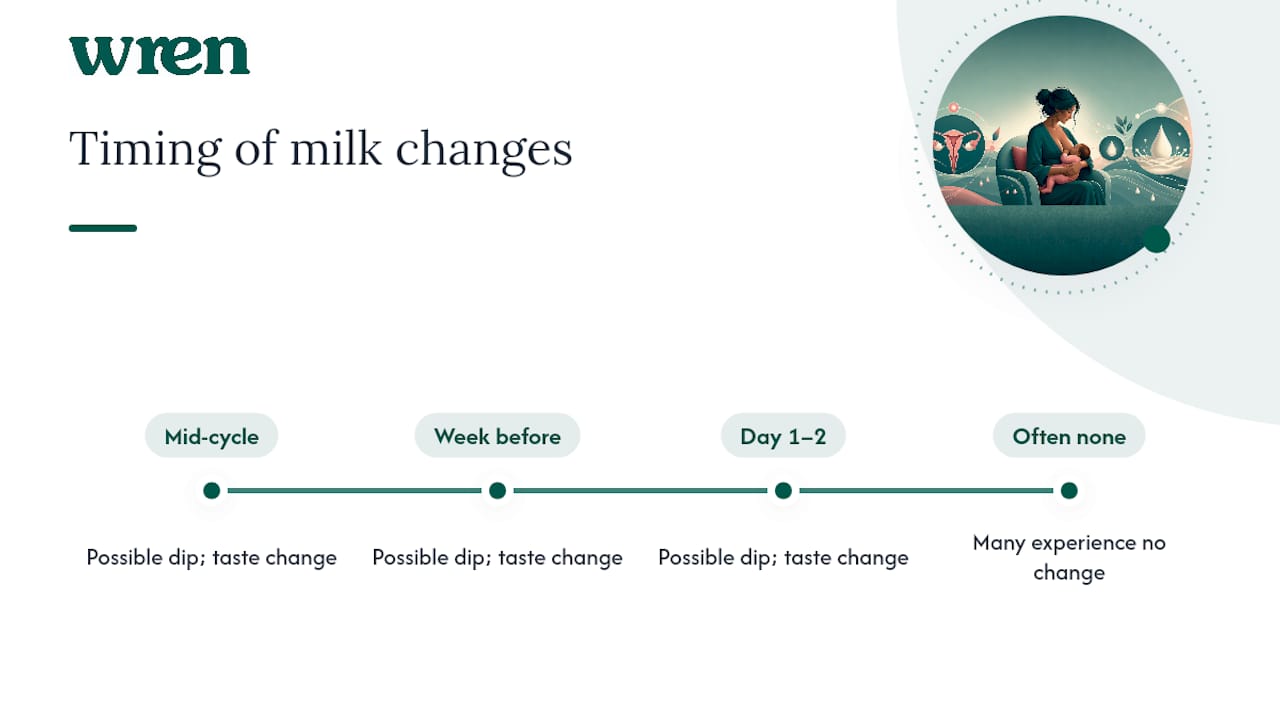
It’s worth saying plainly: many breastfeeding mothers notice nothing at all. The La Leche League International notes that while a temporary decrease is common around ovulation and into the first days of a period, plenty of people sail through their entire cycle with production untouched. There’s no way to predict in advance which camp you’ll fall into, and one cycle behaving differently to the next is normal too.
Fussy feeding or low supply: how to tell the difference
A baby pulling off the breast, feeding for shorter stretches, or briefly refusing one side is usually about taste or flow, not a genuine shortage. Babies notice subtle changes faster than any tracking app ever could, and most adjust within a day or two.
The more reliable markers sit with your baby’s output over several days, not a single fussy feed:
- Six or more wet nappies and regular soiled nappies in 24 hours
- A steady weight trend on the health visitor’s chart, not a single low reading
- Breasts that feel softer after feeds rather than persistently full and heavy
If you want to check in the moment, offer both sides, watch for rhythmic swallowing rather than fluttery sucking, and reassess the latch. A shallow latch mimics low supply symptoms even when production is completely normal.
Practical steps to keep your supply steady through your cycle
Frequent, effective milk removal is the strongest lever you have, more reliable than any supplement on the market. The Physician Guide to Breastfeeding is clear that drained breasts make milk faster, so the response to a dip is almost always more removal, not less.
- Nurse on demand and add extra feeds. Offer the breast slightly more often than usual for two or three days, particularly during the pre-period window.
- Protect night feeds. Prolactin peaks overnight, so a feed or pump session in the small hours does more for supply than the same session at noon.
- Try power pumping. Pump for 20 minutes, rest for 10, pump for 10, rest for 10, then pump for a final 10. Repeat once daily for two or three days.
- Add a pump after nursing. Even five extra minutes after baby comes off signals the breast to keep up production, particularly first thing in the morning and just before bed.
- Keep skin to skin contact going. It supports oxytocin release, which helps milk flow during let down.
- Don’t neglect fluids, food, and rest. None of these will single handedly rescue a low supply day, but chronic under sleeping and under eating make everything harder.
Some lactation resources mention calcium and magnesium as a possible support during this window, with anecdotal supplementation of calcium and magnesium in recommended ranges, started a few days before a period is expected. The evidence here is thin, drawn mostly from informal reports rather than controlled research, according to Lactalearning, so treat it as a conversation to have with a health visitor or GP rather than a fix to reach for automatically.
Pro Tip: Pump output is a poor stand in for what your baby actually removes. A nursing baby typically clears more milk than a pump session ever will, so don’t panic over a low pumping number during your period. Watch your baby’s nappies and weight instead.
If you rely on expressing day to day, our guide on what affects pumping output walks through other factors worth ruling out alongside cycle timing.
When will your period actually return while breastfeeding?
There’s no fixed timeline. Some mothers see a period return within two months, others go a year or more without one, and both are entirely normal, particularly with exclusive breastfeeding and frequent night feeds. The Australian Breastfeeding Association notes that fully breastfeeding parents often go several months without menstruating, though individual variation is wide.
Menses tends to return sooner once night feeds drop off, solids are introduced, or direct nursing sessions reduce. If your period arrives earlier than expected, treat it as a cue to have a supply support plan ready rather than a red flag on its own.
When to seek professional support
Most cycle related dips resolve on their own within days, but if you observe unusually heavy bleeding, it may be a sign to consult further, as discussed in Mióma és erős menstruáció: fontos jelek, amelyekre érdemes figyelni. Get in touch with a GP, health visitor, or lactation consultant if you notice any of the following:
- Poor or stalled weight gain over more than one check
- A sustained drop in wet nappies lasting more than two or three days
- Fever, red or hot patches on the breast, or other signs of mastitis
- Pain that doesn’t ease with a latch adjustment
Bring a simple log of feeds or pump sessions and your baby’s recent weights. In the short term, expressing and offering it by bottle, cup, or spoon buys time without resorting to sudden weaning, which can make supply harder to rebuild than the original dip.
Wren’s perspective on managing cycle-related dips
The pattern in the research is consistent: supply dips tied to the menstrual cycle are usually short, hormonal, and self-correcting once removal increases. What trips parents up isn’t the dip itself, it’s second-guessing a single fussy feed or one low pump session and reaching for drastic changes before giving frequent nursing a few days to work.
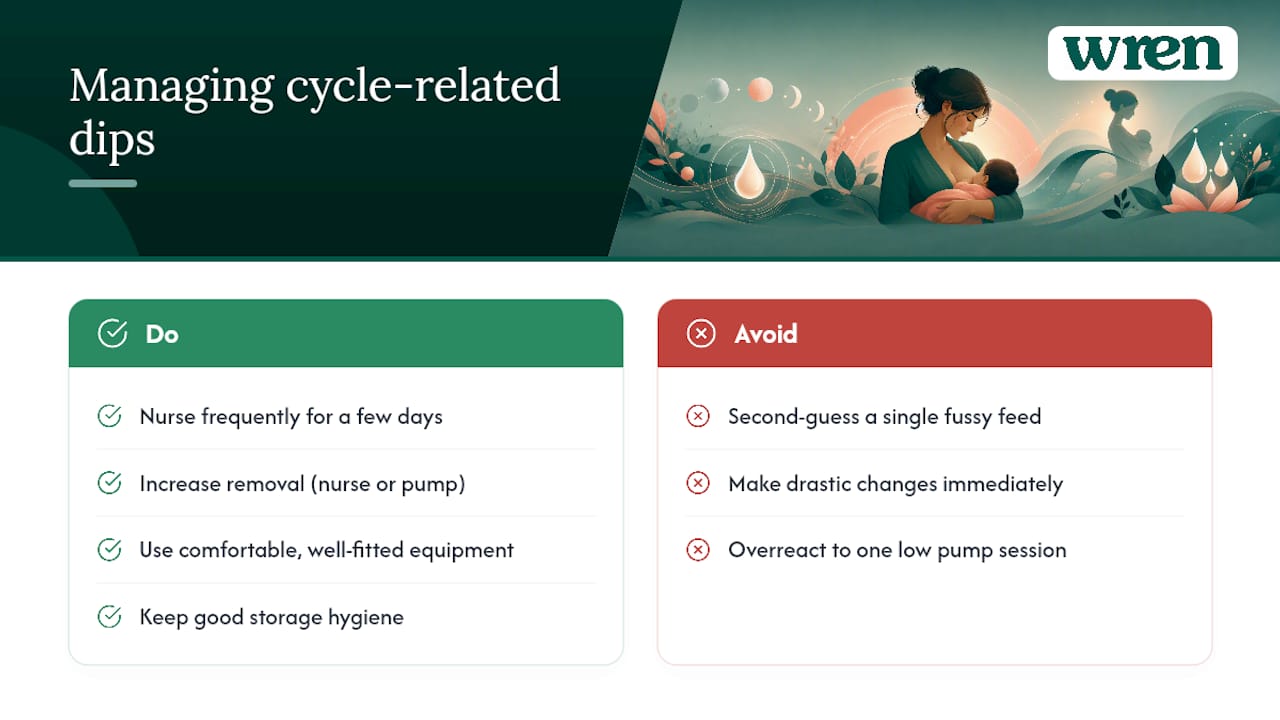
At My-wren, our focus stays practical. Comfortable, well-fitted equipment makes it easier to keep up the frequent removal that actually restores supply, rather than dreading a pump session during an already tiring week. Good storage hygiene matters too, particularly if you’re expressing more often than usual to bridge a dip.
None of this replaces individual clinical advice. If something feels persistently wrong rather than temporarily off, a lactation consultant or GP should always be your next call.
— Paul
How Wren products support you through a supply dip
Extra pumping sessions and more frequent removal are the main tools for riding out a cycle-related dip, and the right equipment makes that easier to sustain. My-wren’s Lactation Massager is designed to support let-down comfort during expressing, useful on the days when hands-on stimulation makes the difference between a quick, effective session and a frustrating one.
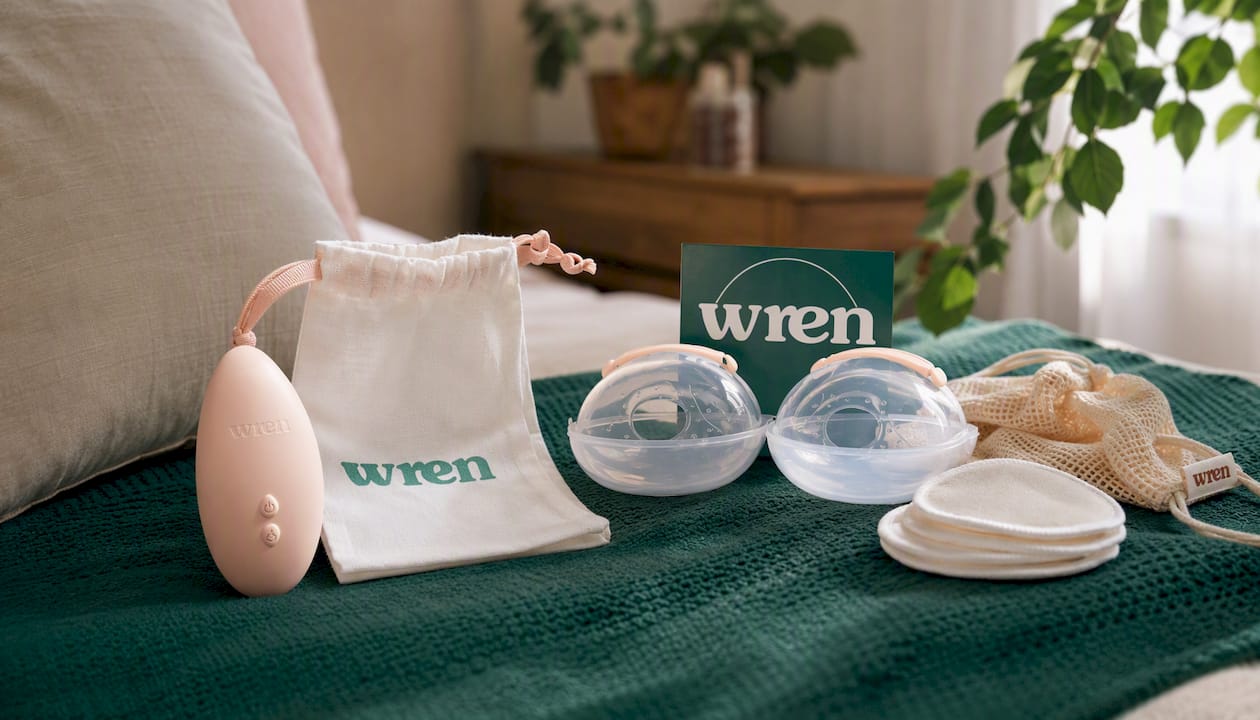
If you’re expressing more often to bridge a dip, hygienic storage matters. The Nipple Bubble comes with its own storage case and bag, keeping shields or small feeding items clean between sessions without extra fuss. For the heavier, less predictable days that often coincide with a period, Bamboo Reusable Breast Pads offer breathable comfort without disposable waste. All three are affordably priced and ship with a standard UK returns policy. Browse the full range at My-wren and build a kit around what your feeding week actually needs.
This article is general information, not a substitute for advice from a qualified doctor. Consult a qualified healthcare professional about your own circumstances before acting on anything here.
Sources
- Menstruation - Your Period While Breastfeeding (La Leche League International)
- Getting Your Period while Breastfeeding: How your Menstrual Cycle Affects your Milk Supply (Physician Guide to Breastfeeding)
- What to Know About Periods While Breastfeeding (WebMD)


