


Paced bottle feeding: a practical guide for new mums


Paced bottle feeding is a baby-led technique that lets your infant control their milk intake by mimicking the natural suck-swallow-pause rhythm of breastfeeding. Endorsed by the NHS and the UNICEF Baby Friendly Initiative, it reduces the risk of overfeeding, supports your baby’s ability to self-regulate hunger, and protects your breastfeeding relationship when you introduce a bottle. Whether you are returning to work, sharing feeds with a partner, or supplementing with expressed milk, this guide gives you the exact steps to make it work.
What is paced bottle feeding and why does it matter?
Paced bottle feeding is defined as a responsive, baby-led feeding method that replicates the suck-swallow-breathe pattern a baby uses at the breast. The standard feed duration is 15–20 minutes, which mirrors the time a baby typically spends nursing. That timing matters because it prevents milk from flowing faster than a baby can process it.
The technique is particularly relevant for mothers who combine breastfeeding with bottle feeding. Bottles with standard nipples deliver milk much faster than the breast, which can cause babies to prefer the bottle simply because it requires less effort. Paced feeding removes that speed advantage. It keeps the feeding experience close enough to nursing that your baby does not develop a strong preference for one over the other.
The UNICEF Baby Friendly Initiative specifically recommends this approach to protect breastfeeding. Keeping the two experiences similar reduces the risk of what is commonly called “nipple confusion,” though the more accurate term is “flow preference.”
What do you need to practise paced bottle feeding?
The right equipment makes a significant difference. Slow-flow nipples are the starting point. They restrict milk flow and require your baby to work for each mouthful, which is exactly what happens at the breast. Nipple flow rates vary considerably between brands, so test a few to find one that keeps feeds lasting the full 15–20 minutes. If your baby finishes in under ten minutes, the flow is too fast.
Essential equipment and positioning at a glance
| Item | Recommendation |
|---|---|
| Nipple type | Slow-flow, size 1 or newborn |
| Bottle shape | Wide-base teat to encourage a broad latch |
| Feeding position | Semi-upright, approximately 45 degrees |
| Bottle angle | Horizontal, parallel to the floor |
| Feed duration | 15–20 minutes per feed |

Beyond equipment, position is everything. Hold your baby in a semi-upright position at roughly 45 degrees. This posture slows the natural pull of gravity on the milk. Keep the bottle horizontal and parallel to the floor throughout the feed. A slight tip towards vertical defeats the purpose entirely by allowing milk to flow freely and overwhelm your baby.
Pro Tip: Before you start, check that the teat is full of milk with no air bubble at the tip. An air-filled teat causes your baby to swallow excess air, which leads to wind and discomfort.
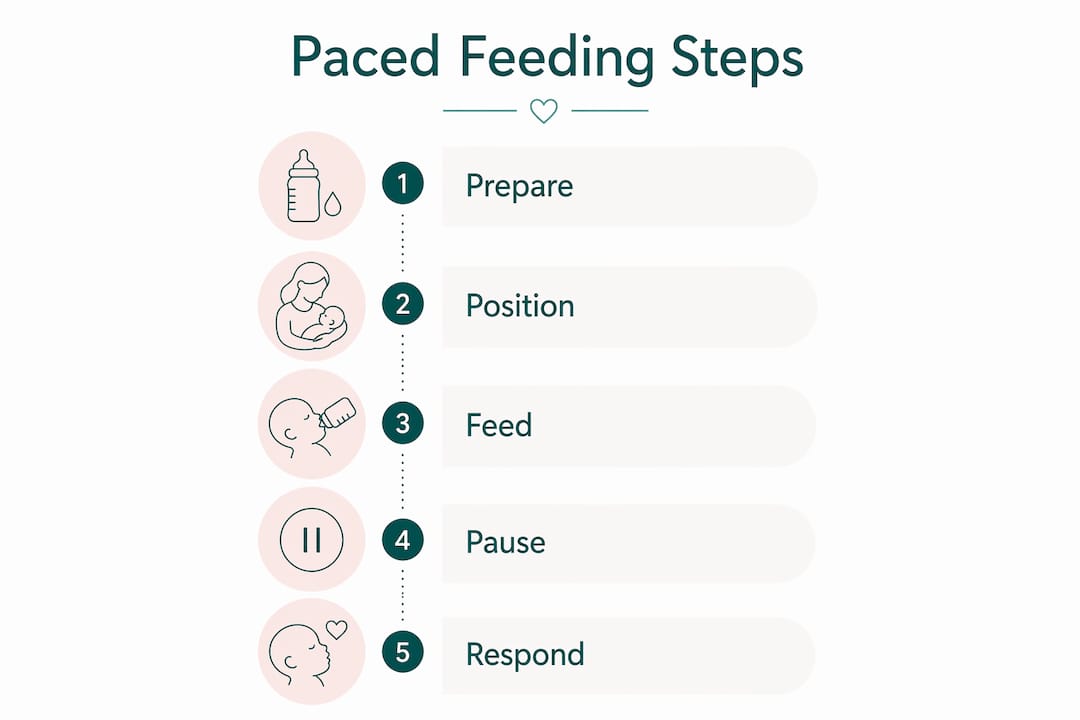
How to pace feed your baby: step by step
Follow these steps consistently and your baby will settle into the rhythm within a handful of feeds.
-
Invite the latch. Gently stroke the teat against your baby’s upper lip and wait for them to open wide. Do not push the teat into their mouth. Let them draw it in, just as they would at the breast.
-
Hold the bottle horizontally. Keep the bottle parallel to the floor so the teat is only just full of milk. This forces your baby to actively suck rather than passively receive milk from gravity.
-
Pause every 20–30 seconds. Tip the bottle downward so the teat empties of milk. Hold this pause for five to ten seconds. This gives your baby time to swallow, breathe, and assess whether they are still hungry.
-
Watch for feeding cues. Resume feeding only when your baby signals readiness, such as rooting, sucking movements, or turning towards the teat. If they turn away or slow their sucking, extend the pause.
-
Switch sides halfway through. At the midpoint of the feed, move your baby to the other arm, just as you would switch breasts during nursing. Switching sides encourages symmetrical muscle development, reduces the risk of neck stiffness, and promotes eye contact on both sides.
-
Stop when your baby signals fullness. Turning away, pushing the bottle out with their tongue, relaxing their hands, or slowing sucking all indicate your baby has had enough. A half-empty bottle is a perfectly acceptable outcome.
Pro Tip: Set a gentle timer for 20 minutes when you start out. It helps you resist the urge to rush the feed and gives you a clear signal to begin winding down.
Common challenges with bottle feeding pacing and how to fix them
Most mothers hit the same obstacles when they start. Knowing what to expect makes it far easier to stay consistent.
-
Baby protests the slower flow. This is the most common early challenge. Babies typically need 3–5 feeds to adjust to the paced rhythm. Stay calm, keep pauses short at first, and gradually extend them as your baby adapts.
-
Tipping the bottle too steeply. Even a small upward angle allows milk to pool in the teat and flow without effort. Check your bottle angle before every pause and correct it if needed.
-
Forcing your baby to finish the bottle. Baby cues should guide feeding, not the volume left in the bottle. Forcing a baby to finish is a leading cause of overfeeding and, over time, feeding aversion.
-
Frustration with frequent pauses. Some babies fuss during pauses because they are used to continuous flow. Offer a dummy or your clean finger briefly during the pause to satisfy the sucking urge without delivering milk.
“Responsive feeding means following your baby’s lead, not the clock or the bottle. A baby who stops feeding is communicating, not failing. Listening to those signals is the single most important skill in paced feeding.”
Pro Tip: If your baby consistently finishes feeds in under ten minutes despite pauses, try a slower-flow nipple from a different brand. Flow rates labelled “slow” differ significantly between manufacturers.
How does paced bottle feeding support breastfeeding?
Paced feeding works because it replicates the suck-swallow-breathe pattern that babies use at the breast. At the breast, a baby pauses naturally between swallows and controls the let-down by adjusting suction. Paced bottle feeding recreates those pauses artificially, which keeps the feeding experience consistent across both methods.
The digestive benefits are direct. Paced feeding reduces swallowed air, which means less wind, less spit-up, and a more settled baby after feeds. Babies who swallow less air during feeds tend to be more comfortable between feeds, which reduces fussiness and makes feeding times calmer for everyone.
The longer-term benefit is self-regulation. Paced feeding promotes infant self-regulation and strengthens a baby’s ability to recognise hunger and fullness cues. Babies who learn to stop eating when full, rather than when the bottle is empty, build healthier eating patterns that carry forward well beyond infancy.
“Responsive feeding creates a nurturing feeding relationship, making bottle feeding more than just nutrition. It becomes valuable bonding time between parent and baby.”
The bonding dimension is often underestimated. Maintaining eye contact, switching sides, and responding to cues all build the same attentive connection that breastfeeding fosters. For mothers who want to maintain their breast milk supply while introducing a bottle, paced feeding is the most effective way to keep both methods working together. You can also find practical guidance on breastfeeding tips for returning to work if you are planning to combine feeding methods around your schedule.
Nursing vs bottle feeding: what paced feeding preserves
| Feature | Breastfeeding | Paced bottle feeding |
|---|---|---|
| Feed duration | 15–20 minutes | 15–20 minutes |
| Baby controls intake | Yes | Yes |
| Suck-pause-breathe rhythm | Natural | Replicated manually |
| Side switching | Yes | Yes (recommended) |
| Bonding and eye contact | High | High when practised correctly |
Key takeaways
Paced bottle feeding is the most effective method for combining bottle and breastfeeding without disrupting your baby’s natural hunger and fullness cues.
| Point | Details |
|---|---|
| Use slow-flow nipples | Choose size 1 or newborn nipples and test brands until feeds last 15–20 minutes. |
| Hold the bottle horizontally | Keep the bottle parallel to the floor throughout to prevent gravity-driven fast flow. |
| Pause every 20–30 seconds | Tip the bottle down briefly to let your baby swallow, breathe, and signal hunger or fullness. |
| Switch sides mid-feed | Move your baby to the other arm halfway through to mimic breastfeeding and prevent neck stiffness. |
| Follow fullness cues, not volume | Stop feeding when your baby turns away or slows sucking, regardless of how much milk remains. |
What I have learned from watching mothers master paced feeding
The mothers who take to paced feeding most quickly share one trait. They trust their baby more than they trust the bottle. The hardest mental shift is accepting that a half-empty bottle is a success, not a failure. We are conditioned to measure feeds in millilitres, but a baby who stops at 60ml because they are full has done exactly the right thing.
The adaptation period is real. Three to five feeds of protest is not a sign that paced feeding is not working. It is a sign that your baby is learning something new. Staying consistent through those early sessions is what makes the difference.
I have also noticed that side switching is the step most mothers skip when they are tired or rushed. It feels unnecessary. But babies who are always fed on the same side develop a subtle preference for turning their head one way, which can affect feeding comfort at the breast too. Two minutes of switching sides per feed prevents weeks of correction later.
The reward is a baby who feeds calmly, signals clearly, and stays comfortable between feeds. That is not a small thing. It makes the entire feeding experience, whether at breast or bottle, more predictable and more connected.
— Paul
My-wren feeding essentials for paced bottle feeding

My-wren’s breastfeeding accessories and essentials include slow-flow nipples, wide-base bottles, and feeding tools selected to support paced feeding from the first session. Each product is chosen to keep bottle feeding as close to the breastfeeding experience as possible, so your baby moves between the two without difficulty. For mothers who want everything in one place, My-wren’s breastfeeding kits and bundles bring together the nipples, bottles, and accessories you need to get started with paced feeding straight away.
FAQ
What is paced bottle feeding?
Paced bottle feeding is a responsive, baby-led technique that mimics the suck-swallow-pause rhythm of breastfeeding. The baby controls their intake through pauses every 20–30 seconds, with feeds lasting 15–20 minutes.
How do I know if my baby is ready to stop feeding?
Fullness cues include turning away from the bottle, slowing or stopping sucking, pushing the teat out with the tongue, and relaxing the hands. Stop feeding when these cues appear, regardless of how much milk remains in the bottle.
Which nipple flow rate is best for paced feeding?
Slow-flow or newborn-size nipples are the standard recommendation. Flow rates vary between brands, so test different options until feeds consistently last 15–20 minutes.
Will paced feeding affect my breast milk supply?
Paced feeding itself does not reduce supply. Because it prevents bottle preference, it supports your baby’s willingness to continue nursing, which in turn maintains demand and protects your supply.
How long does it take for a baby to adjust to paced feeding?
Most babies settle into the paced feeding rhythm within 3–5 feeds. Initial protest at the slower flow and pauses is normal and typically resolves quickly with consistent practice.


