


Pump Flange Inserts: Sizes, Fit and Options Compared


A flange insert is a soft silicone liner that sits inside the breast shield (the funnel-shaped part that goes over your nipple) and makes the tunnel narrower, so it matches your nipple instead of the standard opening. For most UK mums the best choice is an insert or adaptor made for the pump they already use. Wren’s 17mm and 21mm breast shield adaptors are designed for exactly that, and below you will see how to measure, how to pick a size and how the main kinds of insert compare.
TL;DR
- Inserts reduce the tunnel of a standard shield, which is often 24 mm or larger, to fit a smaller nipple.
- Measure the nipple width in millimetres, then add roughly 2 to 4 mm as a starting size. Measure both sides.
- A good fit means the nipple moves freely in the tunnel, pumping is painless and milk flows well.
- Choose an insert made for your pump’s shield size. Wren offers 17mm and 21mm adaptors alongside a 25mm breast shield.
- Silicone grips the skin, so you may need one size up from your hard-flange size, with a little lubrication.
Table of Contents
- What a flange insert does
- How to measure for the right insert size
- How to tell if an insert fits
- Silicone behaves differently from hard plastic
- Flange insert options compared
- What to look at before you buy
- Wren’s view on flange fit
- Shop Wren adaptors and parts
- FAQ
- Sources
What a flange insert does
Silicone flange inserts are soft liners that fit inside a flange to reduce the tunnel size and match it better to the nipple. They are used with smaller nipples, with wearable pumps and with collection cups, and they save you buying a whole new shield for every size.
The same Minnesota WIC (a US public nutrition programme) guide lists common insert sizes as 13, 15, 17, 19 and 21 mm. Many standard pump flanges start at 24 mm, which is why an insert is the usual route to a smaller opening. It also notes that smaller inserts feel firmer and larger ones feel softer.
The reason size matters is simple. If the tunnel is too wide, areola is drawn in and can swell. If it is too narrow, the nipple rubs. Either can reduce how much milk you express and make pumping sore.
How to measure for the right insert size
Measure before you buy, not after. A ruler in millimetres or a printed sizing card is enough.
- Stimulate the nipple first. Cleveland Clinic advises gently rolling the nipple so it is in its natural, perked-up state.
- Measure the width across the widest part. This is usually the base of the nipple, not the areola.
- Measure both sides. They are often different, and you may need two sizes.
- Add 2 to 4 mm. The same guidance gives an example: an 18 mm nipple may fit a 20 or 21 mm flange.
- Re-measure later. One fitting guide suggests checking again around 8 to 12 weeks postpartum, when size commonly changes.
Wren has a step-by-step guide on measuring flange size at home, and a page on choosing the right flange for a Wren pump.
A size chart as a starting point
The Indiana Lactation Assistance and Learning (LAL) programme publishes a nipple measuring guide with these pairings:
| Nipple width | Suggested size |
|---|---|
| 9 to 11 mm | 13 mm |
| 11 to 13 mm | 15 mm |
| 13 to 15 mm | 17 mm |
| 15 to 17 mm | 19 mm |
| 17 to 19 mm | 21 mm |
| 21 to 23 mm | 24 mm |
| 23 to 25 mm | 26 mm |
Treat this as a first guess. Your own comfort while pumping decides the final size.
Why the tip may matter too
A 2025 study in the Journal of Human Lactation, discussed by Breastfeeding Support, suggests measuring the tip of the nipple may work better than measuring the base. If the base measurement feels wrong in use, try a size nearer to your tip measurement.
How to tell if an insert fits
The NHS-published Flange FITS Guide from University Hospital Southampton describes a good fit: only the nipple is drawn into the tunnel, its sides touch the walls, and it glides a little back and forth. So yes, your nipple should touch the sides. That contact is normal.
Check during a real pumping session, with the nipple centred and your usual suction setting. Cleveland Clinic lists these signs of a good fit:
- the nipple moves freely
- no pain while pumping
- milk is expressed effectively
- the nipple does not look swollen afterwards
- no cracking, bruising or bleeding
Signs the insert is too small
The nipple cannot move easily and little or no milk comes out. Breastfeeding Support, citing lactation consultants Marasco and West, adds that a tunnel that is too small can cause cracking at the base of the nipple and abrasions.
Signs the insert is too large
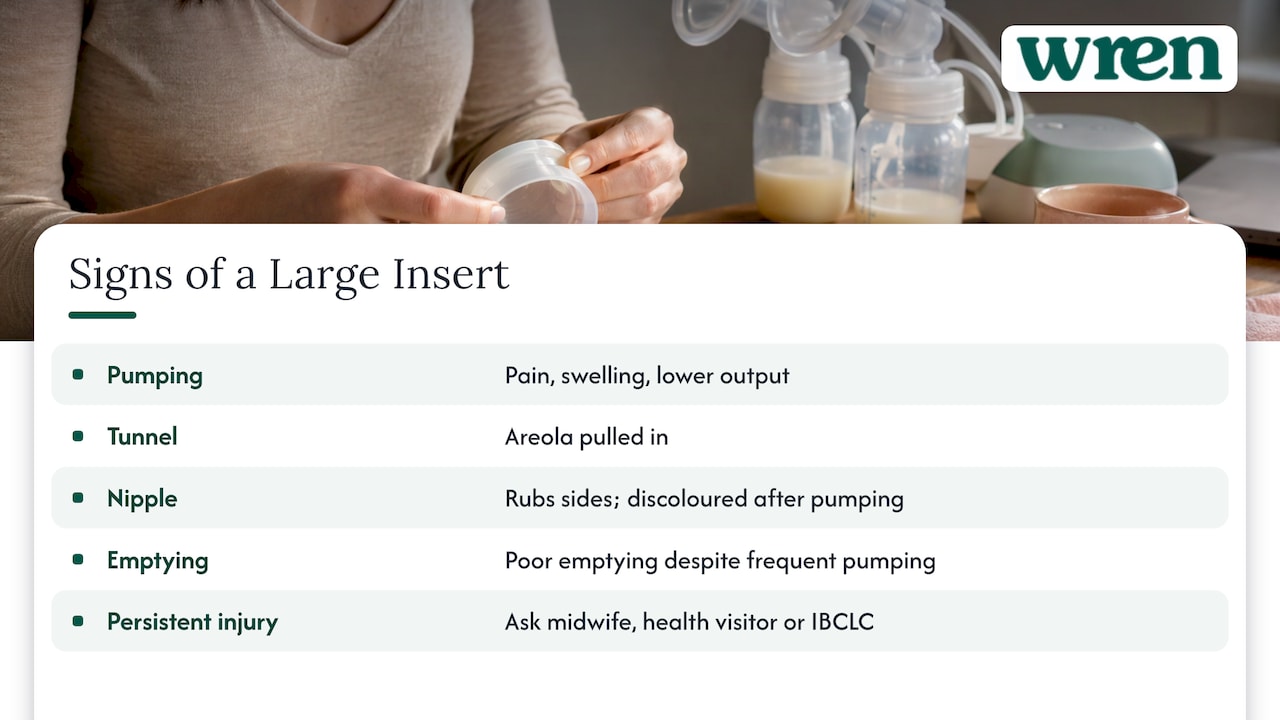
Pumping hurts, the nipple swells and output drops, and areola is pulled into the tunnel. The Minnesota WIC guide also lists the nipple rubbing against the sides, a discoloured nipple after pumping, and poor emptying despite frequent pumping as reasons to try a smaller size.
If pain, cracking or bleeding continues after a size change, speak to your midwife, health visitor or an IBCLC lactation consultant (a qualified breastfeeding specialist). Wren’s guides on what to do about sore nipples and a wrong flange size cover the first steps.
Silicone behaves differently from hard plastic
Silicone naturally grips nipple tissue. According to the Minnesota WIC guide, this means the nipple does not glide as easily, and users who fit well in a hard flange may need to go up slightly when they switch to silicone. A small amount of lubrication, such as coconut or olive oil, can help. The Flange FITS Guide likewise suggests a thin layer of coconut oil or nipple balm on the bend of the flange for comfort.
If you use balm, check the ingredients first. Wren has a guide to nipple balm ingredients to check for safe feeding, and one on whether nipple balm really helps.
Some UK lactation specialists also report that trying your measured size plus or minus 2 mm is worthwhile, because smaller sizes can suit some mums. Change one size at a time and note how each session feels.
Flange insert options compared
Search results for this keyword are mostly multipacks of generic silicone inserts, sold in sets such as 13 to 21 mm for a 24 mm shield. They are cheap and come in many sizes, but the packet rarely tells you which shield they sit in. Here is how the main kinds compare on the points that matter to you.
| Option | Sizes | Made for your pump? | Best for |
|---|---|---|---|
| Wren breast shield adaptors | 17mm and 21mm, plus a 25mm breast shield | Yes, sold by the brand for use with its wearable pumps | Wren pump users who want a matched fit and a single place to buy spare parts |
| Multi-size silicone insert sets | Commonly 13, 15, 17, 19, 21 mm, set for 24 mm shields | Only if your shield is the stated size | Trying several sizes while you find your fit |
| Pump-brand inserts | Depends on the maker | Yes, for that maker’s shields | Users of a standard plug-in pump |
| Hard flanges in smaller sizes | Often from 15 mm upwards, depending on the brand | Yes, for that brand | Mums who need a size the pump does not offer in an insert |
Wren breast shield adaptors
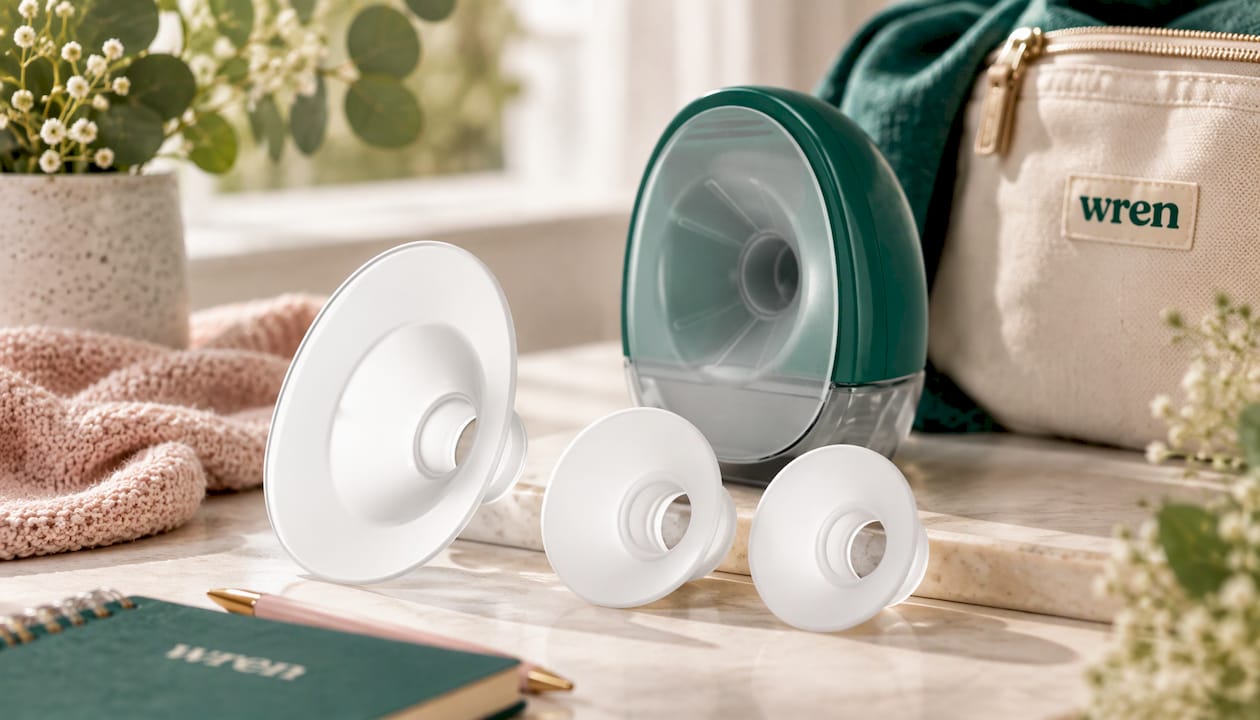
Wren sells a Breast Shield 25mm, a 17mm adaptor and a 21mm adaptor. Wren’s wearable pumps are wire-free and sit inside your bra, and the adaptors are part of that range, so you buy the right size from the same shop as the pump. Browse the full spare parts collection for replacements.
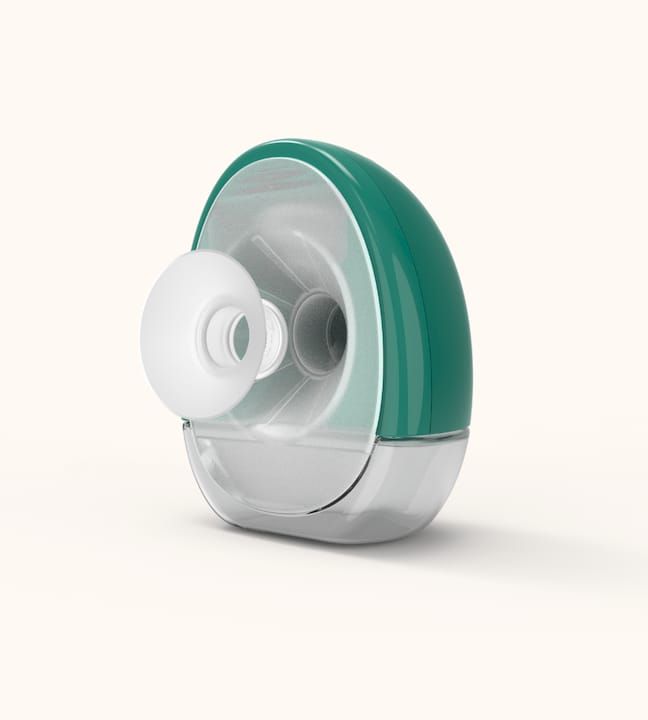
Two adaptor sizes cover a lot of ground for many mums. If you measure around 15 to 17 mm, the 17mm sits at the top of that bracket on the chart above, and a nipple of 17 to 19 mm lines up with 21mm. If your measurement falls between sizes, use the fit checks above to decide which feels better.
Multi-size insert sets
Universal sets let you test several sizes without committing to one. Check that the shield you own is the size the set is designed for. One fitting guide notes that its 13 to 21 mm inserts are only compatible with 24 mm shields. An insert in the wrong shield can sit loosely and leak suction.
Pump-brand inserts and hard flanges
Other pump makers sell their own range. According to Breastfeeding Support, ranges vary widely: Ardo goes from 13 to 36 mm, Ameda from 21 to 36 mm, and Medela from 15 to 36 mm with smaller inserts. If you already own one of those pumps, keep to its own parts.
What to look at before you buy
- Your measurement. Buy for the size you measured, not for the biggest set on the page.
- The shield size it fits. Inserts for a 24 mm shield will not suit a 25 mm one, so read the listing carefully.
- Material. Look for silicone that is easy to wash and sterilise along with your other pump parts.
- Spare quantity. You will wash and sterilise parts often, so a spare pair saves waiting for a dry set.
- Both sides. If your nipples differ, buy two sizes.
If you also care about what you wear while expressing, a roomy, front-opening wardrobe helps with wearable pumps. This guide to postpartum nursing outfits gives some ideas.
Wren’s view on flange fit
We see flange fit as the part of pumping that decides how comfortable the whole routine is. A wearable pump that sits in your bra only helps if the tunnel suits you, which is why we sell a 25mm breast shield with 17mm and 21mm adaptors.
Our advice is simple. Measure at home, pick the size that matches, and check the fit in a real session. If the first size does not feel right, try the next one rather than putting up with discomfort. Every feeding journey is different, and your size may change over time.
We built Wren around discreet, hands-free expressing, and a well-matched flange is what lets that work for you at home, at work or on the move.
Paul
Shop Wren adaptors and parts
Wren’s Breast Pumps are wearable and wire-free, and the shields and adaptors are listed next to them. Pick the 17mm adaptor or the 21mm adaptor once you have your measurement, and add breastfeeding accessories such as nipple balm and milk storage bags to the same order.
If you are still choosing a pump, the guide to the best breast pump for large breasts and the article on pumping after breastfeeding will help you decide. For general recovery, see the postpartum breast care guide.
FAQ
Should nipples touch the side of the flange?
Yes. The Flange FITS Guide says that at the best fit the sides of the nipple touch the tunnel walls and the nipple glides a little back and forth. Only the nipple should enter the tunnel, not the areola.
How do I know whether my flange is too small or too big?
Too small: the nipple cannot move easily and little milk comes out. Too large: pumping hurts, the nipple swells and extra areola is drawn in. Check during a session at your usual suction setting.
Do I need a flange insert?
You need one if the standard shield opening is larger than your nipple needs. Many standard flanges are 24 mm or more, so mums with smaller nipples often use a 13 to 21 mm insert. Measure first to see where you fall.
Where can I buy flange inserts?
You can buy Wren’s 17mm and 21mm adaptors and its 25mm shield directly from my-wren.com. Choose the size from your measurement.
Sources
- Silicone Breast Pump Inserts: Tips for Fit & Function, Minnesota WIC
- Finding Your Breast Pump Flange Size, Cleveland Clinic
- Nipple Measuring Guides, Indiana LAL
- The Flange FITS Guide, University Hospital Southampton
- How to Increase Milk Supply When Pumping, Breastfeeding Support
- Breast Pump Fitting Guide, The Night Owl
- About 5, Cordelia Uys
- Postpartum Capsule Wardrobe: 7 Nursing Outfits for Recovery


