


Pumping while driving: is it ever safe?


Pump while parked, not while driving. Once the vehicle is moving, breast pumps stay in the bag. NHS guidance on expressing milk covers hygiene and storage, but it says nothing about doing it at 60mph, and driving without due care and attention is a real offence that fiddling with flanges could trigger.
- Safest: park up, engine off, pump, then drive on.
- Second best: pump as a passenger, seatbelt on, while someone else drives.
- Last resort: plan pit stops in advance and only use wearable pumps once you’ve stopped.
Key Takeaways
Pumping while driving is safest treated as a parked activity, not something to attempt at the wheel.
| Point | Details |
|---|---|
| Park before pumping | Set up, run, and finish sessions with the handbrake on, never while the car is moving. |
| Know the legal risk | Careless driving charges can follow if pump fiddling affects vehicle control, per gov.uk guidance. |
| Follow NHS storage rules | Expressed milk keeps up to six hours at room temperature, up to eight days refrigerated. |
| Pack for speed | A hands-free pump, spare flanges, cooler bag, and backup power cut setup time drastically. |
| Choose the right pump | My-wren’s hands-free double and single electric pumps suit frequent and occasional drivers respectively. |
Table of Contents
- Is pumping while driving legal in the UK?
- What equipment makes on-the-road pumping practical?
- How do you set up a safe pumping session in a parked car?
- What if you’re tempted to pump while the car is actually moving?
- How do you keep expressed milk safe after a car session?
- What goes wrong on the road, and how do you fix it?
- What should be in your car pumping kit?
- Why the “just get it done” mindset around car pumping misses the point
- Get your car pumping kit sorted with My-wren
- Sources
Is pumping while driving legal in the UK?
There’s no law naming “pumping while driving” specifically, but that doesn’t make it a grey area. UK police can charge a driver with driving without due care and attention if any activity, including adjusting a breast pump, causes them to lose proper control of the vehicle or drift out of a lane. The penalties for careless driving include fines, penalty points, and in serious cases disqualification, and an officer doesn’t need to see a crash happen to issue one.
Seatbelt fit matters more than most drivers realise here. A bottle or flange wedged under the belt strap changes how it sits across your chest, and in a collision that alters where force lands on your body. Practical guidance on car-based pumping consistently lands on the same conclusion: pull over before you touch the pump, never while the wheels are turning.
Before you pull away, run through this:
- Parked, with the handbrake on.
- Engine off, or safely idling with climate control if the weather demands it.
- Seatbelt sitting flat against your body, not diverted around equipment.
- Pump fully packed away before you release the handbrake.
Careless driving covers any moment a driver’s attention or control of the vehicle is reduced, and it doesn’t require an accident to have happened for a fine or points to follow.
Pro Tip: Run through your whole car pumping routine at home first, sitting in the driver’s seat with the engine off. Muscle memory means fewer fumbles once you’re actually on the road.
What equipment makes on-the-road pumping practical?
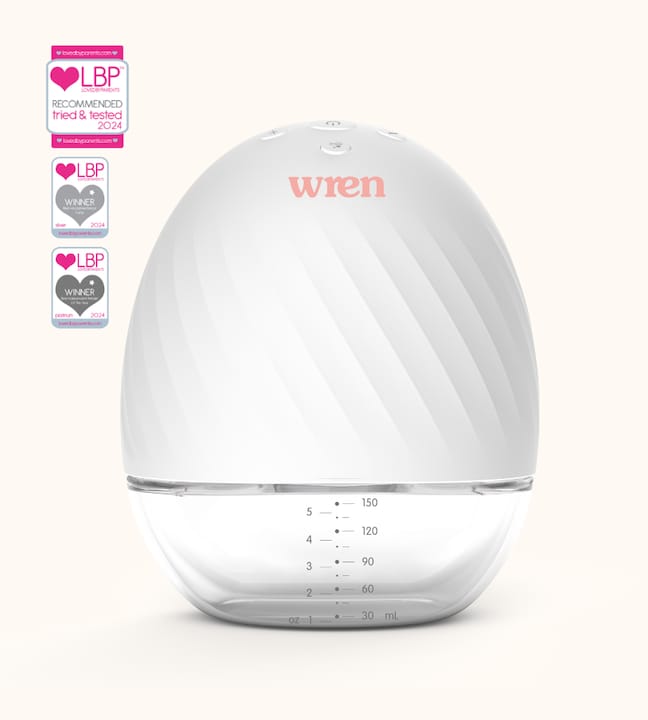
The right kit turns a car session from a fiddly ordeal into a five-minute job. A hands-free wearable pump sits inside your bra and needs no tubing trailing to a base unit, which makes it the better pick for anyone pumping several times a day on the move. A hands-free electric pump with a small external unit works well too, particularly for occasional commuters who don’t need the bulkier double setup.
Beyond the pump itself, a few things separate a smooth session from a stressful one:
- A hands-free pumping bra to hold flanges in place without your hands.
- Spare 25mm breast shields, since flange fit affects both comfort and output.
- An insulated cooler bag with ice packs, sized to fit your collection bottles.
- A car adapter or portable battery pack, tested for compatibility before you rely on it.
- Bamboo reusable breast pads, wipes, and a wet bag for used parts.
- A lactation massager and a nipple bubble with storage case for protection between sessions.
Pro Tip: Pack your bag in the order you’ll use it: pump on top, cooler bag next, hygiene items last. You want your hands finding things without looking.
How do you set up a safe pumping session in a parked car?
- Find and park in a safe spot, ideally somewhere shaded and away from passing traffic.
- Apply the handbrake and switch off the engine, or leave it idling only if you need climate control.
- Lay out your pump parts on a clean surface such as a wipeable mat on the passenger seat.
- Put on your hands-free bra and fit the flanges, checking they sit centred and comfortable.
- Reposition your seatbelt so it sits properly across your body, not trapped under tubing or bottles.
- Start the pump on a low setting and increase gradually as let-down begins.
- Stay parked for the full session. If someone else is driving, you can pump as a passenger, seatbelt on.
- Stop the pump, disconnect, and cap bottles immediately once you’re done.
- Bag used parts in a wet bag and place bottles in your cooler bag.
- Check the pump is powered off and stowed before releasing the handbrake.
A tinted rear window or a sunshade clipped over the glass buys privacy without needing to move the car. Some mums find playing music helps let-down along, since a tense, rushed atmosphere in the driver’s seat works against you.
What if you’re tempted to pump while the car is actually moving?
Don’t. Setting up, adjusting, or removing pump parts while the vehicle is in motion adds risk that outweighs any time saved.
Every credible source on this points the same way: pull over first, or hand pumping duties to whoever isn’t driving. There’s no safe middle ground once the car is rolling.
Avoid attempting any pumping activity, even as a passenger, in these conditions:
- Heavy traffic where sudden braking is likely.
- Poor weather with reduced visibility or grip.
- Long motorway stretches demanding constant attention from the driver.
- Any situation where fitting the pump would compromise seatbelt position.
For longer drives, build pump breaks into your route the way you’d plan fuel stops, and treat passenger-seat pumping as a genuine option rather than a last resort.
How do you keep expressed milk safe after a car session?
NHS guidance on expressing breast milk sets clear limits: freshly expressed milk keeps for up to six hours at room temperature, up to eight days in the fridge, and considerably longer in a freezer, provided it’s stored properly from the moment it’s expressed.
Freshly expressed breast milk can be kept at room temperature for up to six hours, in the back of the fridge for up to eight days, or in a freezer for longer storage.
In a car, that means sealing bottles immediately and getting them into an insulated cooler bag with shaped ice packs, kept out of direct sunlight on the seat rather than the parcel shelf. If you can’t fully wash pump parts between sessions:
- Wipe them down with a clean cloth or pump wipes.
- Seal them in a dedicated wet bag, separate from clean gear.
- Wash properly at the earliest opportunity, ideally within a couple of hours.
What goes wrong on the road, and how do you fix it?
Most car pumping problems have quick fixes once you know what’s causing them.
- Battery dies mid-session: carry a car adapter or a charged power bank as backup.
- Flange slips out of place: pull over, check the fit, and reposition. Never adjust while moving.
- Suction feels weak: check tubing and seals for cracks or moisture; swap in a spare if needed.
- Let-down won’t start: stress and unfamiliar surroundings can inhibit it. A few minutes of relaxation, familiar music, or a quick session with a lactation massager beforehand often helps.
To avoid spills on bumpy roads, use bottles with secure locking lids and keep them upright in a bottle holder or cup holder rather than loose on the seat.
Pro Tip: Use your pump’s auto shut-off feature if it has one, and practise the detach-and-cap sequence until it takes seconds. The less handling milk needs while you’re near the driver’s seat, the better.
What should be in your car pumping kit?
A well-stocked bag means you’re never caught out between school run and supermarket car park.
- Hands-free double electric breast pump: best for mums pumping multiple times a day.
- Hands-free electric breast pump: lighter option for occasional trips.
- 25mm breast shield: spare flange for a reliable seal.
- Bamboo reusable breast pads: comfortable, leak-proof, and washable.
- Lactation massager: helps with let-down and clogged ducts.
- Nipple bubble with storage case: hygienic protection between sessions.
- Insulated cooler bag with ice packs, sized for your bottles.
- Spare cables or a power bank for reliable charging.
Prices across the breastfeeding accessories range are quoted in £, and bundled kits often work out cheaper than buying each piece separately.
Why the “just get it done” mindset around car pumping misses the point
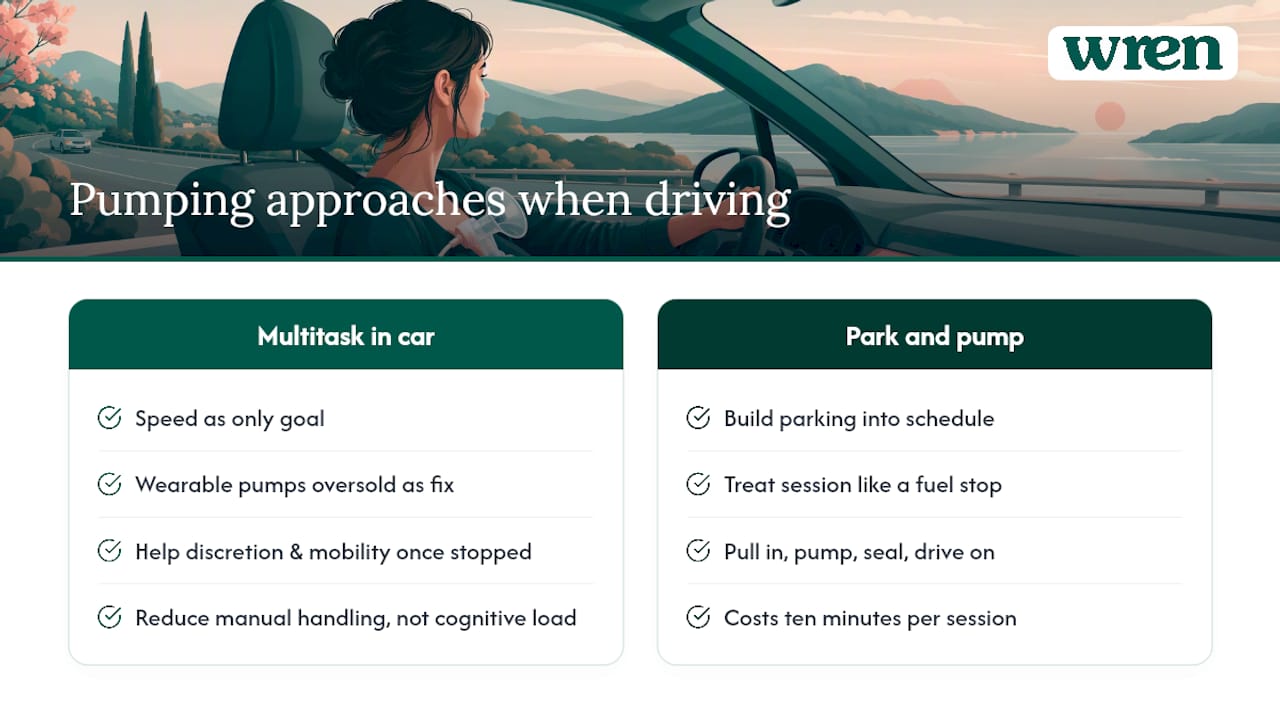
Most advice aimed at busy mums treats speed as the only goal, and that’s where it goes wrong. The mums who manage pumping on the road well aren’t the ones who’ve found a way to do it faster while driving. They’re the ones who’ve built parking into their schedule the same way they’d build in a nappy change or a feed.
The conventional advice oversells wearable pumps as a solution to the driving problem, when really they solve a different problem: discretion and mobility once you’ve stopped. A hands-free pump reduces manual handling, but it doesn’t remove the cognitive load of monitoring a device, and that’s exactly the kind of distraction that turns a five-second glance into a serious problem at speed.
What actually works is unglamorous: treating a pumping session like a fuel stop, not a multitasking hack. Pull in, pump, seal, drive on. If you’re doing this daily, the ten minutes it costs you is smaller than the risk it avoids.
Get your car pumping kit sorted with My-wren
Most of the guesswork around road pumping comes down to having the wrong pump for the job. A base-unit pump with trailing tubes was never built for a car seat. My-wren’s hands-free double electric breast pump was, fitting inside a bra so there’s nothing to plug in, balance, or hold once you’re parked and ready to go.

For mums doing multiple sessions a day, the double pump cuts session time roughly in half compared with single pumping, while the single hands-free pump suits anyone who only needs to top up on occasional longer drives. Pair either with a breastfeeding bundle to get flanges, pads, and a massager sorted in one order, all priced in £ with no separate shopping trips needed. Browse the breast pump collection and build a kit that matches how often you’re actually on the road.
This article is general information, not a substitute for advice from a qualified doctor. Consult a qualified healthcare professional about your own circumstances before acting on anything here.


