


Reuse milk storage bags: safe rules for mums


You can safely reuse milk storage bags, but only purpose-made reusable bags designed for repeated sterilisation. Single-use disposable bags should not be reused. The seals degrade, microcracks form, and the material is not rated for the heat of a steam steriliser or repeated washing. For any mother wanting to reduce waste without risking milk quality, the answer is clear: switch to purpose-made reusable bags and follow the manufacturer’s reuse guidance precisely.
Three steps to take right now if you plan to reuse:
- Stop reusing single-use bags. They are not designed for it, regardless of how intact they look.
- Check your reusable bag’s manufacturer instructions for the stated reuse count and approved cleaning methods.
- Sterilise and dry thoroughly after every use before refilling.
Pro Tip: Always inspect the seal before each refill. If the zip-lock or double-seal shows any discolouration, stiffness, or resistance, discard the bag. A compromised seal is the most common contamination point.
This article follows NHS UK guidance on expressing and storing breast milk and prioritises infant safety throughout. Breast milk storage is a YMYL topic: when in doubt, follow your midwife or health visitor’s advice.
Key takeaways
Purpose-made reusable silicone or heavy-duty plastic bags are the only safe option for repeated milk storage bag use; single-use disposable bags must not be reused.
| Point | Details |
|---|---|
| Single-use bags: do not reuse | Thin plastic degrades, seals wear, and the material is not rated for sterilisation. |
| Reusable bags: follow the reuse count | Check the manufacturer’s stated limit and discard at the first sign of seal wear or discolouration. |
| Clean and sterilise after every use | Hand-wash with food-grade detergent, brush the seal channel, rinse thoroughly, and sterilise before refilling. |
| Follow NHS storage windows | Room temperature up to 4 hours, fridge up to 8 days, standard freezer up to 6 months; never refreeze thawed milk. |
| My-wren storage bags | Designed for breast milk storage with freezer compatibility and labelling panels; check the product page for full specifications. |
Table of Contents
- Can you reuse milk storage bags? Understanding the types
- How to clean and sterilise reusable milk storage bags
- Reuse limits, storage times, and refreezing rules
- What are the safest alternatives to single-use bags?
- What does UK guidance actually say about reusing milk bags?
- Manufacturer guidance on reuse counts and NHS infant feeding advice
- How to reduce contamination risk during reuse
- UK legal and safety regulations for milk storage bags
- My-wren reusable storage options for UK mothers
- Sources
Can you reuse milk storage bags? Understanding the types
Not all milk storage bags are the same material, and that difference determines whether reuse is safe.
Single-use disposable bags are made from thin, pre-sterilised plastic film. Brands such as Medela and Lansinoh label these explicitly as single-use. The seals are not built to withstand repeated sterilisation cycles, and the plastic can develop microcracks after the first fill and freeze cycle. Those cracks are invisible to the naked eye but can harbour bacteria and allow chemical leaching from degraded plastic into the milk. The CDC advises using breast milk storage bags or clean food-grade containers, and explicitly warns against storing breast milk in disposable bottle liners or bags not intended for breast milk storage.
Purpose-made reusable bags are a different product category. They are typically made from food-grade silicone or heavy-duty BPA-free plastic, with reinforced double seals and walls thick enough to survive repeated sterilisation. Some manufacturers state a specific reuse count on the packaging; others describe the bag as reusable for the product’s lifespan provided it shows no wear.
“When evidence is limited on the repeated reuse of disposable bags, the safe approach is to prefer purpose-made reusable products or sterilised hard containers.” The Mayo Clinic recommends storing expressed milk in clean, capped food-grade glass or hard plastic containers, or specialist milk storage bags intended for breast milk rather than general household bags.
When you must not attempt reuse, regardless of bag type:
- The bag has been in contact with spoiled or off-smelling milk.
- There is any visible blood contamination.
- The seal shows wear, discolouration, or does not close flush.
- Your baby is unwell or immunocompromised.
- You have any doubt about seal integrity.
Community forums show many mothers asking whether a “barely used” single-use bag can go through the dishwasher. The short answer: the bag may survive the cycle, but it is no longer safe for breast milk. Treat that as anecdotal context, not guidance.
How to clean and sterilise reusable milk storage bags
The approved method for purpose-made reusable bags is hand-washing with food-grade detergent, followed by sterilisation. Some bags are also dishwasher-safe; always confirm this with your specific manufacturer’s instructions before using a machine.
Hand-washing method
- Open the bag fully and rinse with cold water to remove milk residue before it dries.
- Fill with warm water and a small amount of food-grade washing-up liquid.
- Use a soft bottle brush to scrub the interior walls and, critically, the seal channel. Milk fat collects in the seal and is the primary contamination risk.
- Rinse thoroughly with clean water until no soap remains.
- Leave the bag open, upside down, on a clean drying rack. Do not close the seal until the bag is completely dry inside.
Dishwasher method
Place the bag on the top rack only, open and secured so water can circulate inside. Confirm the bag is rated dishwasher-safe at the temperature your machine runs. Not all reusable bags tolerate high-heat cycles; silicone bags generally do, while some heavy-duty plastic bags do not.
Sterilisation options
- Steam steriliser: Compatible with most silicone bags. Follow the steriliser manufacturer’s cycle time.
- Boiling: Only if your bag’s manufacturer explicitly permits it. Submerge fully for the stated time. Not suitable for bags with plastic components that can warp.
- Chemical steriliser (Milton-type): Suitable for bags where heat sterilisation is not recommended. Rinse thoroughly afterwards, as residue can affect milk taste.
Pro Tip: A small interdental brush works better than a standard bottle brush for cleaning inside the seal channel. Run it along the full length of the zip-lock after every wash.
Cleaning guidance from retailers and parenting product pages describes these same steps, though methods vary by product. Manufacturer demo content shows dishwasher and hand-wash techniques as practical illustrations. Treat these as product-specific guidance rather than clinical evidence, and always defer to the instructions that came with your specific bag.
For cleaning pump parts using the same principles, the My-wren guide to cleaning pump parts covers compatible sterilisation methods in detail.
Reuse limits, storage times, and refreezing rules
Follow the manufacturer’s stated reuse count. If the packaging gives a number, that is the limit. If it does not, inspect the bag before every use and discard at the first sign of wear. Single-use bags have no safe reuse count.
Safe storage times for expressed breast milk (UK guidance)
The My-wren storage guide covers labelling and thawing in detail. The CDC’s handling and storage guidance aligns with these windows and is the authoritative reference for expressed milk safety.
Never refreeze thawed breast milk. Once milk has been warmed or left at room temperature for more than two hours, discard it.
Signs to discard milk immediately:
- Sour or off smell after swirling (separating is normal; spoilage is not).
- Visible particles that do not disperse after warming.
- Unusual colour change beyond the normal yellow-to-white variation.
- Any doubt about storage conditions or bag integrity.
Labelling checklist for every bag:
- Date and time of expression
- Volume in millilitres
- Baby’s name (if milk is used in a shared care setting)
- Reuse count (for reusable bags: mark each use)
Switching to reusable bags reduces the cost of repeated single-use purchases over a pumping journey of several months. Single-use bags typically cost between £0.20 and £0.50 each; a purpose-made reusable bag used across many cycles brings the per-use cost down considerably. For a broader look at which bags offer the best value in the UK, the My-wren storage bag buying guide compares options by material and cost.
What are the safest alternatives to single-use bags?
The safest alternatives to reusing single-use bags are purpose-made reusable silicone bags, sterilised hard containers (glass or BPA-free plastic), and dedicated freezer pots. Each removes the degradation risk that comes with repurposing a single-use product.
What to check on the label before buying:
- Material: food-grade silicone or BPA-free hard plastic
- Dishwasher-safe and/or steam-steriliser compatible
- Freezer-rated and thaw-safe (can go from freezer to warm water)
- Leakproof seal with a double zip-lock or screw-top
- Labelling area on the bag or lid
- Manufacturer’s stated reuse count or lifespan guidance
My-wren product options:
- My-wren Milk Storage Bags: designed for expressing and storing, with clear labelling panels and freezer compatibility. Check the product page for current material and sterilisation specifications.
- Bamboo Reusable Breast Pads: for mothers building a fully reusable breastfeeding kit alongside sustainable storage.
- Hands-Free Electric Breast Pump and Hands-Free Double Electric Breast Pumps: for mothers who express regularly and need a reliable, high-volume pumping routine to pair with reusable storage.
Other market categories to consider (generic descriptions):
- Reusable silicone pouches: thicker walls, wide-mouth opening for easier cleaning, typically rated for multiple uses by the manufacturer.
- Hard freezer pots with screw-top lids: glass or BPA-free plastic, stackable, fully sterilisable, and with no seal to degrade.
Buying checklist for UK shoppers:
- Read the manufacturer instructions before purchase, not after.
- Confirm the return policy covers defective seals.
- Check that the bag is labelled with a reuse count or lifespan statement.
- Verify the bag is available from a UK retailer so you can access customer support.
The shift from single-use to reusable storage is part of a broader move toward sustainable breastfeeding habits. Reusable breast pads follow the same logic: the benefits of reusable breast pads cover why the switch makes practical and environmental sense. For a wider view on swapping single-use items for reusable alternatives across everyday routines, Fierce Nature’s guide to simple sustainable swaps offers useful context.
What does UK guidance actually say about reusing milk bags?
UK guidance is conservative. The NHS advises expressing milk into clean, sterilised containers and following strict storage windows. It does not endorse reusing single-use bags. The practical position from authoritative UK and international bodies is: use purpose-made containers, follow manufacturer instructions, and when in doubt, use a new bag or a sterilised hard container.
Authoritative sources and what each contributes:
- NHS UK (nhs.uk): Guidance on expressing and storing breast milk, including storage windows and hygiene requirements. The primary reference for UK mothers.
- Mayo Clinic: Practical container safety guidance, including the recommendation to use food-grade glass or hard plastic and specialist milk storage bags rather than household bags.
- CDC (US Centers for Disease Control and Prevention): Detailed handling and storage protocols, including the explicit warning against disposable bottle liners and unsuitable bags.
“Use breast milk storage bags or clean, food-grade containers with tight-fitting lids made of glass or plastic to store expressed breast milk.” The CDC’s handling guidance is clear that the container must be intended for breast milk storage — not a repurposed household bag.
Evidence gaps: There are limited peer-reviewed studies specifically examining the repeated reuse of single-use disposable breast milk bags. The conservative guidance from health bodies reflects that gap. Where evidence is thin, the safe approach is to prefer purpose-made reusable products or sterilised hard containers, as the Mayo Clinic’s storage guidance supports.
Manufacturer guidance on reuse counts and NHS infant feeding advice
Manufacturer instructions are the binding reference for any reusable bag. Medela and Lansinoh both label their standard storage bags as single-use only. Purpose-made reusable bags from specialist brands state a reuse count on the packaging or in the product instructions; some silicone bags are described as reusable for the product’s lifespan provided no wear is visible. Always follow the number on your specific bag’s packaging.
The NHS infant feeding guidance aligns with this approach. Expressed milk should be stored in sterilised containers, labelled with the date and time, and used within the recommended windows. The NHS does not provide a specific reuse count for bags because its guidance is built around sterilised hard containers and purpose-made bags rather than repurposed single-use products.
If you are using a My-wren Hands-Free Double Electric Breast Pump and expressing regularly, pairing it with purpose-made storage bags from the outset removes the question of reuse limits entirely for the first bag in the cycle.
How to reduce contamination risk during reuse
Contamination risk during reuse comes from three sources: residual milk fat in the seal, bacteria introduced during handling, and degraded bag material. Addressing all three is straightforward with consistent habits.
Wash your hands before handling expressed milk or touching the inside of any bag. The Mayo Clinic specifically recommends hand-washing before pumping or handling breast milk. Keep the bag’s opening away from surfaces, clothing, and your face during filling.
Store bags flat in the freezer so they freeze quickly and evenly, reducing the time milk spends at an intermediate temperature. Label every bag before filling, not after, so the label does not require you to handle a full bag. Only reuse a bag for the same baby unless the manufacturer explicitly states cross-use is safe.
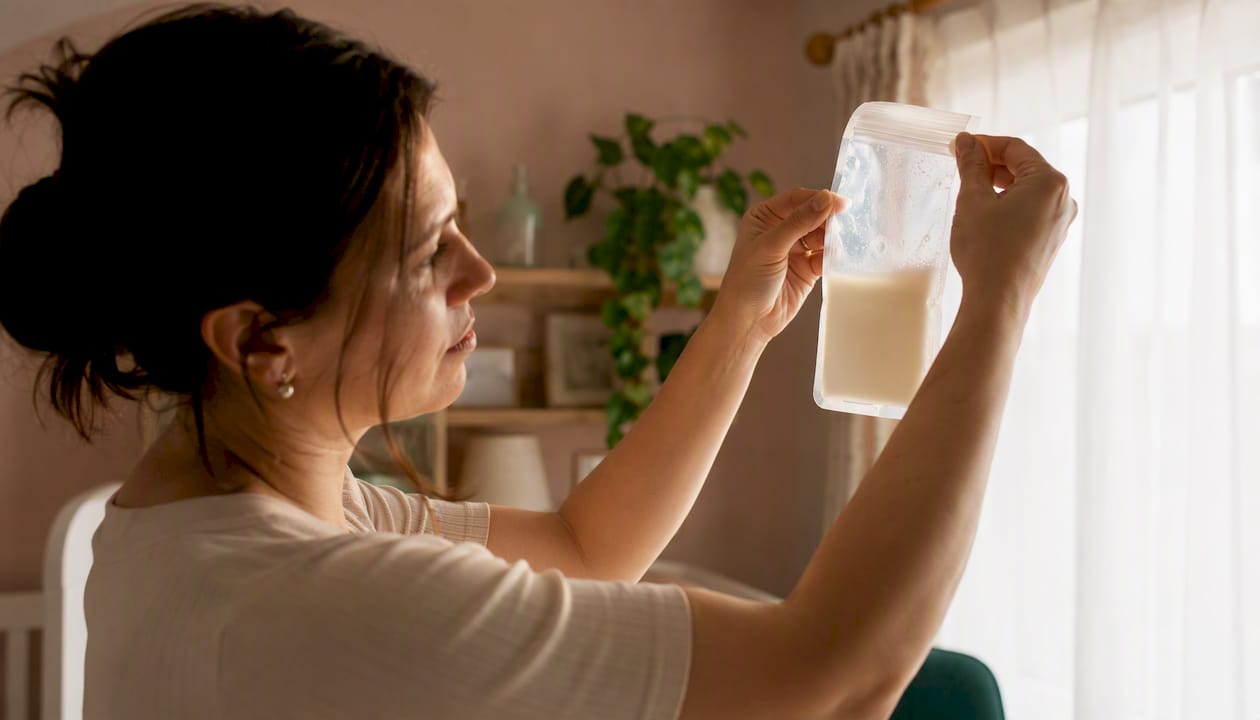
Inspect the seal under good light before each refill. Run a clean finger along the inside of the seal channel to check for residue. If you feel any tackiness or see any discolouration, discard the bag. A bag that has held spoiled milk should never be reused, even after sterilisation.
UK legal and safety regulations for milk storage bags
Milk storage bags sold in the UK must comply with UK food contact materials regulations, which require that materials in contact with food do not transfer substances to food in quantities that could endanger human health. This framework, retained from EU Regulation 1935/2004 following the UK’s departure from the EU, applies to all food-grade containers including breast milk bags.
Practically, this means any bag sold as a breast milk storage bag in the UK must be made from food-contact-approved materials and must not leach harmful substances under normal use conditions, including freezing and thawing. Bags that are not labelled as food-grade or breast milk storage bags fall outside this protection.
The UK Food Standards Agency (FSA) oversees food contact materials regulation in Great Britain. If you have concerns about a specific product, the FSA’s guidance on food contact materials is the primary reference. For Northern Ireland, EU food contact materials law continues to apply under the Windsor Framework.
This article provides general information. For specific regulatory or medical questions about milk storage safety, consult your health visitor, midwife, or a qualified professional.
A note on reuse, safety, and sustainability
Reducing waste from single-use bags is a reasonable goal, and purpose-made reusable bags make it achievable without compromising milk safety. The priority, though, is always the milk. A bag that looks fine but has an invisible seal crack or degraded plastic is not worth the risk.
My-wren’s position is straightforward: use purpose-made reusable bags, follow the manufacturer’s reuse count, sterilise thoroughly after every use, and follow NHS storage windows. That combination gives mothers a practical, lower-waste routine without cutting corners on safety.
My-wren reusable storage options for UK mothers
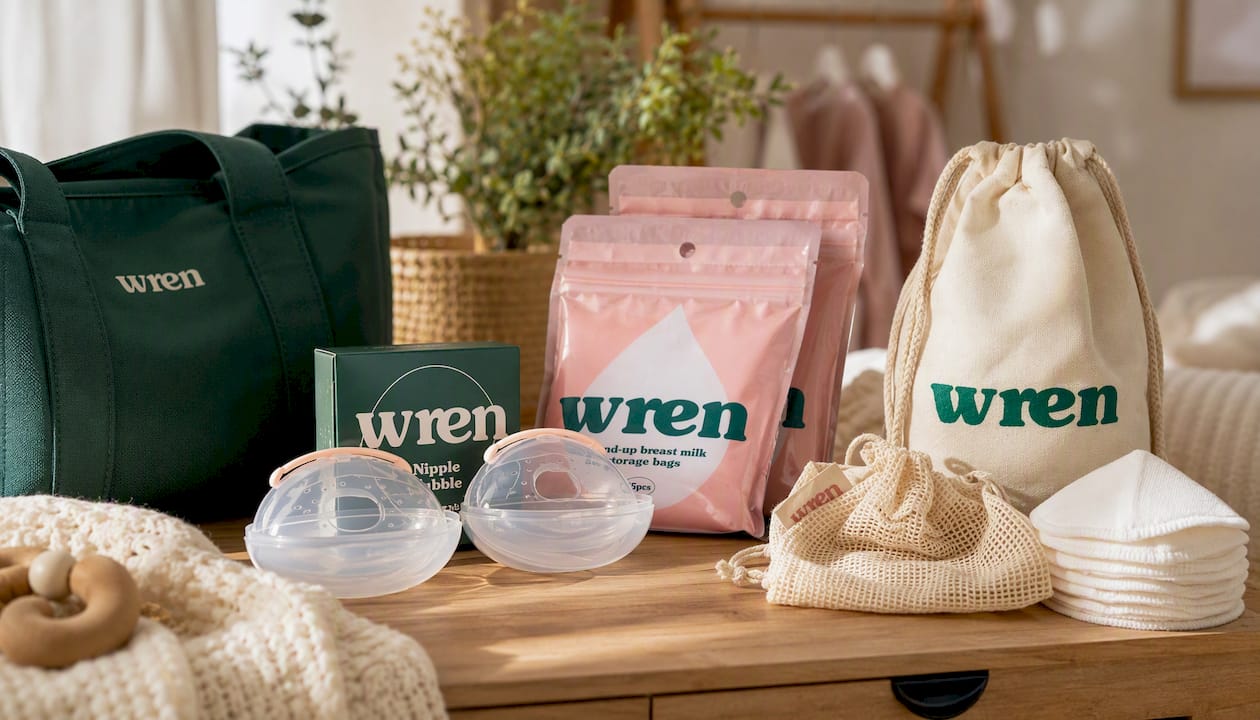
My-wren’s Milk Storage Bags are designed for expressing and storing breast milk, with clear labelling panels and freezer compatibility. They meet the core buying checklist: food-grade material, freezer-rated, and with a leakproof seal. For mothers building a complete reusable kit, the breastfeeding accessories range includes the Bamboo Reusable Breast Pads, Lactation Massager, Nipple Bubble with storage case and bag, and a Breast Shield 25mm (Flange) for pump fit. Mothers who express regularly can pair storage bags with the Hands-Free Electric Breast Pump for a complete, lower-waste pumping setup. View the full range at My-wren and check individual product pages for current sterilisation and reuse specifications.
Sources
This article is general information, not a substitute for advice from a qualified doctor. Consult a qualified healthcare professional about your own circumstances before acting on anything here.


