


Thaw breast milk safely: quick steps for parents


The safest way to defrost frozen breast milk is slow thawing overnight in the fridge, kept at or below 4°C. When you need milk faster, placing the sealed bag or bottle in a bowl of lukewarm water (no hotter than 37°C) or holding it under lukewarm running water both work well. These methods preserve nutrients and prevent dangerous hot spots.
Three things to avoid immediately:
- Never thaw or warm breast milk in a microwave
- Never use boiling water or place a bottle directly on a hob
- Never refreeze milk that has fully thawed
These rules come directly from NHS guidance and are reinforced by the CDC and HSE.
Table of Contents
- How do you thaw breast milk safely, step by step?
- What methods should you avoid, and why?
- How do you warm thawed milk safely before feeding?
- How long is thawed breast milk safe to use?
- Best practices for storage bags and containers
- What are the rules on refreezing and leftover milk?
- Quick tips for common problems
- Key takeaways
- A note on this guidance
- My-wren breast milk storage bags
- Useful sources
How do you thaw breast milk safely, step by step?
Fridge method (preferred)
- Take the oldest bag or bottle from the freezer the night before you need it. Always use the oldest milk first.
- Place it upright in the back of the fridge, away from the door, where the temperature stays most consistent at or below 4°C.
- Leave it to thaw overnight. Once fully thawed, use within 24 hours.
- Before feeding, swirl the bottle or bag gently to recombine the cream layer that separates during freezing. Do not shake vigorously, as this can damage the milk’s proteins.
Water bath method (faster)
- Fill a bowl or jug with lukewarm water. The water must not exceed 37°C.
- Place the sealed storage bag or closed bottle into the water.
- Change the water every few minutes to maintain warmth. A small 60–90 ml portion typically thaws within 10–20 minutes.
- Once thawed, dry the outside of the bag or bottle before opening.
- Pour into a sterilised bottle only when ready to feed.
Running warm water method
- Hold the sealed bag or closed bottle under a stream of lukewarm running water.
- Keep the water temperature below 37°C. A simple way to check: the water should feel comfortably warm on your wrist, not hot.
- Rotate the container slowly so all sides thaw evenly.
- Use immediately once thawed, or refrigerate and use within 24 hours.
Pro Tip: Label every bag with the date expressed and the volume before freezing. When you open the fridge, the oldest milk is always the one to reach for first.
What methods should you avoid, and why?
Some common shortcuts carry real risks.
- Microwave: — Microwaving creates uneven hot spots within the milk, even when the outside feels cool. These hot spots can scald a baby’s mouth. The CDC confirms that microwaving also destroys heat-sensitive nutrients and antibodies, reducing the milk’s nutritional value.
How do you warm thawed milk safely before feeding?
Warming is optional. The HSE notes that healthy full-term babies can drink chilled milk straight from the fridge. If your baby prefers warm milk, follow these steps:
- Place the bottle in a bowl of warm water for a few minutes, or use a dedicated bottle warmer set to a gentle temperature.
- Never heat milk above 40°C. Water used for warming should not exceed 37°C.
- Test the temperature by shaking a few drops onto the inside of your wrist. It should feel neutral, not warm.
- Do not heat the same milk twice. Once warmed, use it within two hours or discard.
Pro Tip: A digital thermometer takes the guesswork out of water temperature. A quick check before placing the bottle in the bowl costs seconds and protects your baby.
How long is thawed breast milk safe to use?
The 24-hour fridge window starts when the milk is completely thawed, not when you first move it from the freezer.
| Condition | Time limit |
|---|---|
| Thawed in the fridge (≤4°C) | Use within 24 hours |
| Thawed and left at room temperature | Use within 2 hours |
| Warmed and offered to baby | Use within 2 hours |
| Leftover milk after a feed | Use within 2 hours |
| Refreezing thawed milk | Not permitted |
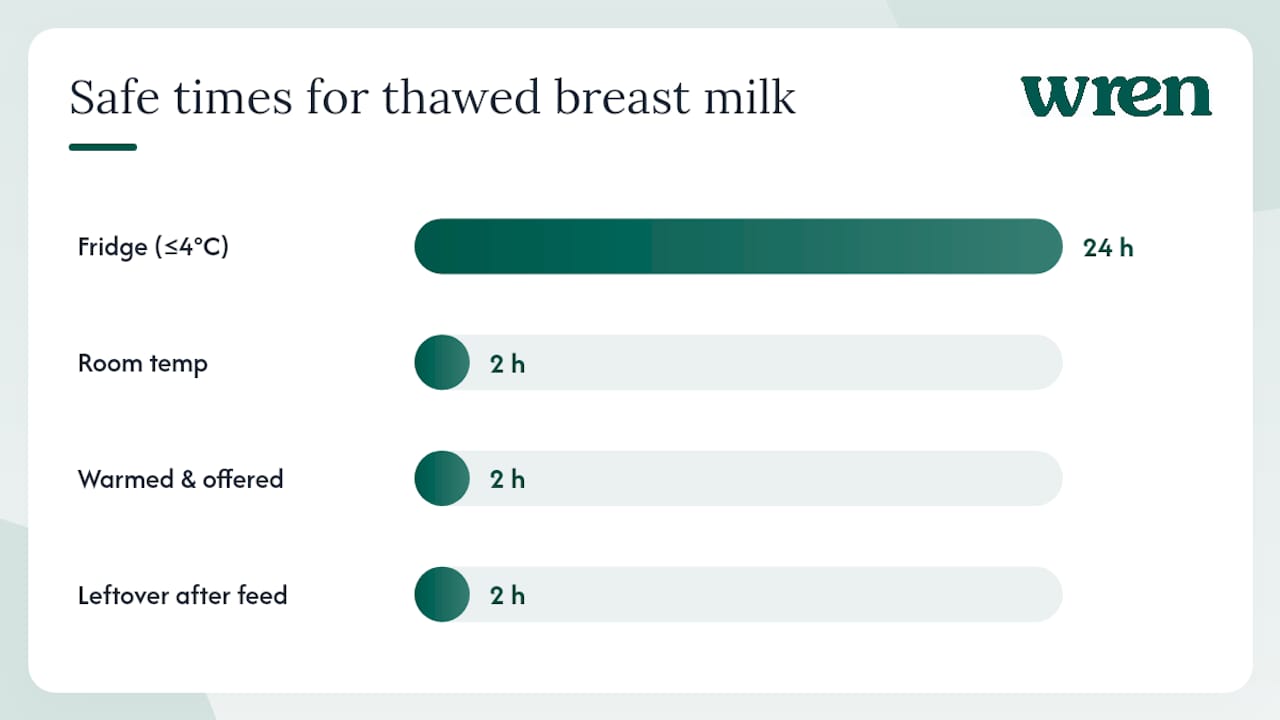
Factors that shorten these windows include a fridge running above 4°C, a premature or medically vulnerable baby, or any doubt about how long the milk has been out. When in doubt, discard. The CDC recommends using thawed milk within 24 hours for fridge storage and within 2 hours once warmed or at room temperature.
Best practices for storage bags and containers
Choosing the right container and labelling it correctly makes safe thawing much easier. For full guidance on how to store breast milk, My-wren’s resource covers every stage from expressing to freezing.
- Use food-grade breast milk storage bags or sterilised hard plastic or glass containers designed for breast milk. Ordinary freezer bags are not suitable.
- Leave a small amount of headspace in each bag or container before sealing, as milk expands when frozen.
- Label every bag with: date expressed, volume, and your baby’s name if the milk is going to a nursery or childminder.
- Follow the first in, first out rule: always thaw the oldest milk first. Store new bags at the back of the freezer and move older ones to the front.
- Freeze milk in small portions (60–120 ml) to reduce waste and speed up thawing.
- Thaw milk while it is still in the sealed bag, then pour into a sterilised bottle only when ready to feed.
Pro Tip: Lay storage bags flat to freeze. They stack neatly, take up less space, and thaw faster than bags frozen upright.
What are the rules on refreezing and leftover milk?
Short answer: once thawed, breast milk cannot be refrozen.
- Never refreeze milk that has fully thawed, regardless of how long it has been in the fridge.
- If your baby does not finish a feed, the CDC advises using any leftover milk within 2 hours of the feed starting, then discarding the rest.
- For partial feeds, label the bottle with the time the feed began. If two hours pass, discard.
- If you accidentally warmed more milk than your baby needed and the baby has not yet fed from the bottle, you can refrigerate it and use it within 2 hours. Once a baby has fed from a bottle, bacteria from their mouth enter the milk, so the 2-hour rule applies strictly.
Quick tips for common problems
Travelling with frozen milk
Pack frozen bags in an insulated cool bag with ice packs, following expert support for pregnancy, postpartum & C‑section recovery advice to help with your postpartum self-care needs. Milk kept this way can remain frozen or safely chilled for several hours, though transit times vary. Use within 24 hours of arriving at your destination, and never refreeze milk that has partially thawed during travel. For parents returning to work, planning your cool bag setup the night before makes the morning routine much smoother.
High-lipase milk
Some mothers produce milk with higher lipase activity, an enzyme that breaks down fat. After freezing and thawing, this milk can develop a soapy or metallic smell. It is safe to feed, but some babies refuse it. Cooling expressed milk quickly before freezing and using it within the recommended windows can reduce the effect. If the smell is strong, scalding the milk to 70°C immediately after expressing (before freezing) deactivates lipase, though this does reduce some immune factors.
Fat separation and texture changes
Separation on thawing is normal. Swirl the bag or bottle gently rather than shaking. NHS guidance is clear that vigorous shaking can damage the milk’s structure. If texture changes concern you, or if your baby is premature or unwell, speak to your health visitor or GP before feeding.
Key takeaways
The safest way to defrost frozen breast milk is slow thawing in the fridge at or below 4°C, with lukewarm water as a reliable faster alternative.
| Point | Details |
|---|---|
| Fridge first | Thaw overnight in a fridge at or below 4°C; use within 24 hours of full thaw. |
| Water bath as alternative | Use lukewarm water at or below 37°C; never use boiling water or a microwave. |
| Never refreeze | Once fully thawed, breast milk cannot be refrozen under any circumstances. |
| Time limits matter | Use thawed milk within 24 hours in the fridge, or within 2 hours once warmed or at room temperature. |
| My-wren storage bags | My-wren’s breast milk storage bags are designed for safe freezing and easy labelling, supporting best-practice thawing. |
A note on this guidance
The advice in this guide reflects NHS, CDC, and HSE recommendations on safe breast milk handling. One thing worth saying plainly: most parents worry too much about the warming step and not enough about the labelling step. Getting the date and volume on every bag before it goes in the freezer is the single habit that prevents the most waste and confusion. A bag with no date is a bag you will eventually discard out of uncertainty.
Warming is genuinely optional for healthy full-term babies. Skipping it removes one variable from the process entirely. For premature babies, babies with health conditions, or any situation where you are unsure, your health visitor or GP is the right person to ask.
My-wren breast milk storage bags
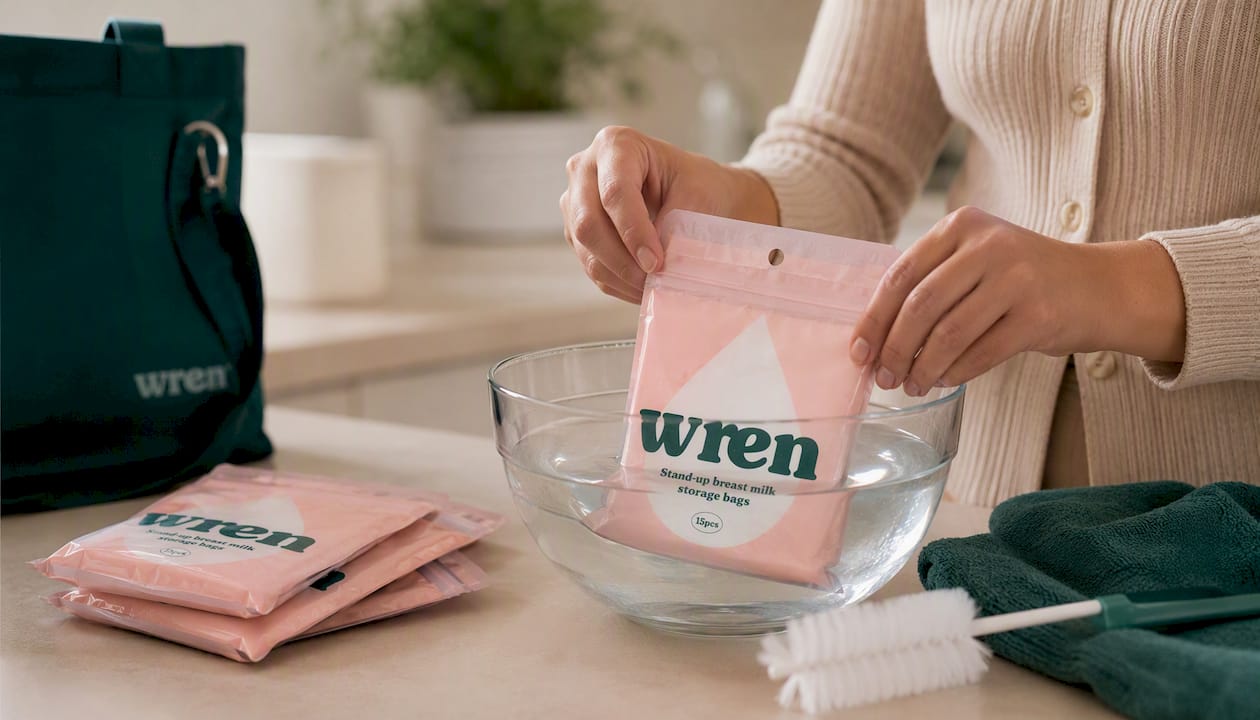
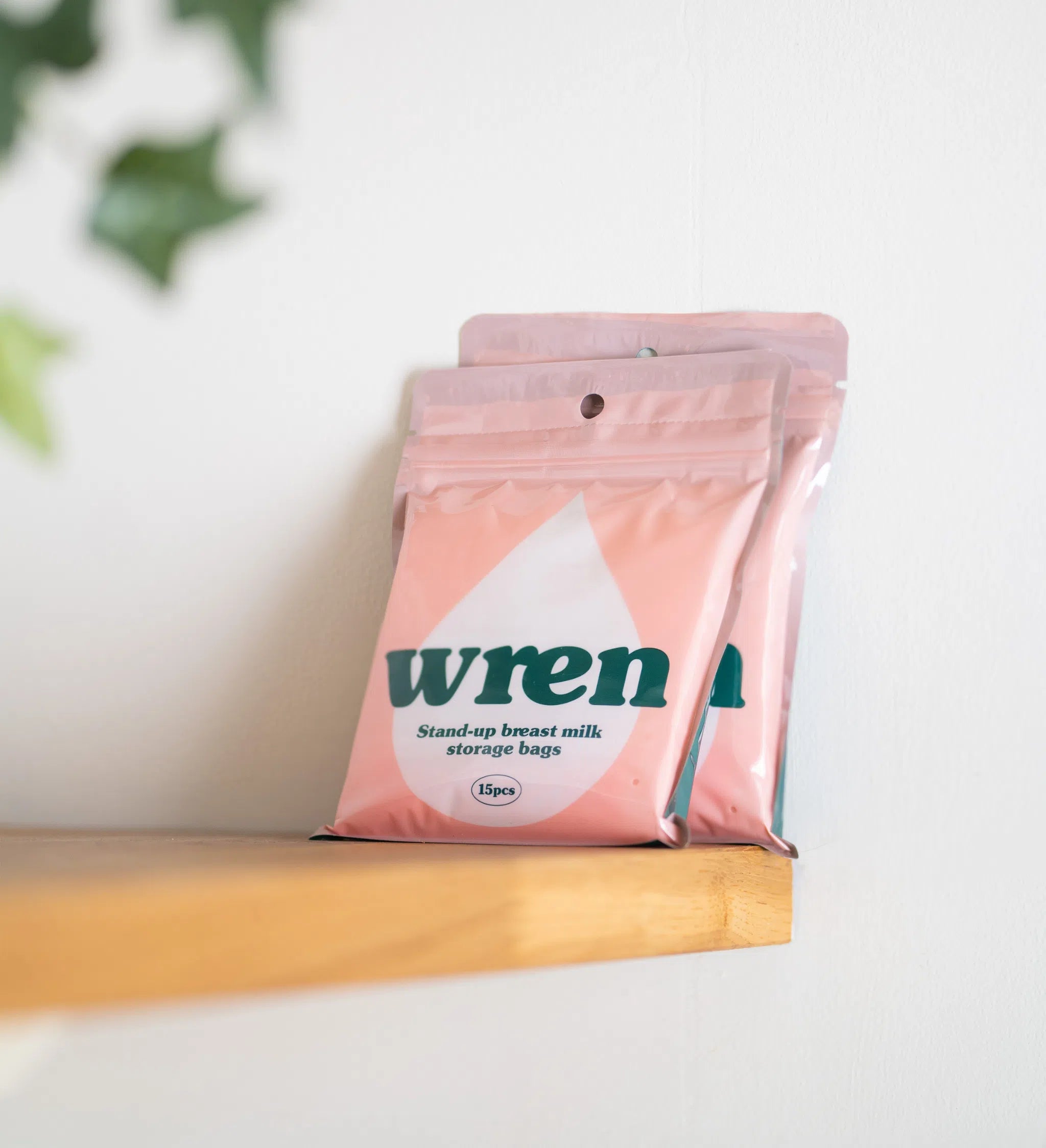
My-wren’s breast milk storage bags are pre-sterilised, food-grade, and designed with a clear labelling panel so you can record the date, volume, and time expressed without hunting for a marker. They seal securely to prevent leaks during freezing and thawing, and lie flat for space-efficient freezer storage. For parents building out their full feeding kit, the My-wren breastfeeding kit pairs storage bags with the other essentials you will actually use. Browse the storage bags on the My-wren shop and check current prices in £.
Useful sources
- Expressing and storing breast milk - NHS
- Breast Milk Storage and Preparation | Breastfeeding | CDC
- Storage and Preparation of Breast Milk - CDC (PDF)
- Heating expressed breast milk - HSE
- Tips for Freezing & Refrigerating Breast Milk - HealthyChildren.org
- How to Store Breast Milk | Breastfeeding Tips - My Wren
This article provides general information only and is not a substitute for professional medical advice. Always confirm current guidance with your health visitor, midwife, or GP, particularly for premature or medically vulnerable babies.


