


Mix Breast Milk Temperatures Safely: NHS Rules for UK New Mothers


Yes, you can mix breast milk of different temperatures, but only if you cool freshly expressed or room-temperature milk to fridge temperature before adding it to already chilled or frozen stock. Never add warm milk straight to frozen milk. That risks partial thawing and gives bacteria a chance to multiply. Whatever you combine, label the container with the date and time, and use warmed or room-temperature milk within 2 hours.
TL;DR:
- Adding warm milk directly to frozen or chilled breast milk risks partial thawing and promotes bacterial growth, so freshly expressed milk must be cooled before mixing.
- The safe storage limits are four hours at room temperature, four days in the fridge, and six to twelve months in the freezer, with all milk used within two hours after warming or reaching room temperature.
- Mixing is safe for same-day top-ups and small amounts added to chilled milk but should be avoided if the milk has been stored under different conditions or if it came from an unwell person.
- Proper cooling, combining, warming, and labeling routines, along with the right equipment, streamline milk handling and reduce the risk of contamination.
- Evidence shows that healthy, full-term babies are comfortable with milk at any temperature, as long as hygiene and storage guidelines are followed.
Table of Contents
- Essential rules for mixing breast milk temperatures safely
- When is it fine to combine milk, and when should you avoid it?
- How to cool, combine, warm and label milk correctly
- What the research and official guidance actually say
- Why we think safety and convenience aren’t opposites
- Kit that makes safe milk handling easier
- Sources
- FAQ
Essential rules for mixing breast milk temperatures safely
Handling expressed milk comes down to a small set of rules, and they matter more than most parents realise once more than one pumping session is involved.
The core storage limits, straight from the NHS, are:
- Room temperature (up to 25°C): use within 4 hours, sooner if possible
- Refrigerator: safe for up to 4 days
- Freezer: good for 6 to 12 months
- Once milk has been warmed, or has reached room temperature for a feed, it needs using within 2 hours
Pro Tip: Write the pumping date and time on every bag or bottle the moment you fill it. When you’re bleary-eyed at 3am, you don’t want to be guessing which batch is oldest.
A few “do not” rules sit alongside those limits. Do not add warm or freshly expressed milk directly to frozen milk. The warm milk can partially thaw the outer layer of the frozen block, and that uneven temperature creates a window where bacteria multiply faster than they would in milk kept consistently cold. Freshly expressed milk needs to be cooled to fridge temperature first, then it can join the chilled batch.
Do not microwave or boil breast milk. Public-health guidance from the CDC warns against microwaving because it heats unevenly, creating pockets hot enough to scald a baby’s mouth while the rest stays lukewarm, and high heat can damage some of the proteins that give breast milk its protective properties. A warm-water bath or a run under lukewarm tap water is the gentler, safer option.
Basic hygiene habits round out the rules: wash your hands before handling milk or pump parts, use clean or sterile containers, and store milk towards the back of the fridge or freezer where the temperature stays most stable, not on the door. If the fat has separated (which is normal), swirl the container gently to recombine it rather than shaking it, since vigorous shaking can damage delicate antibodies.
When is it fine to combine milk, and when should you avoid it?
Not every mixing scenario carries the same risk, and knowing the difference saves a lot of unnecessary second-guessing at the changing table.
- Same-day top-ups. If you’ve pumped twice in one day, cool the second batch in the fridge for a short spell, then pour it into the chilled container holding the earlier milk. This is one of the most common and safest combining scenarios for breastfeeding parents.
- Topping up a bottle before a feed. Adding a splash of room-temperature milk to a chilled bottle is fine, provided the combined milk still gets used within the safe time window from when the oldest portion was expressed.
- Avoid mixing when you plan to refreeze. Never add warm milk to frozen milk you intend to put back in the freezer. The NIH review on handling expressed milk is clear that combining different storage histories this way raises contamination risk.
- Avoid mixing milk of unknown history. If you’re not sure how long a batch has been out, or how it was stored, don’t add it to milk you know is safe. Treat the unknown batch on its own terms.
- Skip it if the milk came from someone who’s unwell. This applies mainly to shared or donor milk situations, where illness status isn’t always visible from the container.
Pro Tip: Keep a small dedicated section of your fridge just for breast milk, ordered oldest to newest from left to right. It turns “which one do I use first?” into a five-second glance rather than a guessing game.
Preterm, unwell, or medically fragile infants are the exception to almost every rule here. Warming milk closer to body temperature can sometimes be clinically appropriate for these babies, but that decision belongs to your neonatal or paediatric team, not a general guide. If your baby falls into this category, always follow their specific instructions over general advice.
How to cool, combine, warm and label milk correctly
Getting the sequence right takes the guesswork out of every pumping session.
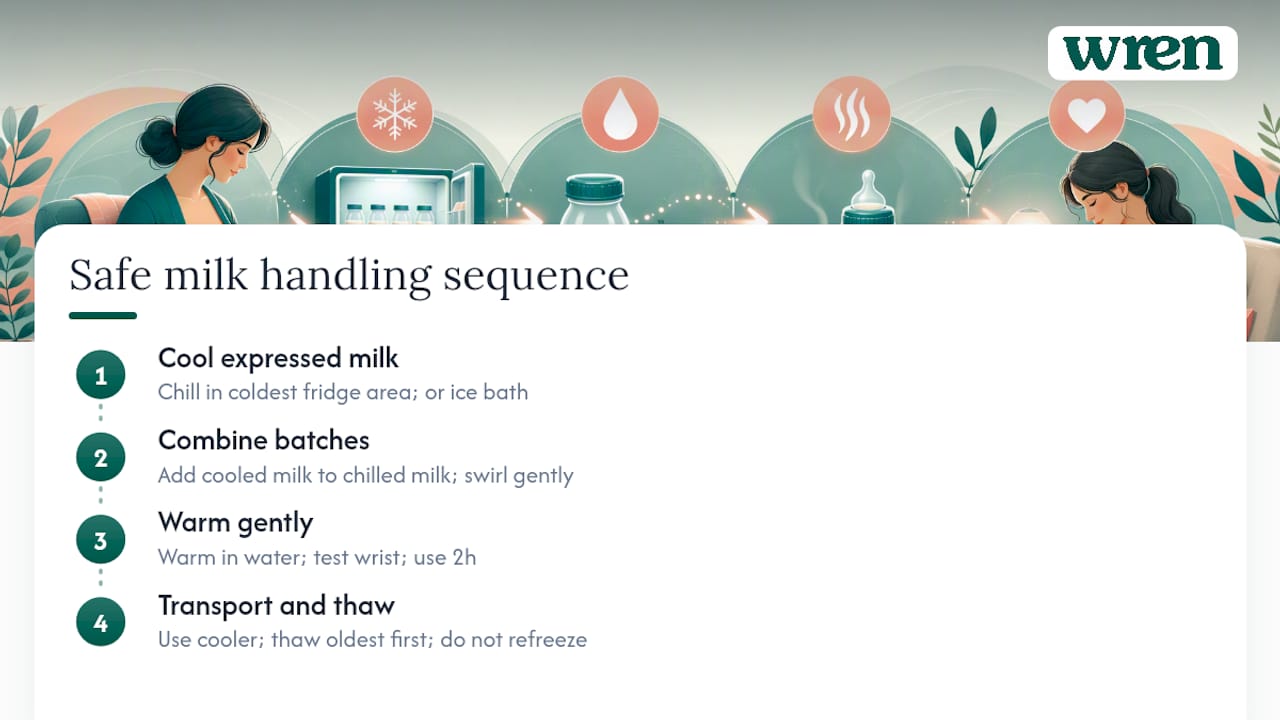
Cooling freshly expressed milk. Place the container in the coldest part of the fridge interior, not the door, and give it a couple of hours to reach fridge temperature before combining it with milk that’s already chilled. If you’re in a hurry, standing the container in an ice bath speeds this up noticeably.
Combining batches. Use clean, sealed breast milk storage bags or hard containers, and add the newly cooled milk on top of the existing chilled milk rather than pouring warm milk straight in. Swirl gently afterwards to redistribute the fat layer that naturally separates during storage.
Warming for a feed. Stand the sealed bottle or bag in a bowl of warm water, or hold it under lukewarm running water, for a few minutes. Test the temperature on the inside of your wrist before offering it, it should feel neutral, not hot. Microwaving is off the table for the reasons covered above. Once warmed, that milk needs using within 2 hours.
Transport and thawing order. For days out, an insulated cooler bag with ice packs keeps expressed milk safe in transit. At home, always thaw the oldest frozen milk first, either overnight in the fridge or under warm running water, and never refreeze milk once it’s thawed.
What the research and official guidance actually say
The evidence here is more reassuring than most parents expect. A 2026 systematic review covering five studies and 373 infants found no clinically meaningful short-term physiological differences, in heart rate, oxygen saturation, or body temperature, when healthy newborns were fed milk at different temperatures. Temperature preference, for most babies, is exactly that: a preference, not a medical requirement.
Milk temperature is largely a comfort choice for healthy, full-term babies. The physiological data simply doesn’t back up the idea that cold feeds are inferior to warm ones for this group.
The stricter rules around mixing and storage exist for a different reason: microbiology, not physiology. Every time milk sits in the “danger zone” of lukewarm temperature, whether from repeated warming, slow cooling, or partial thawing caused by adding warm milk to a frozen batch, bacteria get a longer window to multiply. The NHS and CDC storage limits, and the 2-hour rule after warming, exist specifically to keep that window short.
Why we think safety and convenience aren’t opposites
Cold feeds are safe for most healthy babies, and accepting that fact quietly removes a lot of unnecessary stress from night feeds. There’s no rule that says milk has to be warmed to be good milk. Warming is largely a ritual, for the baby’s comfort or the parent’s habit, not a clinical necessity once you’re feeding a healthy, full-term infant.
What actually reduces stress isn’t more caution, it’s better routine. Pre-labelling chilled bottles before bed, batching your pumping sessions, and knowing your storage order in advance turns a 3am feed into a five-minute task instead of a fridge-side debate. If you want more detail on any single step, our guides on warming breast milk safely and combining milk batches go further into the specifics.
— Paul
Kit that makes safe milk handling easier
Getting the cooling, labelling, and storage steps right every single time is far easier with the right equipment on hand, rather than relying on whatever container happens to be free.
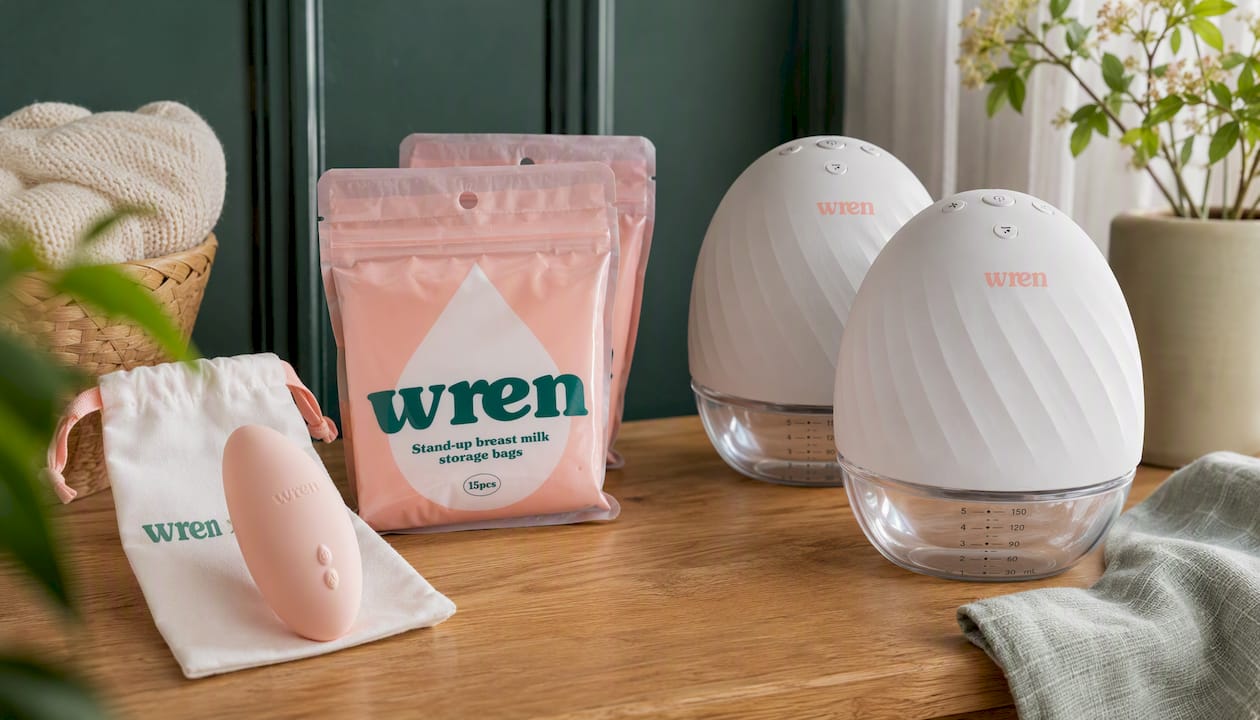
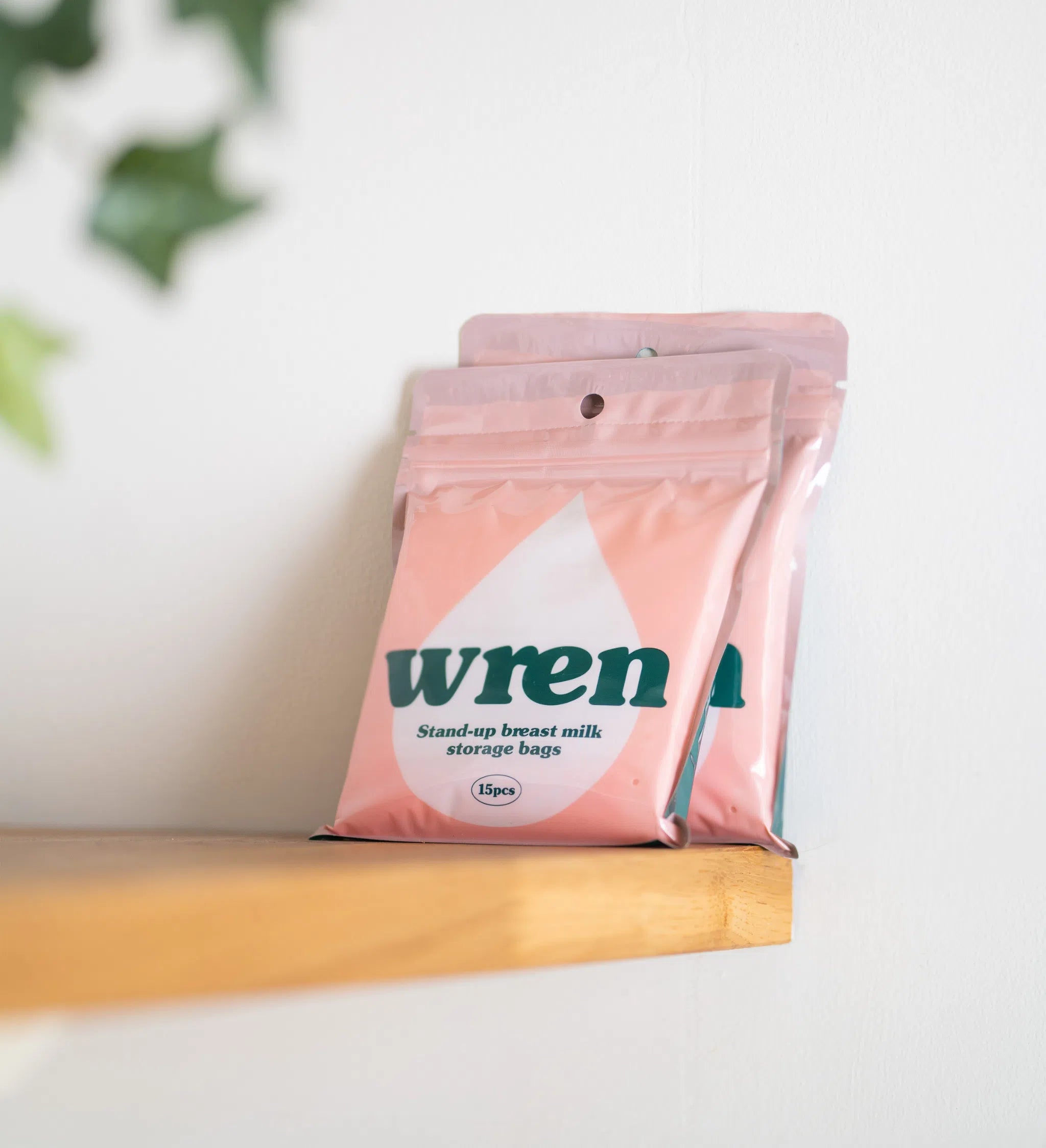
My-wren’s Breast Milk Storage Bags are resealable and labelable, built for the exact freeze-thaw-date routine this guide walks through, so you’re not hunting for a marker pen at midnight. For the collection side of things, the Hands-Free Double Electric Breast Pumps let you express both sides at once while wearing them under your clothes, which shortens the gap between expressing and getting milk into the fridge, the exact window where temperature control matters most. If expression itself feels uncomfortable or supply feels inconsistent, the Lactation Massager is designed to support let-down and comfort during sessions. Browse the full range of breastfeeding accessories and breastfeeding kits on the My-wren site, check the specifications against your own routine, and order what fits before your next pumping session.
Sources
This guide draws on the following official and clinical sources, worth bookmarking for future reference:
- Expressing and storing breast milk (NHS)
- Systematic review on infant physiological response to milk temperature (PubMed, 2026)
- Breast milk storage and preparation (CDC)
- Guidance on handling expressed human breast milk (NIH / NCBI review)
This article is general information, not a substitute for advice from a qualified doctor. Consult a qualified healthcare professional about your own circumstances before acting on anything here.
FAQ
What is the 3-3-3 rule for breast milk?
There’s no official “3-3-3 rule” in NHS or CDC guidance, so treat any version you see online with caution. The verified limits are 4 hours at room temperature, 4 days in the fridge, and 6 to 12 months in the freezer.
Why can’t you add warm breast milk to cold or frozen milk?
Adding warm milk to a chilled or frozen batch can partially raise its temperature, creating a window where bacteria multiply faster than in milk kept consistently cold. Cool freshly expressed milk to fridge temperature first, then combine it with the existing supply.
Can I refrigerate breast milk after it’s been out for 4 hours?
No. Once milk has been at room temperature for 4 hours, it’s past the safe window and should be discarded rather than refrigerated for later use. Sticking to the 4 hour limit is safer than trying to rescue milk that’s gone over it.
How long should breast milk cool before mixing with chilled milk?
There’s no single fixed timer, but freshly expressed milk generally needs a couple of hours in the fridge, or a shorter spell in an ice bath, to reach a similar temperature to the milk it’s joining. The goal is matching temperatures roughly, not hitting an exact number.
Does the temperature of milk affect whether my baby gets gas?
Not directly. Gas is far more commonly caused by swallowing air during a feed than by milk temperature, so paced bottle feeding tends to help more than warming or cooling the milk differently.


