


Pumping in Public for UK Mums: Under Two Minutes to Confidence


Yes, you can pump in public, and the law is firmly on your side. Pack a compact kit, choose discreet gear like a wearable pump, and follow simple storage rules for the milk afterwards. If privacy matters to you, a hands-free pump or a lightweight cover makes the whole process far easier. For the legal detail, NHS guidance backs you up completely.
TL;DR:
- Using a wearable or manual pump allows for discreet, hands-free expression that can be quickly set up in private spaces like cars or restrooms.
- Legal protections under the Equality Act 2010 prohibit businesses from asking mothers to stop or hide while breastfeeding or expressing in public.
- For longer outings, a fully charged electric pump and a pre-assembled setup reduce time and stress when pumping in public.
- Storing pumped milk with proper labeling and insulated bags maintains safety and freshness for up to 24 hours.
- Practising the full pumping routine at home until it takes less than two minutes builds confidence and minimizes fumbling in public.
Table of Contents
- What to pack for pumping away from home
- Is pumping in public actually legal?
- Which pump and outfit keep you most discreet?
- How do you keep a pump powered and ready to go?
- Where should you pump for the first time?
- How do you store and clean up safely on the go?
- How do you build confidence and handle interruptions?
- Where can you learn more and get set up properly?
- The advice that actually matters most
- Shop discreet pumps built for exactly this
- Sources
- FAQ
What to pack for pumping away from home
A grab-and-go kit turns a stressful outing into a five-minute routine. Keep a dedicated bag ready by the door so you never have to think twice before leaving the house.
- Pump: a wearable or compact electric pump, or a manual pump as backup
- Hands-free bra with pre-assembled flanges and bottles already attached
- Storage: a small insulated bag with an ice pack if you’re out for extended periods
- Power: a charged power bank or car adapter, plus the pump’s own charger
- Cleaning wipes and one spare set of parts in case of a spill
- Comfort extras: a nursing cover or scarf, a spare top, and nursing pads
Pre-assembling the flanges and bottles at home shaves minutes off every session. It sounds small, but it’s the single change that makes public pumping feel manageable rather than fiddly.
Is pumping in public actually legal?
It is, and the protection is stronger than many mothers realise. The Equality Act 2010 makes it unlawful for a business to discriminate against a woman who is breastfeeding or expressing milk in a public place, and NHS guidance is unambiguous that you should never be asked to leave.
- No venue can lawfully ask you to stop, cover up, or move to a toilet
- If staff push back, calmly state that breastfeeding and expressing are protected under the Equality Act
- Ask for a quiet corner or private space rather than backing down
If you’re heading back to work, the same legal protection extends to your employer, who must provide reasonable facilities and breaks. Our guide to breastfeeding at work covers what you’re entitled to ask for.
Which pump and outfit keep you most discreet?
Not every pump suits every outing, and the right choice usually comes down to how long you’re out and how much privacy you want.
- Wearable pumps sit inside your bra with no tubes or dangling bottles, making them the quietest and least visible option for a train seat or office desk
- Portable electric pumps give higher output but need reliable power, so they suit longer trips where you can charge between sessions
- Manual pumps are silent and simple, ideal for a quick top-up when you’d rather not draw any attention at all
Clothing does a lot of the work too. The two-layer method, a loose top over a vest, works with almost any pump, while button-down shirts and wrap dresses give quick access without full undressing. Darker prints and looser fabrics disguise both shape and movement, and a lightweight cover adds a final layer if you want it.
Pro Tip: Practise your outfit and pump combination at home first. If you can’t get set up in under two minutes on your sofa, you won’t manage it on a train.
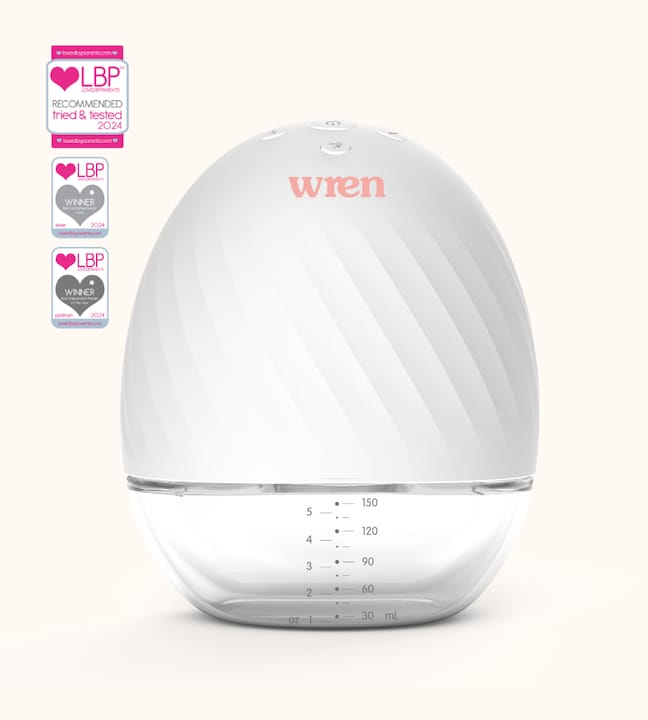
Our best pumps for work guide breaks down output and fit in more detail if you’re still choosing.
How do you keep a pump powered and ready to go?
Nothing derails a public pumping session faster than a dead battery. Check your pump’s voltage requirements before you leave, and always carry a dedicated power bank or car adapter rather than relying on a shared charger.
- Keep cables coiled and tangle-free in a separate pouch so you’re not fumbling at the worst moment
- Pre-assemble parts at home and store them in a labelled zip bag for instant swaps between sessions
- Use ambient noise, a busy café, a phone call, background music, to mask any pump sound
A seat with your back to the wall or a corner spot also reduces how exposed you feel, which helps some mothers relax enough for milk to let down more easily.
Where should you pump for the first time?
Confidence builds in stages, not all at once. Most mothers find it easier to work outward from private spaces rather than diving straight into a crowded café.
- Start in your car, a lactation pod, or a family restroom, locations experts recommend for building initial confidence
- Progress to a quiet corner of a café or a park bench once the routine feels automatic
- Ask staff politely: “Do you have a quiet corner or a private space I could use for a few minutes?” Most will happily point you somewhere
- For airports and long journeys, check terminal maps in advance for parent rooms, and time sessions around security and boarding rather than rushing
The NHS also recommends avoiding public toilets for feeding or pumping wherever a cleaner alternative exists.
How do you store and clean up safely on the go?
Milk safety doesn’t need to be complicated, but it does need a system. As a rough rule of thumb, freshly pumped milk is fine at room temperature for around four hours; beyond that, it needs an insulated bag with an ice pack, which extends safe storage to roughly 24 hours.
- Label every bottle or bag with the date and time before you move on
- Double-cap bottles or seal storage bags properly rather than decanting milk in public
- Carry a spare set of parts in a sealed zip bag so you can swap and go without washing on the spot
- Save the full clean, hot water, sterilising, drying, for when you’re back home
Statistic Callout: A conservative four-hour room-temperature window and a 24-hour cooler window, as recommended by parenting guides, gives you enough flexibility for most half-day outings without any guesswork.
How do you build confidence and handle interruptions?
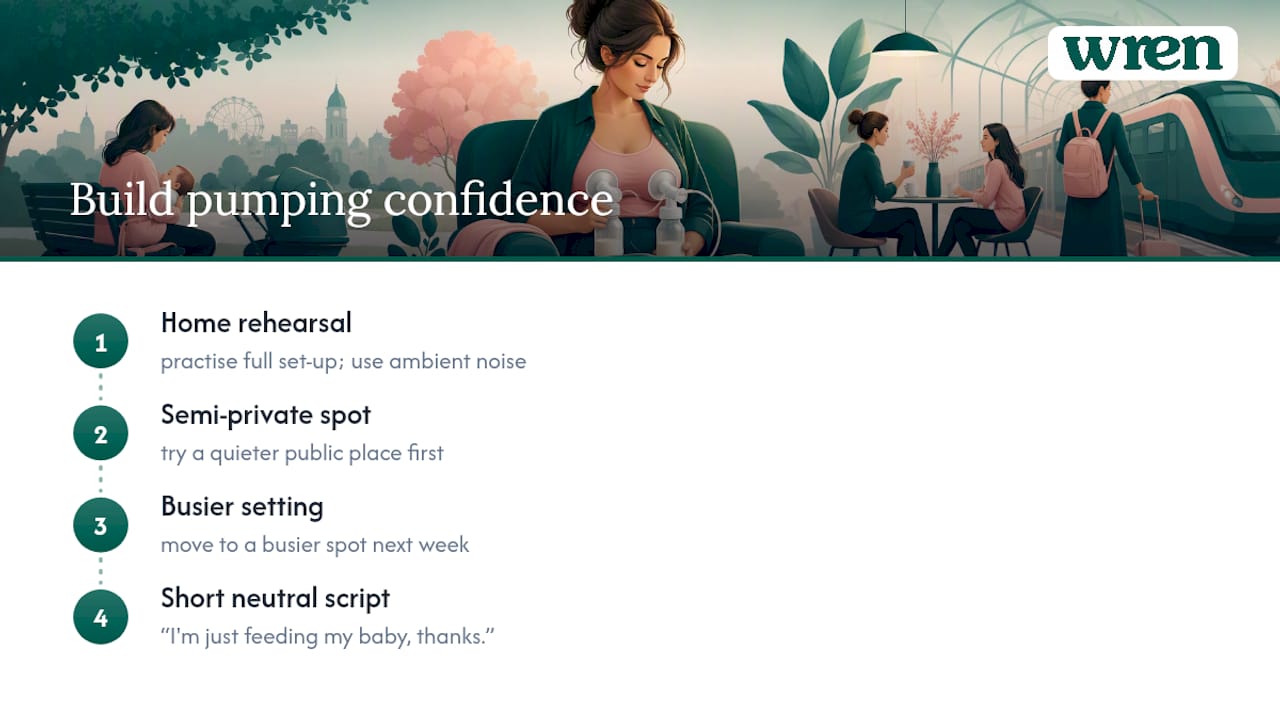
Confidence is a skill you rehearse, not a personality trait you’re born with. Practise your full set-up at home first, using ambient noise or music if that helps you relax, and try slow breathing if let-down feels slower than usual outside your own space.
If someone comments, a short, neutral script works better than a long explanation: “I’m just feeding my baby, thanks.” Curious children usually just want to know what the pump is; a simple “it’s for my baby’s milk” tends to satisfy them completely.
Practical guides consistently find that most people don’t notice or comment at all, and acting matter-of-fact reduces attention far more than trying to hide. Build tolerance gradually: a semi-private spot this week, a busier one next week. Some mothers also find that prioritising postpartum self-care in the weeks after birth makes these small daily challenges feel less draining overall.
Where can you learn more and get set up properly?
Wren designs wearable pumps specifically for the moments this guide covers, quiet, hands-free, and built to sit inside your own bra rather than announce themselves to a room. Paul’s related how-to posts on the Wren blog go into more depth on individual routines if you want to go further.
- How to pump discreetly without missing a beat for step-by-step technique
- Best pumps for work for choosing between models
- Breastfeeding at work for readers heading back to their job
A ready-made breastfeeding kit is worth a look if you’d rather buy the essentials in one go than assemble them piece by piece.
The advice that actually matters most
Most guides to pumping in public bury the useful advice under reassurance you don’t need. Mothers generally aren’t worried whether it’s legal, they already suspect it is. What they lack is a rehearsed routine, and that’s the piece conventional advice skips.
The single highest-leverage thing you can do is practise your full set-up at home until it takes under two minutes. Not the legal script, not the outfit choice, the physical mechanics of getting the pump on and working. Everything else, confidence, discretion, calm reactions to comments, follows from not fumbling in the moment.
Where I’d push back on common advice is the emphasis on covers and hiding. A cover can help some mothers feel steadier, but it’s not the fix for anxiety that people assume it is. The fix is reps: pumping somewhere semi-private a few times before you try a café. Confidence built that way tends to outlast whatever gear you’re carrying.
— Paul
Shop discreet pumps built for exactly this
If everything above sounds like more admin than you want, a wearable pump removes most of it. My-wren’s Hands-Free Electric Breast Pump sits inside your own bra with no tubes and no bottles hanging below your top, which is the discretion this whole guide has been building towards.
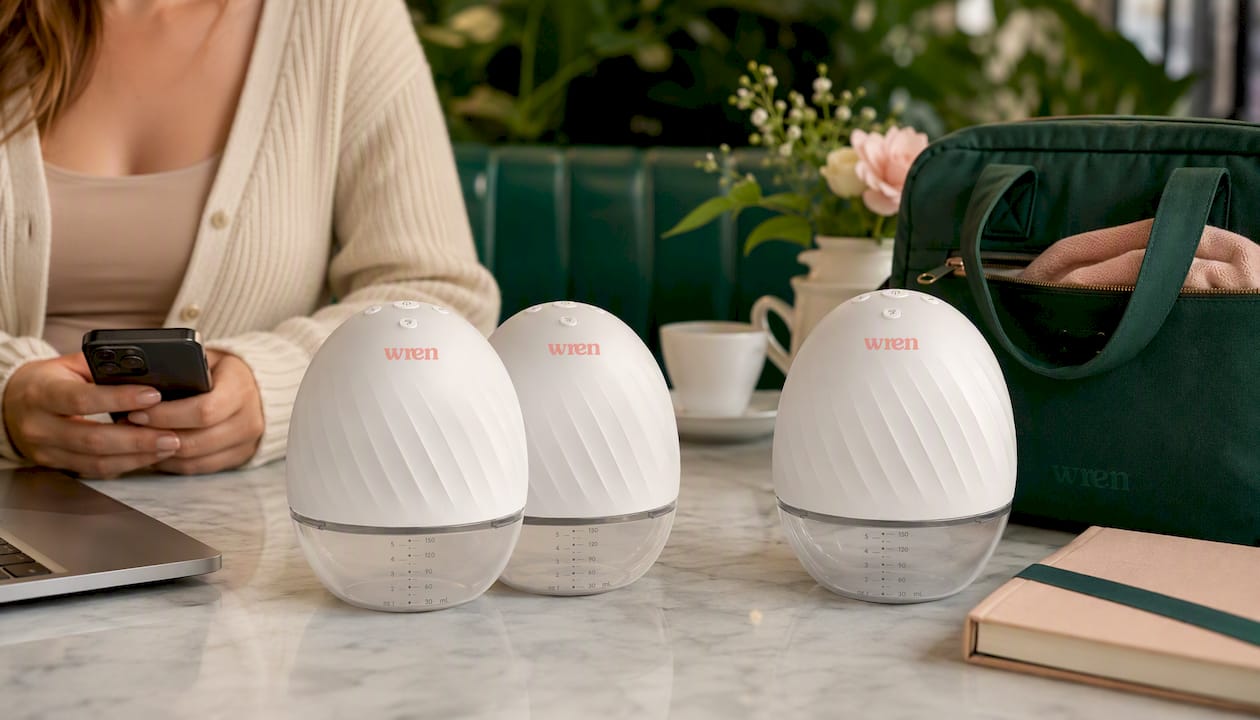
For mothers who need to express from both sides at once without losing an evening to it, the Hands-Free Double Electric Breast Pump covers both breasts hands-free, so you can hold your bag, your phone, or your baby’s hand while it runs. If you’re still comparing options, the full breast pump range is worth browsing before you decide, and spare pump parts are worth keeping on hand for the quick swaps this guide recommends. Charge your pump fully before you leave the house, pre-assemble the parts the night before, and run through the set-up once at home. That one rehearsal is what makes the first public session feel like the tenth.
Sources
- Breastfeeding in public - NHS
- How to pump in public - Mom Loves Best
- How to pump in public without anyone noticing - GirlTalkHQ
FAQ
Is it illegal to breastfeed in public in the UK?
No, it’s fully protected. The Equality Act 2010 makes it unlawful for a business to ask a breastfeeding mother to leave a public place, and the same protection covers expressing milk with a pump.
Is it normal for a woman to breastfeed in public?
Yes, it’s completely normal and increasingly common in cafés, parks, transport, and shops across the UK. Most people won’t notice or comment, and practical guides confirm that acting naturally reduces attention rather than increasing it.
What if I breastfeed my husband?
This question sits outside breastfeeding law and public etiquette, and this guide doesn’t cover it. If you’re asking about feeding your baby in front of your partner or family, that’s simply private, everyday breastfeeding with no legal or social complication attached.
How do I pump milk in public?
Pack a compact kit with a wearable or manual pump, hands-free bra, and insulated storage bag, then choose a semi-private spot like your car before progressing to busier locations. My-wren’s hands-free pumps are built specifically to make this process quick and low-fuss.
How long can pumped milk sit out before it needs cooling?
As a conservative guide, freshly pumped milk keeps for around four hours at room temperature, and up to 24 hours in an insulated bag with an ice pack. Always label bottles with the date and time before you move on.


