


Wash Baby Clothes Before Birth, UK: First Week Now, Bulk 2 to 4 Weeks


Yes. Wash any item that will touch your baby’s skin before its first wear, and treat this as a two-stage job: a small first-week set now, and the bulk of the wardrobe roughly 2 to 4 weeks before your due date. NHS guidance recommends washing new clothes before use, mainly to shift dust, dye residue and manufacturing chemicals picked up in packaging and transit. Paul, who has covered newborn preparation for My-wren’s readers, calls this “the one laundry job worth doing properly, and no more than that.”
TL;DR:
- Washing a small set of newborn essentials early, ideally by 30 to 34 weeks, helps prevent last-minute stress and catches any fabric issues.
- Focus on washing at least six vests and sleep suits, along with a few cardigans, hats, socks, and blankets, to cover frequent outfit changes.
- Use a gentle, fragrance-free detergent for healthy babies and skip fabric softeners, but normal detergents are generally safe for most newborns.
- Store dry, thoroughly washed clothes in labelled, breathable containers, using sealed bags for short-term storage and breathable boxes for longer periods.
- Rewash anything that picks up dust, smells musty, or feels heavily handled, and avoid folding damp clothes to prevent mold and mustiness.
Table of Contents
- Which items to wash first before your baby arrives
- When should you wash baby clothes before birth?
- How to wash baby clothes step by step
- Which detergent should you use, and when should you go fragrance-free?
- How should you store washed baby clothes so they stay ready?
- A practical view on getting this right, not perfect
- Products worth adding to your newborn prep list
- Sources
- FAQ
Which items to wash first before your baby arrives
You don’t need a full wardrobe washed and folded by 20 weeks. What you need is a small, ready-to-grab set for the first week home, because a newborn goes through far more outfit changes than most parents expect.
Prioritise these in your first wash:
- Vests (aim for around six)
- Sleepsuits or stretch suits (around six)
- Cardigans (two is usually enough)
- Hats, socks and bootees
- Muslins and bibs
- A couple of swaddles or lightweight blankets
Newborns grow fast and leak often, through nappies, milk, and the odd dramatic nappy incident, so having six clean stretch suits in rotation matters more than owning twenty. Cloth nappies are the exception to your normal routine: they usually need their own separate wash cycle without fabric conditioner, which can affect absorbency. Heirloom knits, hand-me-downs, or delicate gifted outfits often do better on a gentle cycle or handwash, since a standard 40°C wash can be rougher than the fabric was designed for.
When should you wash baby clothes before birth?
There’s no medically required pregnancy week for this. NHS advice sets out a workable rhythm instead: wash the first-week essentials as soon as they’re bought or gifted, then finish the rest of the wardrobe around 2 to 4 weeks before your due date.
If you’re anxious about an early labour, a split-wash strategy solves the timing problem neatly:
- Wash and pack a small “just in case” set early, ideally by week 32 to 34
- Hold the main wash for the 2 to 4 week window closer to your due date
- Store everything only once it’s completely dry
- Rewash anything that’s picked up dust, a musty smell, or been handled a lot before it goes in the hospital bag or drawer
Sealed bags work fine for a short wait of a few weeks. For longer storage, breathable boxes are the better choice, since sealed plastic can trap any lingering damp and encourage mustiness.
How to wash baby clothes step by step
Once you’re ready to wash, the routine itself is straightforward and doesn’t need baby-specific machinery or a special detergent to get right.
- Prepare each item. Remove tags and packaging, check the care label, close poppers and zips, and turn any printed designs inside out to protect the print.
- Sort before loading. Keep lights, darks and delicates apart, wash cloth nappies and bedding separately, and pop socks or mittens into a mesh bag so they don’t vanish into the machine’s seams.
- Don’t overload the drum. A packed machine rinses poorly, which leaves detergent residue exactly where you don’t want it, against newborn skin.
- Choose your cycle and temperature. Follow the care label first. A 30°C wash suits many everyday items, but delicate or heavily soiled pieces may need a different setting.
- Measure detergent properly. Use the dose marked on the label rather than guessing, and consider a fragrance-free or sensitive formula if you’re at all unsure how your baby’s skin will react.
- Add an extra rinse if needed. This is worth doing on anything you suspect might carry leftover detergent, particularly first washes on new fabric.
- Treat stains before drying. Rinse fresh marks in cold water, pre-soak stubborn ones, and rewash rather than tumble-drying a stain straight away, since heat can set it permanently.
- Dry completely. Air-dry delicate pieces and use a low tumble setting for sturdier fabrics such as vests and sleepsuits. Guidance on drying newborn clothes is consistent on one point: never fold anything away while it’s even slightly damp.
Pro Tip: Wash a full first-week set at least once before you actually need it. That way you’ve already spotted anything that shrinks, bobbles, or reacts oddly to your usual detergent, with no pressure and no baby waiting for a clean vest.
Which detergent should you use, and when should you go fragrance-free?
There’s no need to buy specialist “baby” detergent for a healthy newborn. NHS guidance is clear that there’s no strong evidence bio powders or standard fabric conditioners routinely irritate healthy babies’ skin, so your normal detergent is usually fine.
For babies prone to eczema, the picture shifts slightly. The Royal College of Paediatrics and Child Health flags detergents, added fragrances and some synthetic fibres as potential irritants worth removing if a reaction persists.
Sensible defaults if you’re cautious:
- Choose a fragrance-free or “sensitive” detergent for newborn laundry
- Skip scent boosters and heavy-duty fabric softeners on baby clothes
- Measure the dose carefully rather than adding “a bit extra for good measure”
- Speak to a health visitor or GP if redness or rashes persist despite switching products
A withdrawn UK government study on textile residues offers useful, non-alarmist context here: on the small sample tested, more than 99.9% of NPE residue on cotton textiles was removed after just two washes at 40°C. It’s historical data, not current policy, but it reinforces the basic point: washing works.
How should you store washed baby clothes so they stay ready?
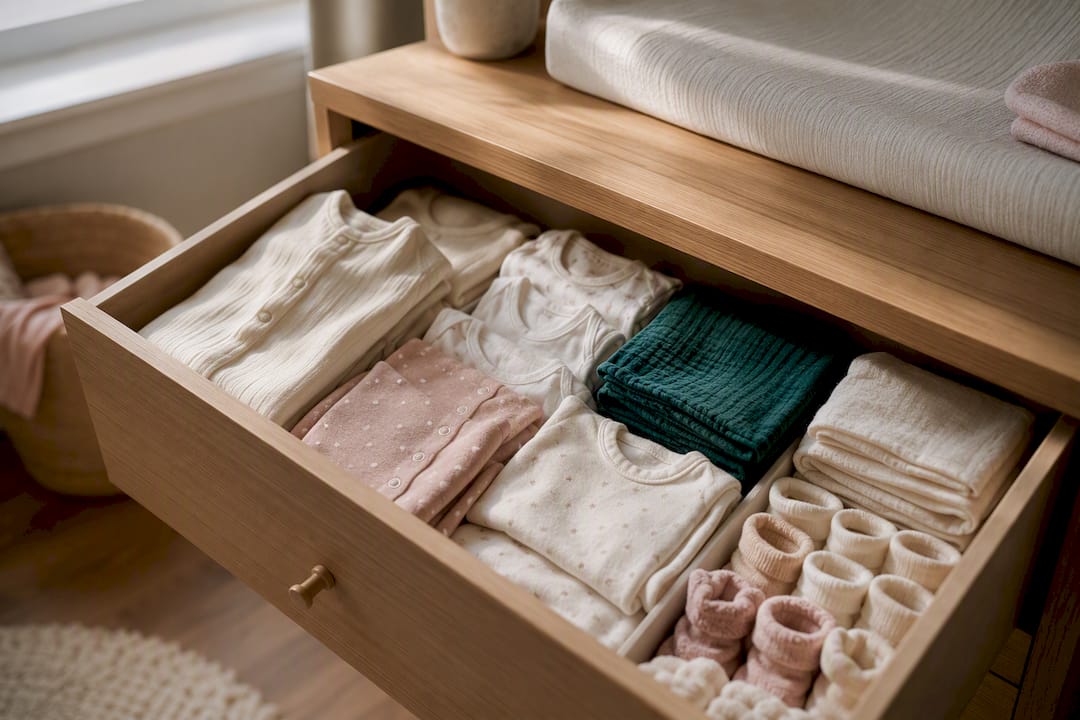
Dry completely before you fold anything away. Damp storage is the fastest route to a musty smell, and in enclosed drawers, damp fabric can develop mould.
A few storage habits save real hassle later:
- Use clean, dry drawers for anything you’ll reach for within days
- Sealed bags are fine for short-term storage of a few weeks
- Breathable boxes suit anything stored for longer stretches
- Label boxes by size, 0 to 3 months, 3 to 6 months, so you’re not hunting through everything mid labour
You don’t need to rewash items just because a few weeks have passed since laundering. Rewash only if something’s picked up dust, feels heavily handled, or smells musty.
Pro Tip: Keep one clearly labelled “newborn essentials” drawer separate from the rest. It’s the box your partner or a visiting relative can find in thirty seconds flat, without a phone call.
A practical view on getting this right, not perfect
Most of the anxiety around washing baby clothes before birth comes from overthinking a genuinely simple task. You don’t need a colour-coded system or six different detergents. You need one small, ready set washed early, and a sensible plan for the rest.
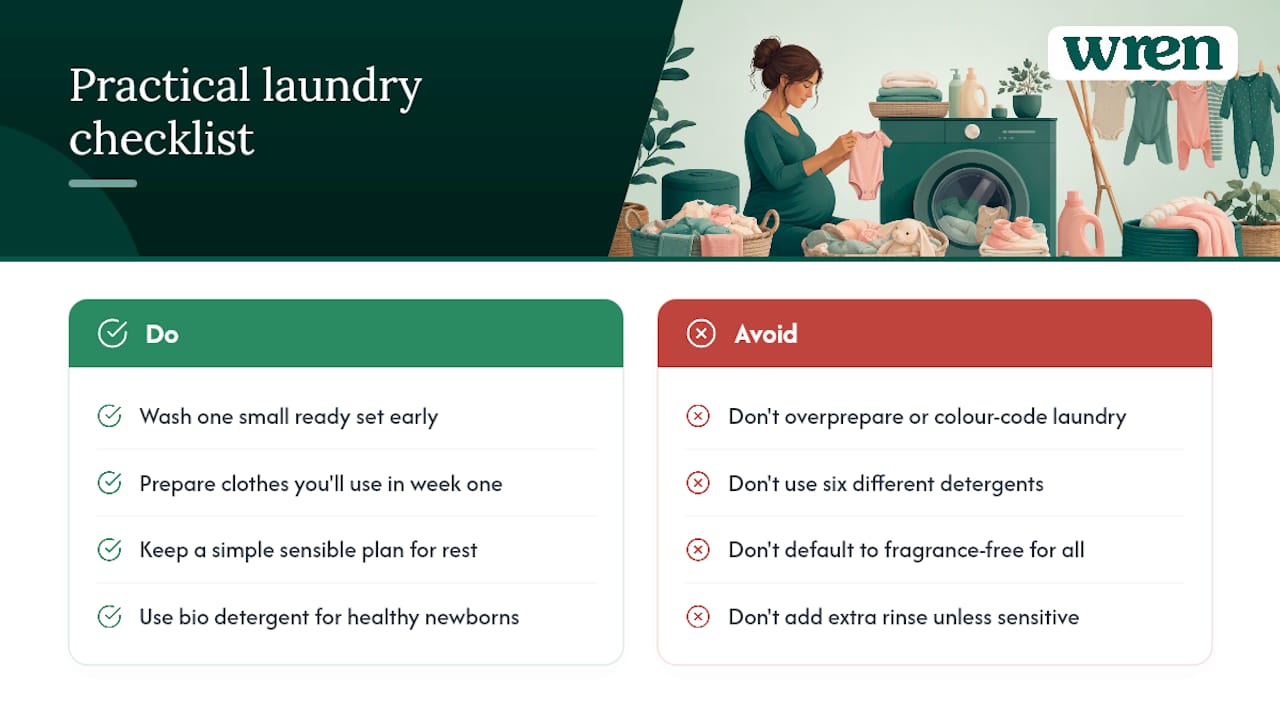
Where I’d push back on some of the more cautious corners of parenting forums: bio detergent is not something to fear for a healthy newborn, and the NHS position on this is genuinely reassuring rather than a grudging compromise. Save the fragrance-free switch and the extra rinse cycle for babies who actually show signs of sensitivity, not as a blanket precaution for every family. Overpreparing the laundry is rarely the problem; underpreparing the first-week kit is.
If you want more of this practical, no-nonsense approach to newborn prep, our guide to how many baby clothes you actually need and our postpartum essentials checklist both follow the same principle: prepare what you’ll genuinely use in week one, and don’t overcomplicate the rest.
— Paul
Products worth adding to your newborn prep list
Laundry sorted, a few other small items tend to matter more than parents expect in that first fortnight. The Bamboo Reusable Breast Pads need a wash routine of their own, similar in spirit to your baby clothes cycle, and our guide to washing reusable breast pads covers that in under a minute.
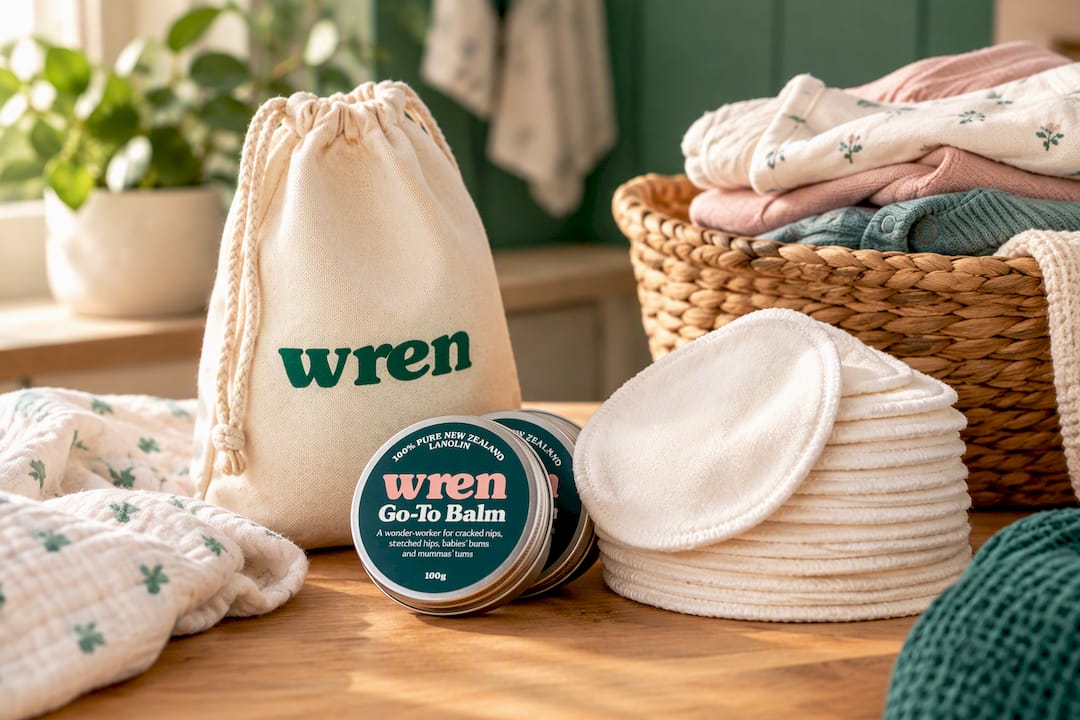
For sore or cracked nipples in the early feeding days, the Wren Go-To Balm Nipple Salve is worth having in the same drawer as your newborn essentials, ready before you need it rather than ordered in a rush at 3am. If you’re still building out the wardrobe itself, Wren’s baby clothes collection is organic cotton throughout, which suits the fragrance-free, gentle-wash approach this guide recommends. Browse the collection, add what’s missing from your first-week set, and get it washed and ready before your due date arrives.
Sources
- What you’ll need for your baby – NHS
- Report on NPE in textiles – UK government (withdrawn)
- Care pathway for children with eczema – RCPCH
FAQ
How early can you wash baby clothes before birth?
There’s no fixed week you need to hit. Many parents wash a small first-week set as soon as it arrives, then handle the rest around 2 to 4 weeks before their due date, following NHS guidance.
Why wash baby clothes before birth?
New clothes carry dust, dye and manufacturing residue from production and packaging, and washing removes most of this before the fabric touches your baby’s skin. It’s a simple precaution rather than a strict medical requirement.
Do you need to wash new baby clothes according to the NHS?
Yes, the NHS recommends washing new baby clothes before first use. It also notes there’s no solid evidence that ordinary bio detergents or fabric conditioners routinely irritate a healthy baby’s skin.
Is 30 weeks too early to wash baby clothes?
No, 30 weeks is a sensible point to wash a small first-week set, especially if you want a bag ready in case of early labour. Just make sure everything is fully dry before it goes into storage, and hold the bulk of the wardrobe until closer to your due date to avoid rewashing.
Is Wren’s Go-To Balm suitable to prepare alongside baby clothes?
Yes, the Wren Go-To Balm Nipple Salve is a sensible addition to a newborn preparation kit, alongside washed vests and sleepsuits. Current pricing is available on the Wren site.


