


One 2–4am Session: Stage Based Night Pumping Schedule for UK Parents


Include at least one efficient night session while establishing supply, ideally between 2am and 4am, and build the rest of your schedule around your baby’s own feeding pattern. Partial pumpers whose babies are feeding well overnight often don’t need a dedicated night session at all. Read on for the physiology behind this, plus stage-by-stage schedules you can start tonight.
TL;DR:
- Night pumping between 2am and 4am is crucial for supply since prolactin peaks overnight, and skipping it regularly can reduce milk production.
- Exclusive pumpers must include night sessions to maintain supply, whereas partial pumpers often do not need separate overnight pumping if their baby feeds well at night.
- For each stage, 8 to 12 expressions in 24 hours are recommended, with the first 6 weeks requiring quick, frequent sessions including one overnight, then gradually reducing as supply stabilizes.
- Using a properly fitted flange and double pumping can significantly improve comfort and efficiency during night sessions, reducing setup time and supporting milk supply.
- Protect sleep by preparing pump parts beforehand, using dim lights, and considering wearable pumps for disruption-free extraction when possible.
Table of Contents
- Why does a night pumping schedule matter for milk supply?
- What is a good night pumping schedule at each stage?
- How do you make night pumping sessions efficient?
- How can you protect sleep while pumping at night?
- When should you worry about mastitis or low supply?
- Wren’s night pumping checklist and template
- Balancing supply protection and your own rest
- Which Wren products actually help at 3am
- Sources
- FAQ
Why does a night pumping schedule matter for milk supply?
Prolactin, the hormone that drives milk production, runs highest overnight. That’s not a myth passed between exhausted parents at 3am. It’s the reason Guy’s and St Thomas’ NHS Foundation Trust advises aiming for at least one expression between 2am and 4am while you’re establishing supply, alongside roughly 8 to 12 expressions across the full 24 hours.
Milk supply works on a demand-and-response basis. The more consistently milk is removed, the more consistently your body is told to make it. Skip the overnight window for too many nights in a row and your body reads that as a signal to slow down, not speed up. This is why the early weeks matter more than any other stage: supply is still being calibrated, and every missed removal is a missed instruction.
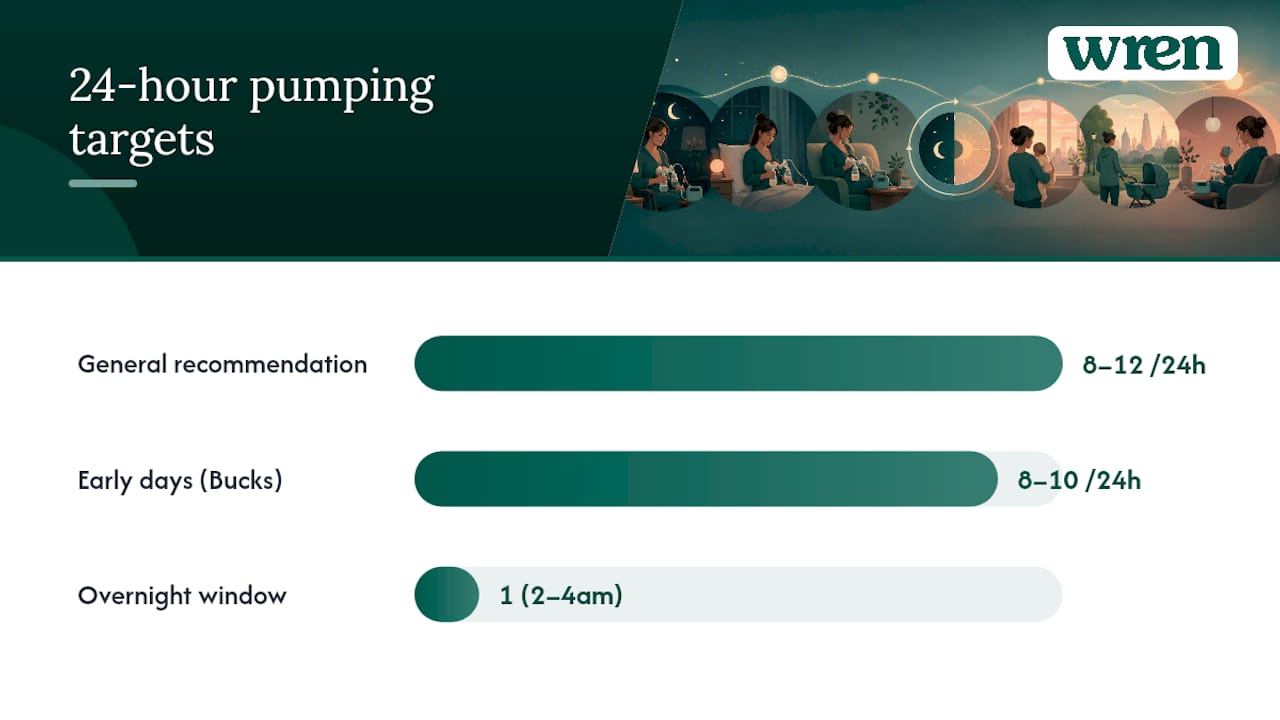
NHS guidance on expressing recommends frequent removal, comfortable equipment, and double pumping to reduce time spent at each session while supporting supply. Hospital-affiliated advice from Bucks Healthcare NHS goes further, warning against leaving gaps longer than around five hours in the earliest days, and suggesting 8 to 10 expressions in 24 hours including at least one overnight.
There’s a meaningful difference between exclusive pumping and partial pumping, and it changes what your night should look like.
- Exclusive pumpers replace every breastfeed with an expressing session, so night pumping isn’t optional. Your body only knows what you tell it, and a long overnight silence tells it to make less.
- Partial pumpers who nurse well and often may already be giving their body the nighttime signal it needs through direct feeds, making a separate pump session unnecessary. NHS advice notes that frequency depends on why you’re expressing in the first place.
- Parents of premature or unwell babies should follow their neonatal team’s specific plan rather than a general schedule. Hospital guidance from EMN ODN points out that hospital-grade double electric pumps are often the right tool here, sometimes available on loan or hire.
The Centers for Disease Control and Prevention frames it simply for exclusive pumpers: pump as often as your baby normally feeds, adding extra sessions if supply needs to be increased. That single rule of thumb solves most of the confusion about how a night pumping routine should flex around real life rather than a rigid clock.
What is a good night pumping schedule at each stage?
Your schedule should shift as your baby grows and your supply settles. Here’s how that typically plays out across three stages.
- 0 to 6 weeks (establishing supply). Aim for 8 to 12 expressions across 24 hours, spaced no more than 4 to 6 hours apart, with one session landing in the 2am to 4am window. A realistic layout: 11pm, 2am, 5am, then into your daytime rhythm. This is the stage where consistency does more for long-term supply than any single session’s volume, and tiny early yields are completely normal.
- 6 to 12 weeks (testing consolidation). If supply feels steady and your baby is gaining weight well, you can experiment cautiously with stretching one overnight gap, say from a 2am session to closer to 3.30am or 4am. Watch for firmness, leaking, or a drop in volume over several days rather than judging by one night, since tracking the 24-hour trend matters more than any single overnight yield.
- 3 months and beyond (consolidated supply). Many parents can drop to one night session, or occasionally none, provided daytime removals stay frequent and consistent. Reintroduce a night session quickly if you notice discomfort, engorgement, or falling output.
Partial pumpers combining breastfeeds with occasional pumping often skip the night session entirely once feeding is established, so long as the baby is nursing effectively through the night. If you’re building supply back up or preparing for a return to work, a short burst of power pumping in the early evening (pump 20, rest 10, pump 10, rest 10, pump 10) can mimic cluster feeding without adding a genuine extra night wake. For a fuller breakdown of frequency by week, this stage-based pumping guide is worth bookmarking.
How do you make night pumping sessions efficient?
A badly fitted flange turns a five-minute job into a twenty-minute ordeal, and it’s the single most overlooked fix in night pumping. If your nipple rubs the tunnel wall or drags noticeably with each cycle, your flange is likely too small; if there’s excess areola pulled in with visible discomfort, it may be too large. Most people need a smaller size than they expect, and a correctly fitted breast shield makes a genuine difference to both comfort and output.
Double pumping both breasts simultaneously halves the time spent at 3am and supports the hormonal signal that drives supply, since both sides are stimulated together rather than sequentially. Single pumping is fine occasionally, but for a genuine night pumping routine, double pumping is the more sustainable habit.
- Start suction low and increase gradually only until it feels comfortable, never to the point of pain.
- Stop once flow has clearly slowed or stopped rather than pushing through on high suction for extra minutes.
- Most sessions land somewhere between 10 and 30 minutes; let flow, not the clock, decide when you’re done.
- Keep pump parts clean between night sessions, and have a second set ready so you’re never stuck scrubbing valves at 2am.
Pro Tip: Keep a spare set of valves and a spare flange by the pump itself, not in a kitchen drawer three rooms away. The two-minute walk to fetch a clean part is often the difference between finishing a night session and abandoning it.
For more on matching duration to flow rather than the clock, see this guide to session length.
How can you protect sleep while pumping at night?
The gap between a five-minute night session and a thirty-minute ordeal usually comes down to preparation, not willpower. Set your kit up before bed rather than fumbling for parts half-asleep.
- Assemble pump parts, bottles, and storage bags on your night stand or a bedside tray before you sleep.
- Use a dim, warm light rather than an overhead one; bright light delays your body’s readiness to fall back asleep afterwards.
- A warm compress or brief lactation massager session for a minute or two before pumping can help let-down start faster, cutting time spent waiting.
- Agree with a partner who handles which task, whether that’s warming a bottle, washing parts in the morning, or taking a turn on a feed so you can sleep through one cycle.
- A wearable, hands-free pump lets you stay reclined and even doze during the session itself, though it suits milder flow better than a high-output session where a stronger double electric pump may clear milk faster.
If you’re weighing whether to squeeze in an extra session or protect sleep on a rough night, let your body’s signals decide: engorgement or discomfort means pump; if you’re simply tired and supply has been stable for weeks, one skipped session rarely undoes progress. Apps like Naluna can help you track feeding and sleep windows side by side, so you’re not guessing which pattern your baby is actually settling into.
When should you worry about mastitis or low supply?
Pumping “to empty” every single session, or stacking extra sessions on top of a settled routine, isn’t the safety net it seems. The Academy of Breastfeeding Medicine’s clinical protocol specifically cautions against routine over-stimulation, warning it can worsen inflammation and tip supply into hyperlactation rather than protecting it.
Excessive pumping and routine “emptying” can worsen mastitis and hyperlactation; expressing should mimic natural feeding patterns rather than maximise stimulation, according to the ABM’s 2022 mastitis protocol.
Watch for these warning signs and act on them promptly:
- A tender, red, or hot patch on the breast, sometimes with a fever or flu-like ache, points to a blocked duct or mastitis. Hand express briefly for comfort, take a suitable analgesic, and contact a clinician if it doesn’t settle within a day.
- Very low volumes in the first days are usually normal. Colostrum can measure just a few millilitres per session, and daily trends matter far more than any single night’s yield.
- Poor infant weight gain, or a premature or unwell baby not taking expected volumes, needs prompt clinical review rather than a wait-and-see approach.
- If you suspect hyperlactation (constant fullness, frequent leaking, a baby who chokes or pulls off during fast let-down), briefly reducing pump frequency and using short hand expression for comfort can help break the cycle, ideally with a lactation specialist’s input if symptoms persist.
Wren’s night pumping checklist and template
A night session only goes smoothly if the right kit is within reach before you need it. Keep this shortlist by the bed:
- A hands-free pump for sessions where you’d rather stay reclined
- A spare set of valves, since a stiff or cracked one quietly kills suction
- A correctly sized breast shield
- Storage bags pre-labelled and within reach, not in a freezer three rooms away
- Reusable breast pads for the inevitable leaks between sessions
- A lactation massager to help let-down start faster
A simple evening template: warm compress and massage at 10.30pm, pump at 11pm, sleep, pump again between 2am and 4am, then back to sleep until your baby (or your alarm) says otherwise. Adjust the exact times to your own baby’s pattern rather than forcing the clock to fit a stranger’s routine. For deeper reading on timing choices, this breakdown of the best time to pump and this guide to combining breastfeeding with pumping both cover ground this article doesn’t have room for.
Balancing supply protection and your own rest
The heuristic worth keeping on your bedside table is this: establish, then consolidate, then personalise. In the first weeks, follow the frequency guidance closely because supply is still being set. Once it’s stable, start testing gaps cautiously rather than clinging to a schedule out of fear. Once you’re a few months in, build a routine around your actual life rather than a generic template, because by then you know your own body’s signals better than any article can predict them.
Fatigue is not a moral failing, and there’s no prize for the parent who pumped through exhaustion for six months straight. If you’re unsure whether to push through another night session or protect your sleep, that uncertainty is itself a reason to speak to a lactation consultant or your health visitor rather than guessing…
— Paul
Which Wren products actually help at 3am
A hands-free double pump earns its place in a night routine because it lets you stay lying down, both breasts working at once, while a single pump suits lighter flow or backup use. Wren’s Hands-Free Double Electric Breast Pumps are built to fit inside your own bra, wire-free, so a 3am session doesn’t mean sitting bolt upright under a bright light.

Before you commit to any night routine, run through a short buying checklist: a correctly sized flange, at least one spare set of valves, and storage bags you can grab without turning on the main light.
Pro Tip: Keep two spare valves in rotation, not one. A single spare means you’re still stuck scrubbing at 3am the moment the first one wears out, and valves degrade faster than most parents expect.
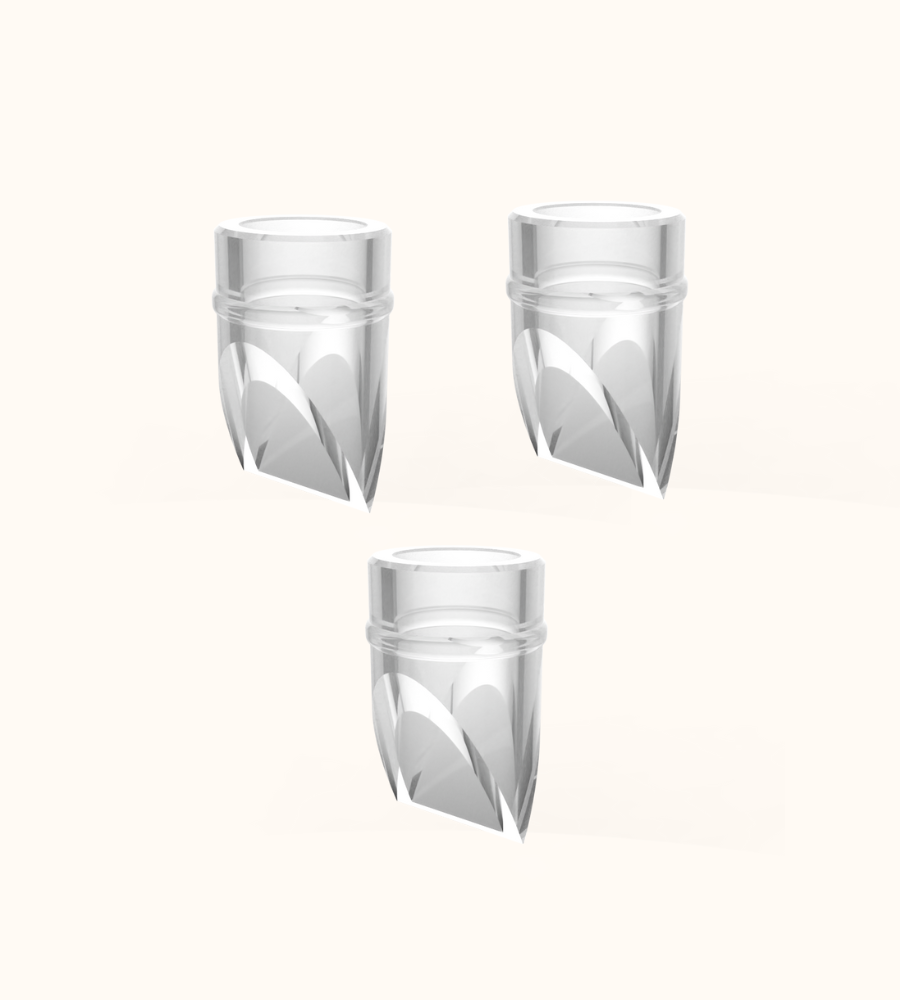
Prices for Wren’s pumps and accessories are listed on the breast pumps collection in £, so you can check current costs before you buy. If you’re only replacing worn parts rather than starting from scratch, the spare parts range covers valves, shields, and other essentials without needing a whole new pump.
This article is general information, not a substitute for advice from a qualified doctor. Consult a qualified healthcare professional about your own circumstances before acting on anything here.
Sources
- Expressing and storing breast milk - NHS
- Expressing your breast milk - Guy’s and St Thomas’ NHS Foundation Trust
- ABM clinical protocol 36 (mastitis spectrum) 2022
- Expressing your breast milk | Bucks Healthcare NHS
FAQ
How often should you pump milk at night?
Aim for at least one night session while establishing supply, ideally between 2am and 4am, as part of roughly 8 to 12 expressions across 24 hours. Once supply is stable, some parents can safely stretch to fewer or no night sessions, provided daytime removal stays consistent.
Can you go four hours without pumping at night?
Early in establishing supply, hospital guidance advises against gaps longer than around five hours, so a four-hour gap is generally fine at that stage. Once supply is consolidated, most parents can extend that gap further without issue, as long as they watch for firmness or a drop in output.
Is pumping for 10 minutes enough at night?
It depends on flow rather than the clock. NHS guidance recommends stopping once flow has clearly slowed, and for some parents that happens within 10 minutes, especially with double pumping, while others need closer to 20 or 30 minutes to fully drain both breasts.
Is it better to pump for 20 minutes or 30 minutes?
Neither figure is universally correct. Flow should decide the length of a session, and pushing past the point where milk has stopped rarely adds meaningful volume while risking discomfort from prolonged high suction.
Do partial pumpers need a night pumping schedule?
Not always. If a baby is breastfeeding effectively and often through the night, that direct feeding already provides the supply signal, so a separate pump session may be unnecessary unless output starts dropping.


