


Best breast pump for low supply: expert picks for UK mums


If your milk supply is low, the single most effective step is to increase how often and how thoroughly you remove milk. Breastfeeding runs on a supply-and-demand basis: the more milk your body is asked to produce, the more it makes. A pump with adjustable stimulation and expression modes gives you the control to work with that physiology directly. My-wren’s Hands-Free Double Electric Breast Pumps are a practical UK-available option designed for frequent, comfortable use.
Urgent red flags — seek help immediately if you notice:
- Fever, breast redness, or severe pain (possible mastitis)
- Blood in expressed milk
- Your baby is not gaining weight, has fewer than six wet nappies per day, or appears dehydrated
- Significant pain that does not ease within the first few days of pumping
These signs need same-day assessment from your GP, health visitor, or midwife, not a new pump.
Table of Contents
- Why is your milk supply low? Common causes to check first
- How to increase milk supply: evidence-based tactics and a sample schedule
- Which pump features matter most when supply is low?
- Why My-wren pumps work well for mothers with low supply
- How to use your pump effectively to build supply
- When should you seek professional help?
- Key takeaways
- The part most pump guides skip
- My-wren products for low supply: what’s available and where to buy
- Useful sources and further reading
Why is your milk supply low? Common causes to check first
Low supply has a range of causes, and identifying yours shapes what you do next. The most common ones are practical and fixable; a smaller number need medical input.
Common causes:
- Infrequent milk removal. Not feeding or pumping often enough is the leading cause. Milk left in the breast signals the body to slow production.
- Poor latch. A shallow latch means the baby removes less milk per feed, reducing the demand signal even when feeds are frequent.
- Scheduled feeding. Feeding to a clock rather than on demand can reduce the number of removal signals your body receives each day.
- Separation from your baby. Time apart without replacing feeds with pumping sessions reduces overall removal frequency.
- Previous breast surgery. Reduction or augmentation surgery can affect milk ducts and glandular tissue.
- Hormonal or medical factors. Thyroid conditions, polycystic ovary syndrome, retained placental tissue, and certain medications (including some contraceptives and decongestants) can suppress supply. These need GP assessment.
- Stress and dehydration. Both can temporarily inhibit let-down and reduce output, though they rarely cause a true supply deficit on their own.
Quick self-screening checklist:
- How many times are you feeding or pumping in 24 hours? Fewer than eight sessions is often the first thing to address.
- Is your baby latching deeply, with a wide mouth and chin pressed to the breast?
- Have you started any new medication recently? Check the patient information leaflet or ask your pharmacist.
- Are you drinking enough fluid? Thirst during a feed is a useful prompt.
Pro Tip: One overlooked cause of poor output is an incorrectly sized flange. If the flange tunnel is too small, it compresses the nipple and restricts milk flow; too large, and it pulls in areola tissue without effective compression. Measure your nipple diameter in millimetres and add 2–4mm to find your starting flange size. Pain, blanching, or a nipple that rubs the tunnel wall are signs the fit needs adjusting.
If you suspect a hormonal or structural cause, ask your GP for a referral rather than relying on pumping frequency alone. The Cleveland Clinic notes that professional fitting and technique matter as much as the pump itself, so an IBCLC (International Board Certified Lactation Consultant) assessment is worth arranging early.

How to increase milk supply: evidence-based tactics and a sample schedule
Frequency and thorough removal are the two levers that reliably increase supply. Everything else supports those two things.
The core tactics
- Increase session frequency. Aim for frequent removal sessions throughout the day and at least one overnight session when prolactin levels are naturally higher.
- Add power-pumping. Power-pumping mimics cluster feeding to send a concentrated demand signal. A standard protocol: pump for 20 minutes, rest for 10, pump for 10, rest for 10, pump for 10. Do this once a day for 3–5 days, not indefinitely.
- Double pump simultaneously. Pumping both breasts at once raises prolactin more than single pumping and cuts session time.
- Use hands-on pumping. Massage before and during sessions, add breast compressions while the pump runs, and finish each session with hand expression. This combination improves drainage and, over time, output.
- Combine pumping with breastfeeding. If your baby is latching, offer the breast first, then pump for 10–15 minutes immediately after to drain any remaining milk.
- Skin-to-skin contact. Holding your baby skin-to-skin before and during pumping supports oxytocin release and let-down.
Pro Tip: Finishing each session with two to three minutes of hand expression after the pump stops can add meaningful extra volume. The milk released at this stage tends to be higher in fat content.
For natural support, lactation-boosting nutrition and staying well hydrated complement pumping frequency, though neither replaces it. Herbal galactagogues such as fenugreek and blessed thistle have limited clinical evidence; prescription options like domperidone are sometimes used under medical supervision in the UK but require a GP assessment. Discuss both with your GP or IBCLC before starting.
Sample 24-hour schedule
The table below gives a starting framework. Adjust session times to fit your life; the total number of sessions matters more than the exact clock times.
| Time | Session type | Purpose |
|---|---|---|
| — | Breastfeed + 10-min pump | Morning prolactin peak; drain thoroughly |
| — | Pump (15–20 min, double) | Add removal session |
| — | Breastfeed or pump | Maintain frequency |
| — | Pump (15–20 min) | Midday removal |
| — | Breastfeed or pump | Afternoon session |
| — | Power-pump | Demand signal boost (3–5 days only) |
| — | Breastfeed + short pump | Evening drain |
| — | Pump (15 min) | Overnight prolactin support |
| — | Breastfeed or pump | Maintain overnight frequency |
For exclusive expressers: replace breastfeed sessions with double-pump sessions of 15–20 minutes. Aim for the same total frequency.
For mothers returning to work: the 10 top breastfeeding tips guide covers scheduling around workplace breaks.
Expected timeline: most mothers see a measurable increase within 3–7 days of consistent extra removal. A full supply response can take several weeks. If there is no change after seven days of following this routine, seek IBCLC support.
Which pump features matter most when supply is low?
The right pump for low supply is not necessarily the most powerful one. Fit, technique, and frequency matter at least as much as motor power. That said, certain features make a real difference.
Features to prioritise:
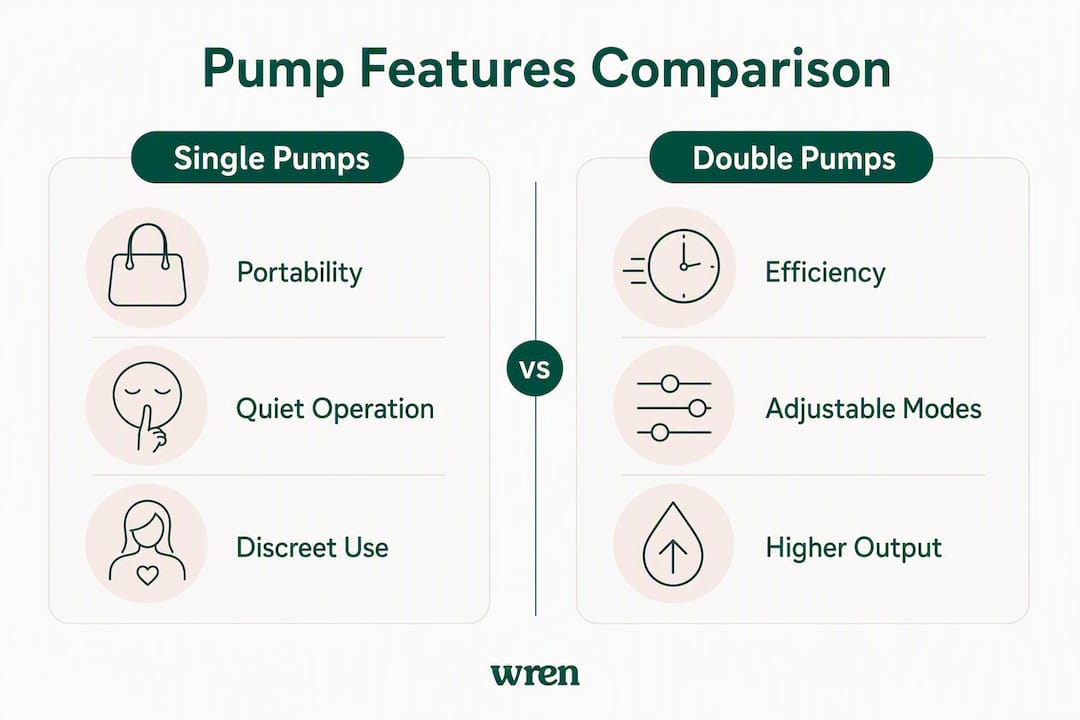
- Separate stimulation and expression modes. Stimulation mode uses faster, lighter cycles to trigger let-down; expression mode switches to slower, deeper cycles to drain the ducts. A pump without this distinction often fails to trigger let-down reliably.
- Adjustable vacuum and cycle speed. Independent control lets you find the highest comfortable vacuum, which is the setting that removes the most milk without causing pain or tissue damage.
- Double-pump capability. Simultaneous bilateral pumping raises prolactin more effectively and halves the time per session, making it easier to maintain high frequency.
- Correct flange sizing. No feature matters more than this. A poor fit reduces output and causes pain regardless of motor quality.
- Closed system. Prevents milk from entering the motor tubing, which protects hygiene and extends pump life.
- Portability and battery life. A pump you use consistently outperforms a more powerful unit you rarely use. Wearable and hands-free designs support the session frequency that supply-building requires.
Pump category comparison
| Pump type | Double pumping | Adjustable modes | Portability | Best suited for |
|---|---|---|---|---|
| Wearable single electric | No | Basic | High | Occasional top-up sessions |
| Hands-free double electric | Yes | Full | High | Frequent sessions, supply building |
| Plug-in double electric | Yes | Full | Low | Home-based exclusive expressing |
| Hospital-grade rental | Yes | Full | Very low | Significant supply deficits, early days |
Hospital-grade pumps are available to hire in the UK and can be a practical option during the critical early weeks when establishing supply. Clinical guidance recommends rental for significant deficits rather than purchasing an expensive unit outright. Ask your midwife, health visitor, or IBCLC about local hire schemes.
Pro Tip: To measure your flange size, use a ruler or soft tape to measure the diameter of your nipple (not the areola) in millimetres when not stimulated. Add 2–4mm. Most mothers need a size between 21mm and 28mm. If you are between sizes, start with the larger and assess comfort and output after a few sessions.
Why My-wren pumps work well for mothers with low supply
My-wren pumps support the key tactics for increasing supply: adjustable modes, comfortable flange options, and UK availability. The product range maps directly onto the evidence-based steps above.
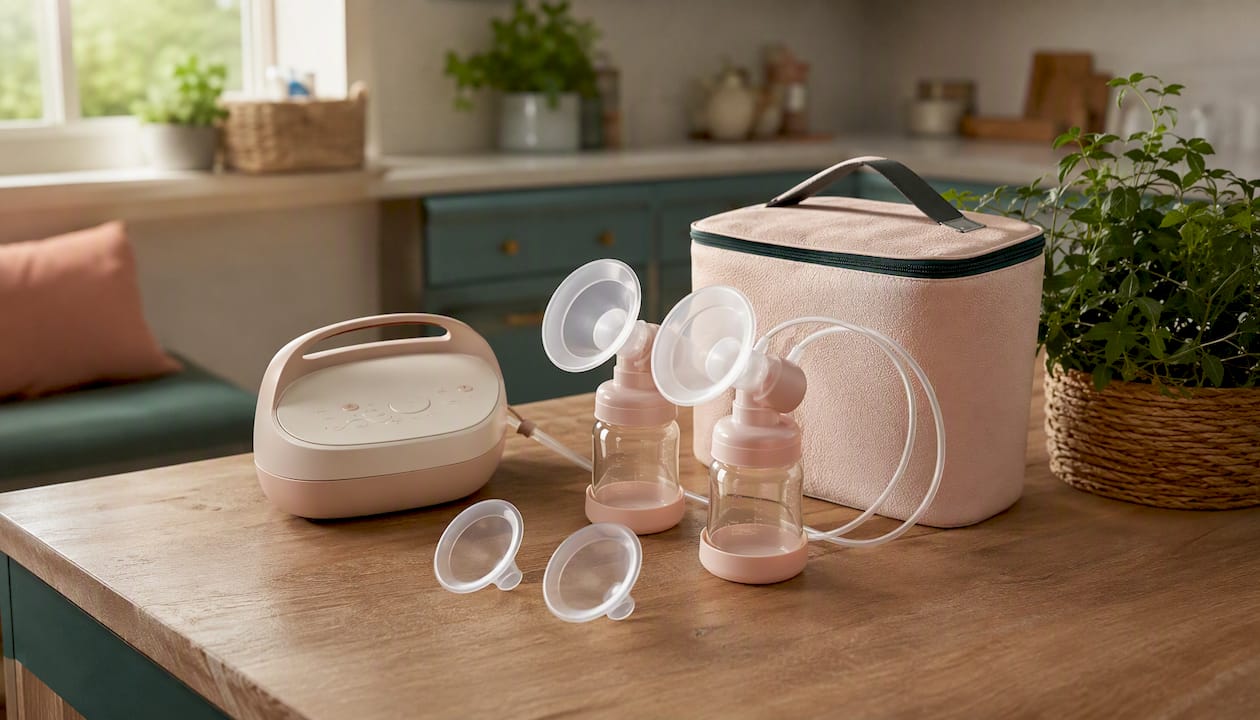
Hands-Free Electric Breast Pump
The single hands-free pump is designed for discreet, on-the-go use. It fits inside a standard nursing bra, runs quietly, and supports the session frequency that supply-building requires without tying you to a wall socket.
Hands-Free Double Electric Breast Pumps
The double pump option allows simultaneous bilateral expression, which raises prolactin more effectively than single pumping. It includes adjustable stimulation and expression modes, giving you the control to trigger let-down and then switch to deeper drainage cycles. For mothers actively working to increase supply, this is the recommended starting point.
Breast Shield 25mm (Flange)
The 25mm breast shield is available as a spare or replacement part. Correct flange fit is one of the most commonly overlooked factors in poor output; having the right size available means you are not limited to whatever came in the box.
Lactation Massager
The My-wren lactation massager supports hands-on pumping by helping to stimulate milk flow before and during sessions. Used alongside breast compressions, it improves drainage and can reduce the risk of blocked ducts. See the guide to using a lactation massager for technique details.
Bamboo Reusable Breast Pads
Frequent pumping sessions mean more leakage between sessions. The bamboo reusable breast pads are absorbent and gentle on sensitive skin, a practical addition when you are pumping eight or more times a day.
Nipple Bubble with storage case and bag
The Nipple Bubble provides nipple protection between sessions and comes with a compact storage case and bag. Useful for mothers experiencing soreness from frequent pumping, and the storage bag keeps accessories clean and organised.
Pricing for My-wren pumps is listed in £ on the product pages. The full range of accessories is available at My-wren breastfeeding accessories, and bundle options that combine pumps and accessories are listed under breastfeeding kits and bundles.
How to use your pump effectively to build supply
Successful pumping depends on technique and consistency as much as equipment. A well-executed session with a mid-range pump will outperform a careless session with a hospital-grade unit.
Step-by-step session guide
- Prepare. Wash hands thoroughly. Have your pump parts clean and assembled. Sit comfortably, ideally with your baby nearby or a photo or item of clothing that smells of them.
- Massage. Spend two to three minutes warming and gently massaging each breast before attaching the pump. This supports let-down.
- Check flange fit. Your nipple should move freely in the tunnel without rubbing the sides. The areola should not be pulled in more than a few millimetres. Adjust size if needed.
- Start in stimulation mode. Run the pump on stimulation (fast, light cycles) until let-down occurs, usually within two to three minutes. You will feel a tingling sensation and see milk begin to flow.
- Switch to expression mode. Move to slower, deeper cycles. Set the vacuum to the highest level that remains comfortable, not the maximum setting.
- Add breast compressions. While the pump runs, use your free hand to apply gentle pressure to different areas of the breast. This improves drainage, particularly in the outer quadrants.
- Finish with hand expression. When flow slows to drops, remove the pump and hand-express for two to three minutes. This retrieves the higher-fat hindmilk and sends an additional removal signal.
- Record your output. Note the volume and time. Tracking over days helps you see whether frequency changes are working.
Flange fit: visual checks
- Too small: nipple rubs the tunnel wall, causes pain or blanching, restricts flow.
- Too large: areola is pulled into the tunnel, reducing compression effectiveness.
- Correct fit: nipple moves freely, little or no areola is drawn in, no pain during expression.
Cleaning and storage
- Rinse pump parts that contact milk in cold water immediately after each session, then wash in hot soapy water or a dishwasher-safe cycle.
- Sterilise once daily using a steam steriliser or microwave steriliser bag.
- Store expressed milk in the back of the fridge (not the door) for up to four days at 4°C or below, or in the freezer for up to six months, in line with NHS guidance.
- Allow pump parts to air-dry on a clean surface rather than using a cloth that may harbour bacteria.
When should you seek professional help?
Seek help if supply does not improve after seven days of consistent extra removal sessions, or sooner if you notice clinical red flags.
Non-urgent contacts (within a few days):
- Your health visitor is the first port of call for feeding concerns in the UK and can refer you onward.
- A GP can assess for hormonal or medical causes and discuss prescription galactagogues if appropriate.
- An IBCLC (International Board Certified Lactation Consultant) provides specialist lactation assessment, including latch observation, weighted feeds, and flange fitting. Find one via the Lactation Consultants of Great Britain.
- Local breastfeeding support groups (NHS-run or voluntary sector, such as La Leche League GB or the National Breastfeeding Helpline on 0300 100 0212) offer peer support and can signpost to professional help.
Seek same-day medical attention for:
- Fever above 38°C with breast pain, redness, or a hard lump (mastitis or abscess)
- Blood in expressed milk that persists beyond the first few days
- A baby who is losing weight, has fewer than six wet nappies in 24 hours, or is difficult to rouse for feeds
- Severe nipple pain that does not ease with position or flange adjustments
No improvement after three to seven days of consistent extra removal is a clear signal to escalate. An IBCLC can identify issues that are invisible to a self-assessment, including tongue tie in the baby, subtle latch problems, or glandular insufficiency.
This article provides general information, not medical advice. Confirm current clinical guidance with your GP, health visitor, or a qualified lactation consultant.
Key takeaways
Frequent, effective milk removal is the single most important factor in increasing supply; everything else, including pump choice, technique, and accessories, supports that core principle.
| Point | Details |
|---|---|
| Prioritise frequency | Aim for frequent removal sessions throughout the day, including at least one overnight session. |
| Try power-pumping | Use the 20-10-10-10-10 protocol once daily for a few days to send a concentrated demand signal. |
| Check flange fit first | Measure nipple diameter in millimetres, add 2–4mm, and confirm fit is pain-free before assuming supply is the problem. |
| Expect results in 3–7 days | Most mothers see measurable improvement within a week of consistent extra removal; seek IBCLC help if not. |
| My-wren double pump | The Hands-Free Double Electric Breast Pumps support simultaneous bilateral expression and adjustable modes, available in the UK from My-wren. |
The part most pump guides skip
Most articles on pumps for low supply focus on motor strength and suction ratings. That framing misses the point. The research is clear: fit, technique, and frequency matter at least as much as motor power. A mother using a mid-range wearable pump correctly, eight times a day, with hands-on technique and correct flange sizing, will typically outperform one using a hospital-grade unit twice a day with a poorly fitted flange.
The other thing guides understate is the timeline. Supply does not respond overnight, and the first two to three days of a new routine often feel discouraging precisely because the body has not yet caught up with the new demand signal. That gap is where most mothers give up. Sticking with consistent removal for a full week before drawing conclusions is genuinely the hardest part, and also the most important.
Wren’s product range is built around the reality that consistency requires convenience. A pump you can use at your desk, on the school run, or during a meeting is one you will actually use eight times a day. That is the practical case for wearable, hands-free design, not just comfort.
For persistent supply concerns, an IBCLC assessment is worth the cost. Many NHS trusts offer lactation consultant support; ask your health visitor for a referral before paying privately.
My-wren products for low supply: what’s available and where to buy
My-wren offers a focused range of pumps and accessories designed for frequent, comfortable use, all available in the UK with direct delivery.
The Hands-Free Double Electric Breast Pumps are the recommended starting point for mothers working to increase supply. Double pumping simultaneously raises prolactin more effectively than single pumping, and the adjustable stimulation and expression modes give you the control the supply-building protocols above require. Pricing is listed in £ on the product page.
For mothers who need a lighter, more portable option for occasional sessions, the Hands-Free Electric Breast Pump fits discreetly inside a nursing bra and runs quietly enough for use at work or in public.
Key accessories worth adding:
- Lactation Massager: supports hands-on pumping technique and helps with blocked ducts. Prices listed in £.
- Breast Shield 25mm: spare flange for correct sizing; available individually.
- Bamboo Reusable Breast Pads: practical for high-frequency pumping days.
- Nipple Bubble with storage case and bag: nipple protection and compact storage between sessions.
Bundle options combining pumps and accessories are listed under breastfeeding kits and bundles, which can offer better value than buying items separately. If you are unsure which flange size to order, the My-wren support team can help with sizing guidance. For persistent supply concerns, ask your health visitor for an NHS lactation consultant referral or contact the National Breastfeeding Helpline on 0300 100 0212.
Useful sources and further reading
- Increasing your supply | Australian Breastfeeding Association: practical protocols for power-pumping, hands-on pumping, and frequency schedules.
- Exclusive expressing | Australian Breastfeeding Association: step-by-step guidance for mothers who are exclusively pumping, including hands-on technique.
- Breast pump types and what to know | Cleveland Clinic: clinical overview of pump types, when to consider hospital-grade rental, and the importance of professional fitting.
- My-wren shop: full product range including pumps, flanges, lactation massagers, and accessories, with UK delivery.
- 10 ways to increase and improve your breast milk supply | My-wren: practical tactics that complement the pumping schedule in this article.
- Why use a lactation massager? | My-wren: explains how massage supports milk flow and hands-on pumping protocols.
- NHS: expressing and storing breast milk: UK guidance on safe storage temperatures, timings, and hygiene for expressed milk.
- Lactation Consultants of Great Britain (LCGB): directory for finding a qualified IBCLC in the UK.
- National Breastfeeding Helpline: free telephone support on 0300 100 0212, available seven days a week.


