


220–350 mmHg: Find a Comfortable Breast Pump Suction Strength for Moms


There is no single ideal suction figure to chase. The right approach is to use the highest suction that feels comfortable and pain-free, paired with correct flange fit and a cycle rhythm that mimics a feeding baby. Getting those three elements aligned matters more than any number on a dial.
TL;DR:
- Using the highest comfortable suction paired with proper flange fit and cycle rhythm is more effective than chasing maximum mmHg numbers.
- The range of adjustable settings and independent control of suction and cycle speed are more important than the pump’s advertised maximum pressure.
- Flange fit, seal quality, and cycle pattern significantly influence comfort and milk flow, often more than the pump’s maximum suction level.
- Routine daily pumping rarely requires maximum suction, and pain indicates the setting is too high regardless of the number shown.
- Mechanical issues like leaks or damaged valves are more common causes of low output than insufficient suction strength.
Table of Contents
- What breast pump suction strength actually means
- How suction, cycle speed and flange fit work together
- How to find your comfortable pumping sweet spot
- Recommended suction ranges and when to go higher
- Fixing common suction problems
- What the evidence says about suction, timing and yield
- Wren’s practical stance on suction settings
- Finding the right Wren pump for your comfortable setting
- Studies and guidance worth reading next
- Sources
- FAQ
What breast pump suction strength actually means
Suction strength refers to the vacuum pressure a pump creates against the breast, and manufacturers measure it in millimetres of mercury (mmHg) or millibar (mbar). One mmHg equals roughly 1.33 mbar, so a pump rated at 250 mmHg sits at around 333 mbar. These figures describe negative pressure, not power in any electrical sense. A higher number simply means a stronger pull.
Personal electric pumps for home use typically top out somewhere between 220 and 350 mmHg, according to lab testing compiled by BabyGearLab. Hospital-grade multi-user pumps often have maximum suction levels similar to personal-use pumps, but the real difference between “personal” and “hospital-grade” lies in motor durability and multi-user hygiene design, not raw vacuum ceiling.
This is where marketing language gets slippery. “Hospital strength” is not a regulated or standardised term. It is a phrase brands use to suggest clinical credibility, but no governing body defines what counts as hospital strength versus personal strength. A pump can carry that label and still sit within the same mmHg range as a standard personal device.
What matters for you as a pumping mother is not the maximum figure printed on the box. It is:
- The range of adjustable settings between minimum and maximum, since a wider range gives you more room to find comfort.
- Whether the pump lets you control suction and cycle speed independently, rather than locking them together.
- How gradually the pressure builds within each cycle, because a slow, tapered pull tends to feel gentler than an abrupt one even at the same peak pressure.
- Whether the seal against your breast is airtight, since a poor seal means the displayed setting never reaches full effect anyway.
Chasing the highest advertised maximum is one of the most common mistakes new pumping mothers make. A pump’s ceiling number tells you almost nothing about how it will feel on your body.
How suction, cycle speed and flange fit work together
Peak vacuum is only one variable in a three-part system. Suction pattern, meaning how quickly a pump reaches peak pressure, how long it holds, and how it releases, shapes both comfort and how effectively milk moves. A review of evidence-based approaches to breast pump selection found that mothers often prefer different pumps despite near-identical peak pressures, because the shape of the suction curve differs between devices.
Flange fit changes everything about how a given suction setting feels. If the flange tunnel is too small, nipple tissue rubs against the sides with every cycle, and even a moderate setting can feel painful. If it is too large, too much areola gets pulled in, which can cause swelling and reduce how efficiently milk actually flows. Wren’s guide to choosing the right flange size walks through how to check your own measurement rather than guessing.
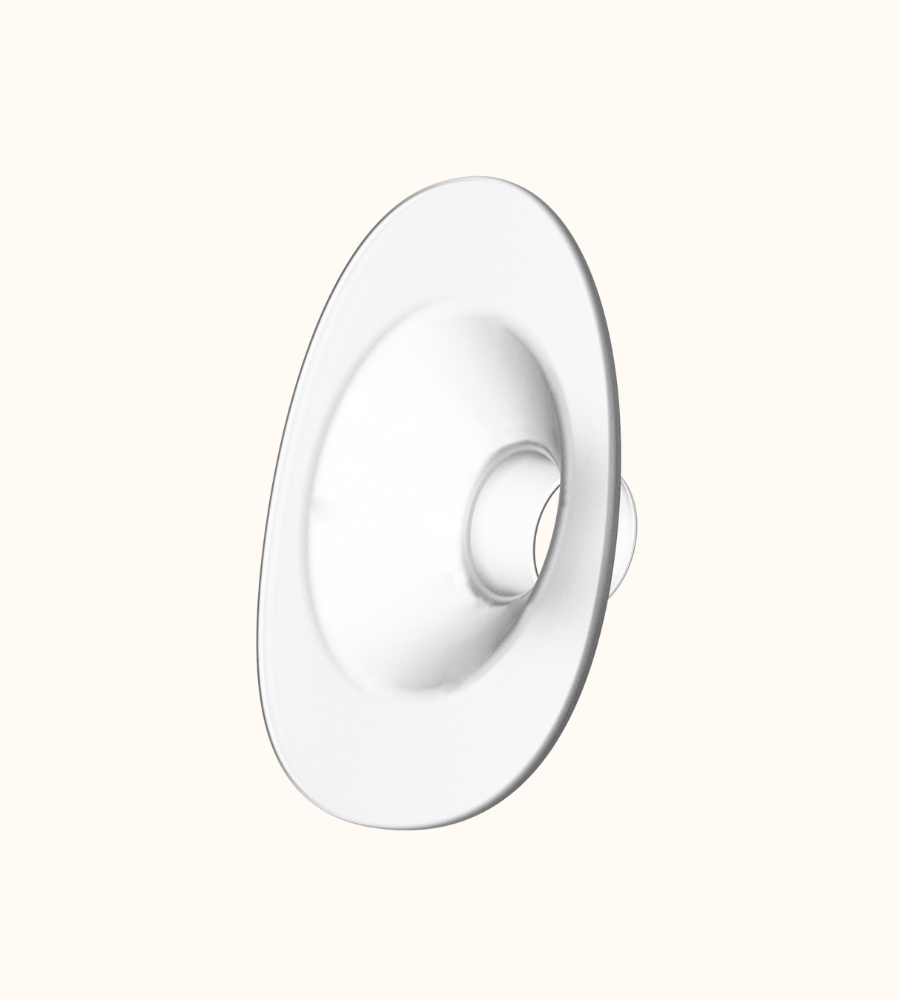
This explains why identical mmHg settings on two different pumps, or even on the same pump with two different flange sizes, can feel completely different. The number on the display is only the starting point. What your breast tissue actually experiences depends on tunnel diameter, seal quality, and how the cycle rhythm unfolds around that peak figure.
How to find your comfortable pumping sweet spot
Finding your sweet spot is a process you repeat at the start of every session, not a setting you find once and forget. Milk supply, breast fullness, and sensitivity all shift across the day and across the weeks postpartum, so the “right” number moves with them.
- Start low and fast. Begin with a stimulation phase, using low suction and a quicker cycle speed, for one to two minutes. This mimics the fast, shallow sucking a baby uses to trigger let-down.
- Switch to expression mode. Once you feel the let-down sensation (tingling, a change in flow, or simply the milk starting to come), move to slower, deeper cycles.
- Increase suction gradually. Turn the dial up one notch at a time until you reach the highest level that still feels comfortable. Stop the instant it tips into discomfort.
- Check for warning signs. Watch for nipple blanching (a whitish colour change), sharp pain, or skin pulled unusually far into the tunnel. Any of these means the setting or the flange size needs adjusting, not pushing through.
- Adjust cycle speed independently if your pump allows it. Sometimes a slower cycle at the same suction level feels more comfortable and clears milk just as well.
- Reassess mid-session. Flow naturally slows as the breast empties. Dropping suction slightly in the last few minutes often feels better without costing you meaningful volume.
Early postpartum expression is a special case worth knowing about. A small pilot study on colostrum expression found that adding five minutes of slower, nutritive-style cycles after a standard fifteen-minute pumping session meaningfully increased the total volume collected, with the extra time contributing a substantial portion of the session’s yield. That difference was statistically significant, though the study involved a small sample, so treat it as a promising signal for the first days after birth rather than a rule for every session months later.
Pro Tip: Keep a spare flange size on hand during the first few weeks. Breast tissue changes as swelling from birth subsides and as your milk supply regulates, so the flange that fits on day three may not fit by week three.
Recommended suction ranges and when to go higher
There is no universal “correct” mmHg; research and manufacturer data together suggest useful reference points:
- Many mothers report comfortable, effective expression somewhere in the moderate portion of a pump’s range, often well below its advertised maximum.
- Personal pumps generally max out between 220 and 350 mmHg, per BabyGearLab’s testing.
- Reaching for the absolute top setting rarely improves output and often just increases discomfort.
Higher suction settings, closer to a pump’s ceiling, have a place in specific clinical situations. A mother exclusively pumping for a premature or hospitalised baby, working to establish supply in the first days postpartum, or dealing with engorgement under a lactation consultant’s guidance may be advised to use stronger settings for defined periods. Outside those contexts, routine daily pumping rarely calls for maximum suction.
Pain is the signal that overrides every other consideration. If a setting hurts, it is too high for you right now, regardless of what number it shows or what worked for someone else’s routine. Persistent pain during pumping is not something to push through for the sake of output, and Wren’s guide on why pumping hurts and how to fix it covers causes beyond suction settings alone, including latch, positioning, and skin conditions.
Fixing common suction problems
Most sudden drops in perceived suction trace back to equipment rather than the pump’s motor failing. Before assuming you need a new device, work through this checklist:
- Check the flange seal against your skin. Any gap breaks the vacuum before it reaches the breast, and Wren’s flange sizing guide explains how to test and correct a poor fit quickly.
- Inspect valves and membranes for cracks, stretching, or milk residue. These small parts wear out faster than most mothers expect and are usually inexpensive to replace.
- Look along the tubing for kinks, moisture, or small holes, all of which reduce the pressure that actually reaches the flange.
- If output still feels low with equipment confirmed intact, try breast massage or manual compression during pumping, along with repositioning to check the flange sits centred over the nipple.
- Adjust cycle speed rather than suction alone. Slowing the rhythm sometimes clears milk more effectively than simply pumping harder.
Wren’s article on maximising milk expression goes through eight practical fixes for low-output sessions in more depth. If output stays low despite working through these steps, or if you suspect a supply issue rather than a mechanical one, a lactation consultant or your GP can assess further. Wren’s piece on whether pumping affects milk supply explains the broader relationship between removal frequency and ongoing production.
What the evidence says about suction, timing and yield
Several threads of research converge on the same conclusion: how suction is delivered matters as much as how strong it is. The review on individualising breast pump technology found that cycle shape and rhythm shape both comfort and efficiency, sometimes more than peak pressure does.
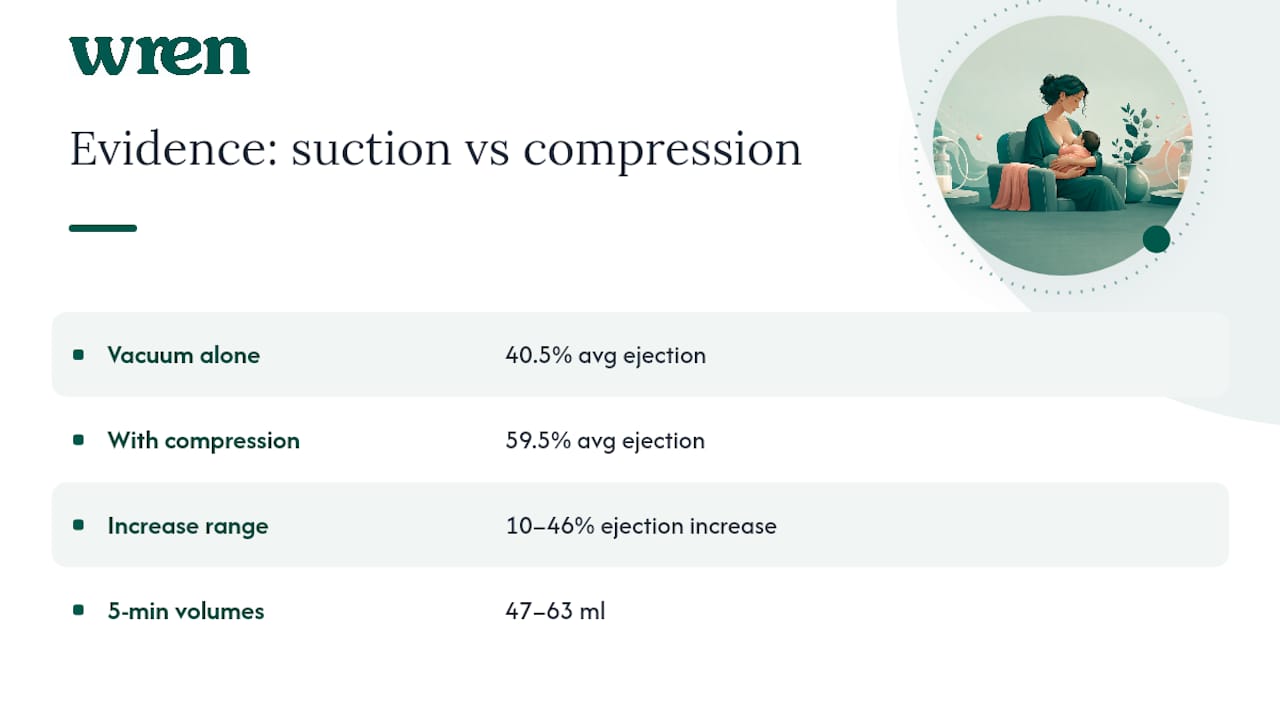
Separate experimental work found that adding compressive stimuli to vacuum increased milk ejection by roughly 10 to 46% compared with vacuum alone, an average of 59.5% versus 40.5% in that study. That is a meaningful case for compression-based massage as a genuine adjunct, not just a comfort feature. Another comparison of vacuum patterns and milk removal found volumes over short intervals varied significantly by pattern, roughly 47 to 63 millilitres over five minutes, even though the percentage of available milk removed varied less across longer sessions.
Wren’s practical stance on suction settings
Chasing the highest number is the single most common mistake seen among pumping mothers, closely followed by using the wrong flange size and assuming it is a suction problem. Both issues masquerade as “my pump isn’t strong enough,” when the actual fix is a smaller or larger flange tunnel, not a stronger motor.
Wren’s pumps are built around adjustable suction and cycle speed as separate controls, precisely because comfort depends on tuning both together rather than maxing out one dial. Pairing that flexibility with the correct flange size, checked using Wren’s flange fit guidance, solves the majority of the discomfort and low-output complaints that get blamed on suction strength alone.
— Paul
Finding the right Wren pump for your comfortable setting
Comfort and effective expression both come down to having the right controls in the first place. Wren’s Hands-Free Double Electric Breast Pumps give you independent suction and cycle speed adjustment across both breasts at once, so you can build the stimulation-then-expression routine covered above without juggling two separate devices.
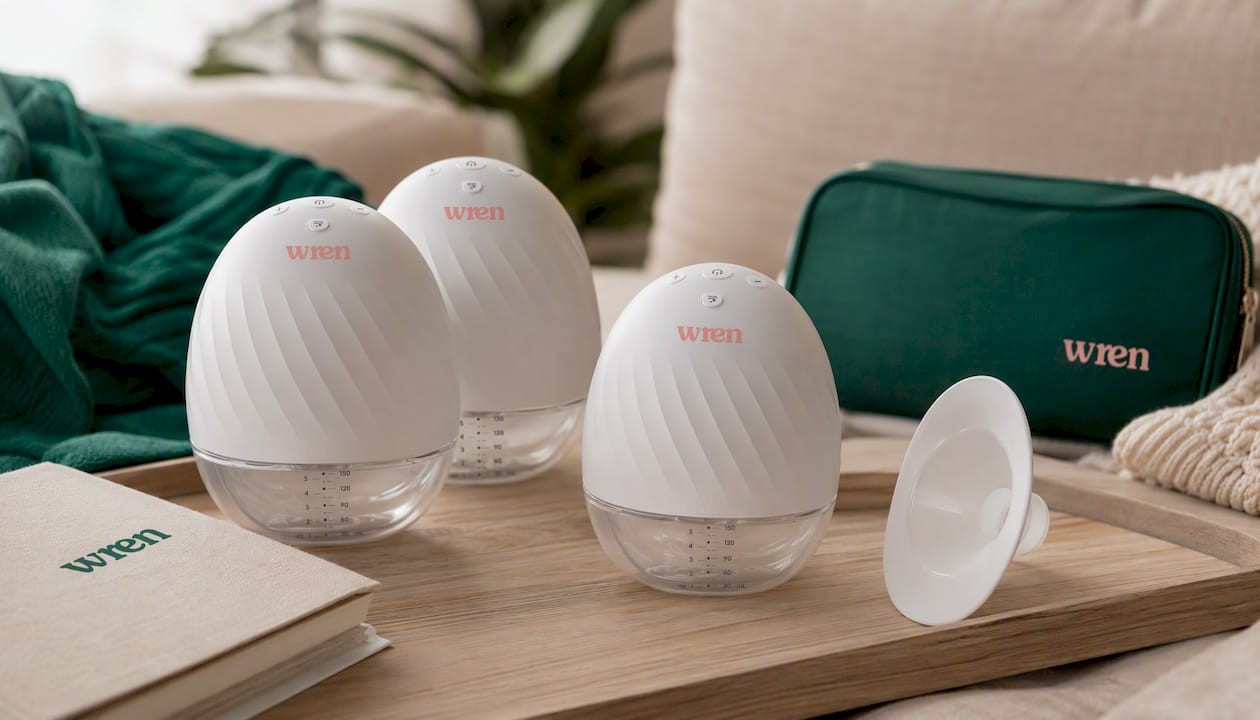
If you are expressing from one side at a time, easing into pumping, or want a lower-cost entry point, the Hands-Free Electric Breast Pump offers the same adjustable control in a single-pump format. And because flange fit changes what any suction setting feels like against your skin, the 25mm Breast Shield gives you a starting size to measure against if you are still working out your correct fit. Browse the full range at My-wren and start with a flange check before you touch the suction dial.
Studies and guidance worth reading next
For deeper reading beyond this guide, the review on individualising breast pump technology covers the evidence base for suction pattern and comfort. The pilot study on modified suction patterns details the colostrum yield findings referenced above. For safe handling after expression, the CDC’s breast milk storage guidance covers temperature and timing rules. For broader feeding frequency context, Baby Bare Essentials’ guide to increasing milk supply covers practical feeding cadence tips.
This article is general information, not a substitute for advice from a qualified doctor. Consult a qualified healthcare professional about your own circumstances before acting on anything here.
Sources
- Which breast pump for which mother: an evidenced‑based approach to individualising breast pump technology
- The mechanics of breast pumping: compression stimuli increased milk ejection
- Experimental comparison of vacuum patterns and milk removal
FAQ
What is the best suction strength for a breast pump?
There is no universal best figure. The right approach is using the highest suction that stays comfortable and pain-free, with correct flange fit and a cycle rhythm that mimics natural feeding.
Why am I only pumping 1 oz every 2 hours?
Low output at this frequency is usually a flange fit, seal, or valve issue rather than a suction strength problem, so check equipment first before increasing pressure. Breast massage, compression, and adjusting cycle speed can also help before you turn suction any higher.
Which breast pump has the highest suction power?
Personal pumps generally advertise maximums between 220 and 350 mmHg, but a higher ceiling does not predict better comfort or output, since suction pattern and flange fit matter more than peak pressure alone.
My breast pump suction is too strong. What should I do?
Lower the setting immediately if you notice pain or nipple blanching, since discomfort is always a signal to reduce pressure rather than push through it. Then check your flange size, as a tunnel that is too small often makes a moderate setting feel far stronger than it should.


