


Start Within 24–48 Hours for Medical Need: UK Pumping Timing


Start pumping the moment your situation calls for it, not on a fixed calendar date. If your baby cannot breastfeed, hand express within the first hours and move to frequent pumping straight away. If you’re exclusively pumping from birth, begin immediately and build to 8–12 sessions a day. If breastfeeding is going well, wait several weeks before adding routine pumping, and if you’re heading back to work, start practising 1–3 weeks before separation.
TL;DR:
- Initiate pumping early when the baby cannot breastfeed or is in NICU, aiming for 8–10 sessions in 24 hours, including overnight.
- Wait 3–6 weeks before introducing routine pumping during successful breastfeeding to avoid oversupply or let-down issues.
- Pump 8–12 times daily, spaced every 2–3 hours, with longer sessions of 15–30 minutes, and prioritize the overnight session for higher milk output.
- Use manual expression in the first 24–48 hours and switch to electric pumps around day 3–5, with hospital-grade pumps for premature or separated infants.
- Practice pumping 1–3 weeks before returning to work, matching your expected schedule, and ensure flange fit and hygiene for safe, effective milk expression.
Table of Contents
- Timing by scenario: medical need, exclusive pumping, and stash-building
- How often to pump and session length
- Hand expression, manual pump, or electric pump: what to use when
- Best time to pump and how to keep milk safe
- Building a pumping routine before returning to work
- Practical setup tips for wearable and hands-free pumps
- What actually matters when deciding to pump
- Which Wren pump suits your pumping stage
- Sources
Timing by scenario: medical need, exclusive pumping, and stash-building
There’s no single answer to when to start pumping, because it depends entirely on why you’re pumping in the first place. A baby in special care needs a different plan from a baby who’s feeding brilliantly at the breast.
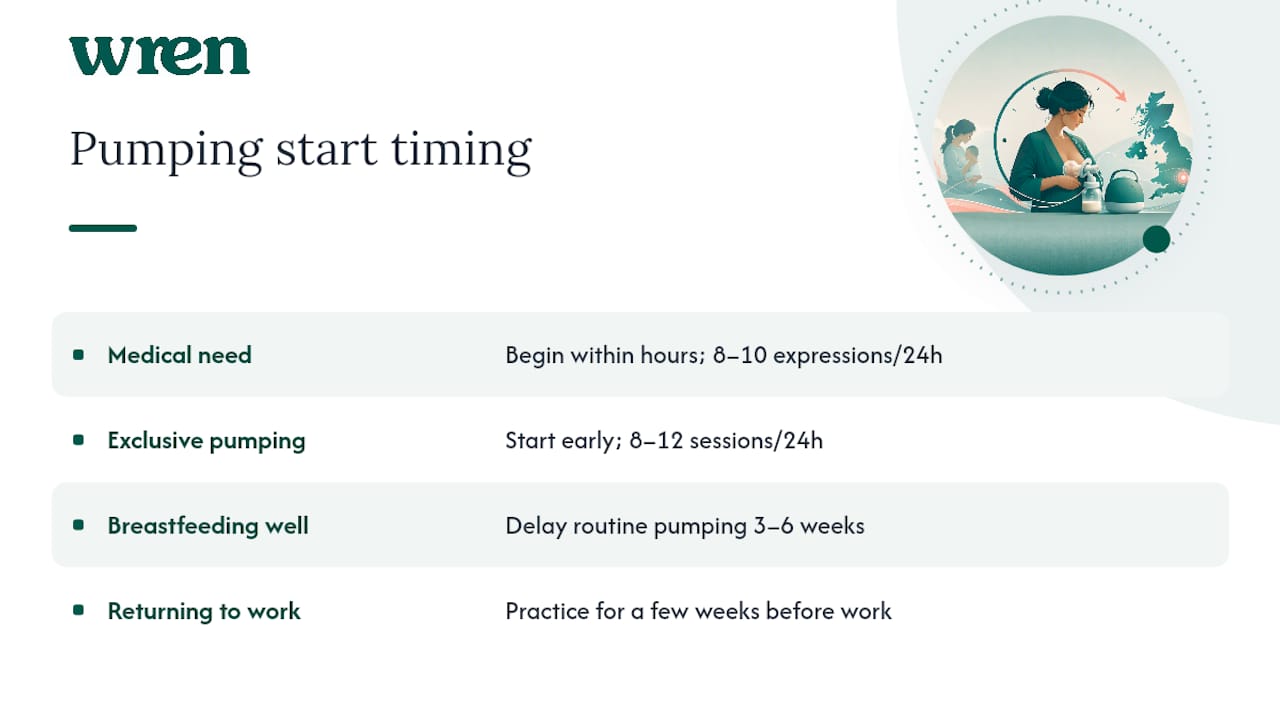
If your baby can’t breastfeed (premature birth, NICU admission, latch difficulties), begin hand expression within the first few hours after delivery. Colostrum is thick and low in volume, so hands often do a better job than a pump in these earliest sessions. Guy’s and St Thomas’ NHS Foundation Trust advises expressing around 8 to 10 times in 24 hours to establish supply when a baby can’t feed directly, including at least one overnight session.
If you’re exclusively pumping from birth, the same urgency applies. Start early and aim for 8–12 sessions across 24 hours, mirroring what a feeding newborn would demand at the breast. Skipping sessions in these first weeks tends to cost you supply later, since your body is still calibrating how much milk to make.
If breastfeeding is going well, hold off. Most health organisations, including the NHS, recommend waiting 3–6 weeks before introducing routine pumping, giving supply and latch time to settle without a pump complicating the picture. Lactation organisations echo this: La Leche League International notes that a baby is a more efficient remover of milk than any pump, and early pumping on top of a well-established feed can risk oversupply or an overly forceful let-down.
If you’re returning to work, work backwards from your start date and begin practising for a few weeks beforehand, once breastfeeding is settled.
How often to pump and session length
Frequency matters more than any single session’s length, particularly in the early weeks when your body is still working out how much milk to produce.
- Exclusive pumping or NICU separation: aim for 8–12 sessions per day, spaced roughly every 2–3 hours, with at least one session between 1am and 5am.
- Adding pumping alongside breastfeeding: start with a single session a day and watch how your body responds before adding more.
- Double pumping sessions: generally run 15–30 minutes. Stop once flow slows and you feel comfortably drained rather than pumping to a fixed clock.
Pro Tip: If a session runs past 30 minutes with little to show for it, stop. Longer isn’t more productive, it usually just means the flange fit or pump settings need adjusting.
The overnight session is the one people are most tempted to skip, and the one worth protecting. Prolactin, the hormone driving milk production, peaks during night hours, so an early-hours pump does more for long-term supply than an equivalent daytime session. Hospital guidance from Healthier Together also points out that double pumping increases output and saves time compared with single-breast sessions, useful when you’re trying to fit expressing around a newborn’s demands.
Hand expression, manual pump, or electric pump: what to use when
The right method changes as your milk changes, and using the wrong tool at the wrong stage is a common source of frustration in the first fortnight.
- First 24–48 hours: hand express. Colostrum comes in small amounts and a pump can struggle to draw it out efficiently; hands, warmth, and gentle massage usually work better.
- Around day 3–5, once milk volume increases, a double electric pump becomes far more practical than continuing by hand or with a single pump.
- Establishing supply for a separated or premature baby: hospital-grade pumps are typically recommended, since they’re built for the frequent, sustained use this situation demands.
- Manual pumps suit occasional, low-volume expressing but become tiring for anyone pumping several times a day.
- Single electric pumps work for occasional sessions but take twice as long as double pumping to clear both breasts.
- Double electric pumps, including hands-free double electric breast pumps, suit anyone pumping regularly or building a stash, since they cut session time roughly in half.
Flange fit matters more than most people realise at the outset. A flange that’s too tight or too loose reduces output and can cause soreness within days, so check fit before assuming a low yield means a supply problem.
Best time to pump and how to keep milk safe
Morning sessions, or a session straight after the first feed of the day, tend to produce the most milk, since prolactin levels are naturally higher overnight and into early morning. Choosing the right time to pump around your baby’s existing feeding rhythm, rather than fighting it, makes sessions more productive with less effort.
Let-down doesn’t always arrive on command, and a few simple triggers help:
- Warm compress on the breast for a few minutes before pumping.
- Gentle massage in circular motions towards the nipple.
- Skin-to-skin contact with baby, or even a photo or video if you’re apart.
Hygiene matters as much as timing.
Thaw frozen milk in the fridge overnight or under cool running water, never at room temperature or in a microwave, which can create hot spots and destroy some of the milk’s properties.
Building a pumping routine before returning to work
Preparing for separation works best as a short, deliberate build rather than a last-minute scramble.
- Start practising 1–3 weeks before your return date, once breastfeeding is well established, adding one pumping session and gradually matching the frequency you’ll need while apart.
- Estimate your stash based on how many feeds you’ll miss each day, then pump on that same schedule in the run-up so your body adjusts before you actually need the milk.
- Sort logistics early: agree pump breaks with your employer, work out where milk will be stored on-site, and check your entitlements to breaks for expressing, since UK employers are required to provide reasonable facilities and rest breaks for this.
A single daily session, kept consistent, protects your existing supply far better than an irregular burst of pumping crammed into the final week.
Practical setup tips for wearable and hands-free pumps
Wearable pumps only perform well when the flange actually fits. Getting the fit right prevents the two most common complaints: low output and nipple soreness after a few days of use.
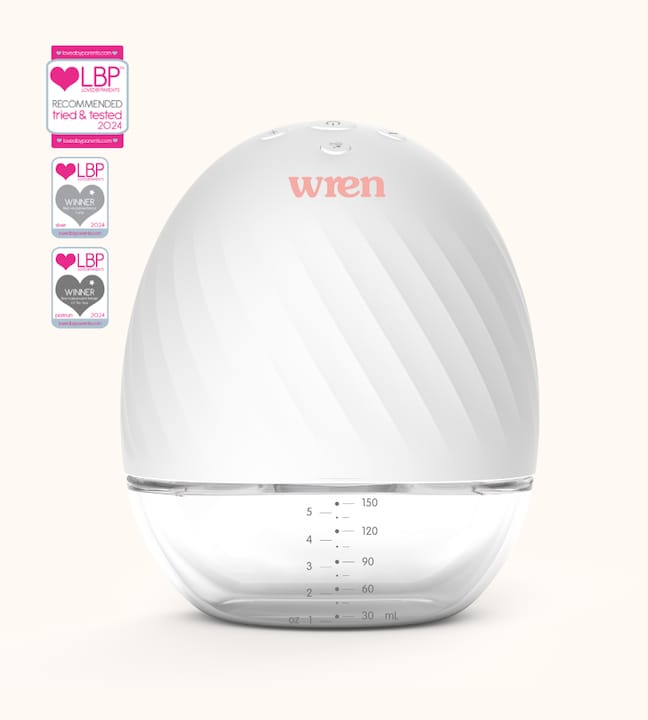
For comfort during longer wear, check the pump sits flush without pinching, and keep hands-free units charged ahead of busy days, since a mid-session power drop is more disruptive than most other pumping hiccups. Adding one daily session after your baby’s first morning feed is a low-risk way to build a small stash without disturbing an established feeding rhythm, and it doubles as a chance to test flange size and pump settings before you rely on them daily.
What actually matters when deciding to pump
Baby’s feeding, your own comfort, and genuine clinical need should outrank any generic weekly milestone. If you’re at all unsure, a midwife or lactation consultant will read your situation far better than a calendar ever could.
The rules worth remembering: start early when there’s medical need, wait 3–6 weeks if breastfeeding is going well, and practise for 1–3 weeks before any planned separation.
— Paul
Which Wren pump suits your pumping stage
If you’re building a regular stash or pumping several times a day, a hands-free double electric breast pump does the job in half the time of single pumping, which matters when you’re juggling a newborn alongside every session.
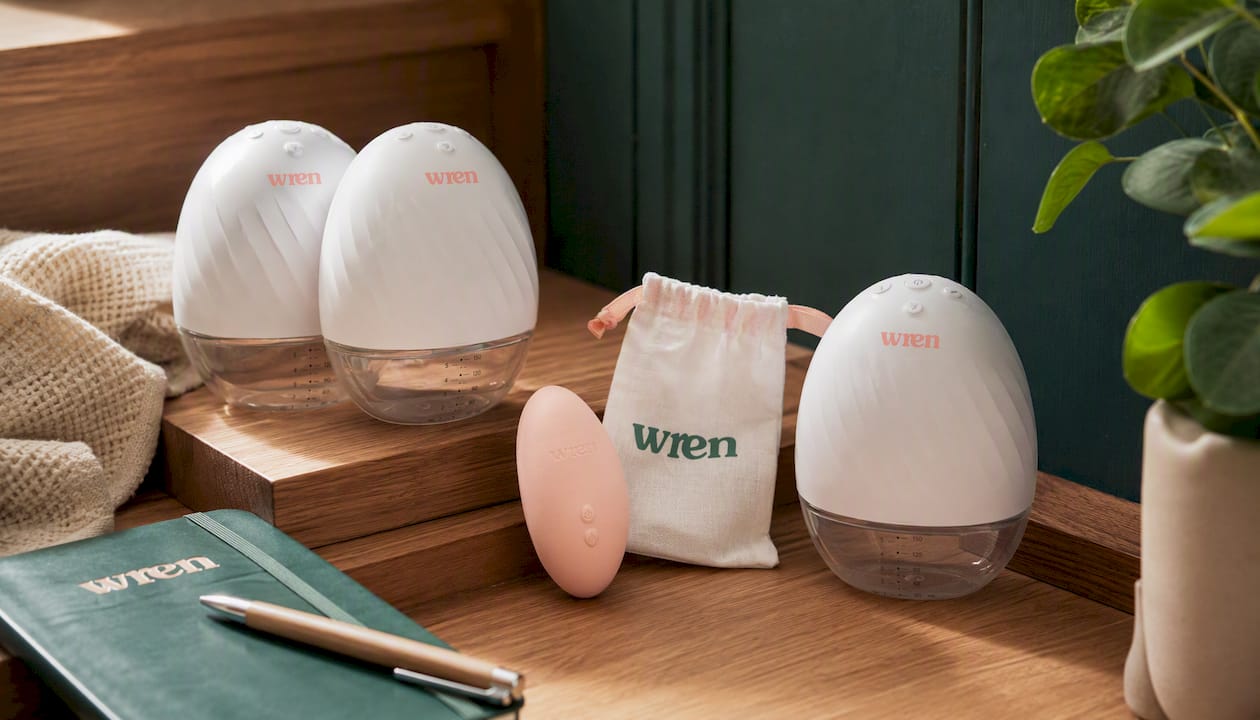
For occasional sessions, testing hands-free pumping for the first time, or simply wanting a lighter option some days, the hands-free electric breast pump is the more practical starting point. And if sore or slow letdown is making sessions harder than they should be, a lactation massager helps encourage flow before and during pumping, worth pairing with either pump. Prices are listed clearly on product pages. Browse the Wren how-to blog for flange-fit guidance and troubleshooting, and speak to your midwife or a lactation consultant if you want tailored advice on hire options or getting started.
Sources
For deeper clinical detail, see NHS guidance on expressing breast milk and the open-access review on establishing milk supply.
This article is general information, not a substitute for advice from a qualified doctor. Consult a qualified healthcare professional about your own circumstances before acting on anything here.
- Expressing your breast milk — Guy’s and St Thomas’ NHS
- Expressing breast milk — Healthier Together (NHS)
- PMC review article (open access)


